A tiny freshwater turtle lives in the same floodplain that fuels Vallarta’s growth. Now, a university team and federal inspectors say the next move can’t be another study or another rescue. It has to be habitat protection, with clear ground rules for land use and real enforcement against trafficking. Behind closed doors, researchers, community guardians, and environmental authorities compared notes on what is disappearing, what can still be saved, and what kind of partnership could outlast the next news cycle.
A joint strategy takes shape
On February 18, leaders at Centro Universitario de la Costa met federal environmental inspectors in Puerto Vallarta. They came to talk about one animal and one hard question. Can a turtle survive inside a booming city? The session brought together campus researchers, civil society groups, and top officials from the Procuraduría Federal de Protección al Ambiente. The campus rector, María Esther Avelar Álvarez, hosted the meeting. She said the university wants a permanent effort that can outlast any one administration. Mariana Boy Tamborrell attended in person. So did Gustavo Ampugnani, who leads federal inspection work for wildlife and coastal ecosystems. Erika Rubí Serrano Farías also joined. The group agreed that habitat protection is the most urgent lever. They pointed to wetland loss, land-use change, and illegal trafficking as core pressures. For expats, this is not abstract. Many remaining sites sit near roads, canals, and neighborhoods you likely pass each week.
Officials described the toolkit they can use if the plan becomes a reality on the ground. PROFEPA can inspect worksites, order closures, and run environmental surveillance when laws are broken. It can also coordinate with Secretaría de Medio Ambiente y Recursos Naturales, which handles key authorizations tied to land-use change. That matters in a city where wetlands may look like “empty lots” one month and construction pads the next. University leaders said their casquito research is already underway. They want it to grow with more scientists and more trained students in the field. They also credited organized students and local communities as day-to-day guardians. One focus is on stronger participatory monitoring committees, so reports move quickly and are visible. The goal is to connect research, education, and enforcement into a single shared playbook. The meeting ended with a commitment to build an integrated proposal led by PROFEPA. The university and civil groups would support it with technical and scientific input. The message was blunt: protecting habitat now is easier than rebuilding it after it is filled or polluted.
Why habitat protection is the point
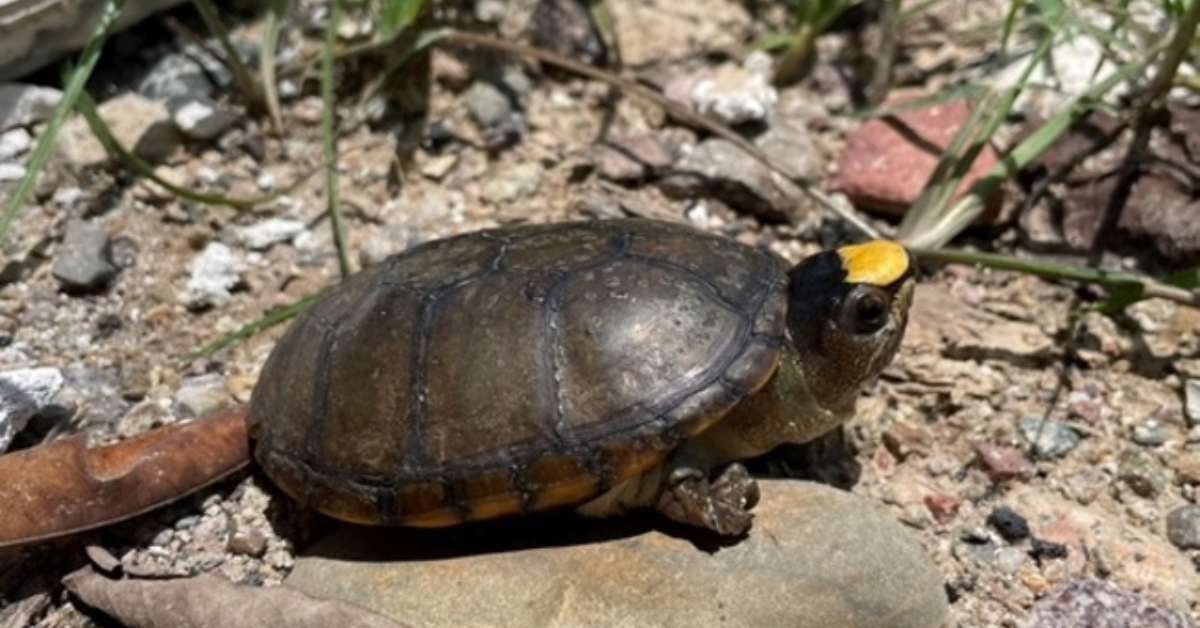
The casquito in this conversation is not a sea turtle. It is a small freshwater mud turtle called Kinosternon vogti, described by scientists in 2018. Adults can fit in a hand, and males show a bright yellow mark on the nose. The species is micro-endemic, meaning it lives in a tiny slice of the world. Records place it in the Bahía de Banderas valley, around Puerto Vallarta, and into southern Nayarit. Field work describes it in small streams, ponds, shallow canals, and seasonal floodplain wetlands. Several of those sites are already degraded by dumping, weeds, and construction debris. Conservation specialists list the species as Critically Endangered, and it is covered by strict trade controls. Its occupied area is extremely small, so each drainage job or landfill can hit hard. In plain terms, the turtle’s home overlaps with the city’s growth footprint. That overlap is why a meeting about habitat protection matters more than another awareness campaign.
The push for coordination is also a response to recent crime. In late 2024 and early 2025, thieves targeted casquito turtles held in a university conservation facility. They used deception and forced entry to get access to the animals. Federal investigators later pursued a suspect in a case tied to theft and trafficking. Those incidents showed how valuable a rare, tiny turtle can become on the black market. They also exposed a practical risk. If animals can be stolen from captivity, they can be taken from the wild. Field teams have reported traps set in nesting and movement areas, often hidden in hard-to-reach spots. When that happens, a local conservation project cannot solve it on its own. It needs permit oversight, site protection, and penalties that make poaching a bad bet. For residents who love Vallarta’s nature but live far from the lagoons, the takeaway is simple. A stagnant puddle behind a fence may be a species’ last address.
What happens next will determine whether this meeting becomes a turning point or a paper trail. A real strategy would start with clear maps of the remaining wetlands and the drainage links between them. It would also set rules for what can be filled, dredged, or fenced, and what must be left alone. Enforcement matters, but so does attention to small daily decisions, like dumping rubble or rerouting a seasonal stream. For expats who rent, build, or buy here, the simplest contribution is to treat wetlands as infrastructure, not wasteland. Ask what flows through a lot before it is paved. If you see a turtle in a canal or roadside puddle, do not keep it. Call the authorities or local conservation groups, and let trained hands decide the safest move. The casquito’s advantage is that it still lives alongside people. Its vulnerability is the same. The city is its habitat.
With information from Meridiano Vallarta, Centro Universitario de la Costa Universidad de Guadalajara, Ciencia UNAM, Chelonian Conservation and Biology