Guadalajara is sketching out a 39-day fan zone that turns its historic center into a World Cup living room, complete with giant screens and nightly programming. Buried in the planning is a second storyline that matters to coastal residents: Puerto Vallarta is being positioned as Jalisco’s oceanfront counterpart, with public viewings and themed experiences planned along the bay. What will be official, what will be local, and how early should fans lock in plans? The next few months should start answering that.
Guadalajara’s fan zone is built for the full 39 days
Guadalajara is treating the 2026 World Cup as a citywide festival, not just four match days. Plans for the FIFA Fan Fest place the main viewing area in Plaza de la Liberación. It sits beside the cathedral, Teatro Degollado, and government buildings. Officials say the plaza is being set up for about 40,000 people at once. The buildout includes a giant screen, lighting, sound, and strong connectivity. The schedule mirrors the tournament itself, running the full 39 days from June 11 through July 19, 2026. State and city leaders are pitching it as a global showcase for Jalisco’s food, music, and public spaces. They estimate the state could receive roughly 2.5 to 3 million visitors during the tournament. The message is clear: you do not need a ticket to feel inside the event. Organizers are also preparing a large volunteer corps to handle visitor assistance, accessibility, and basic crowd guidance. For residents, it signals a long season of street closures, pop-up vendors, and nightly foot traffic in the center.
How the downtown circuit is expected to work
Guadalajara’s design disperses the crowd rather than bottling it into one square. Plaza de Armas is set to be the food hub. Organizers want it to showcase both classics and modern Jalisco cooking. Paseo Fray Antonio Alcalde is planned as the corridor for official activations. Think interactive games, sponsor pop-ups, and official merchandise stands. Teatro Degollado and nearby stages are being framed for cultural shows. The idea is to make match day feel like a downtown festival. Flags and special lighting are expected to stitch the route together at night. The main plaza is also meant to flip into a concert venue after matches. State officials have talked about free headline shows, including a Maná date on June 17. Another mass concert is being discussed with Alejandro Fernández, with timing still open. Between matches, families can expect sports exhibitions and kid-friendly activities. Officials have suggested daily attendance could reach about 65,000 people. That makes timing as important as enthusiasm, especially for Mexico games. Expect checkpoints, bag rules, and a family-forward tone once you are inside.
Puerto Vallarta’s oceanfront public viewings take shape
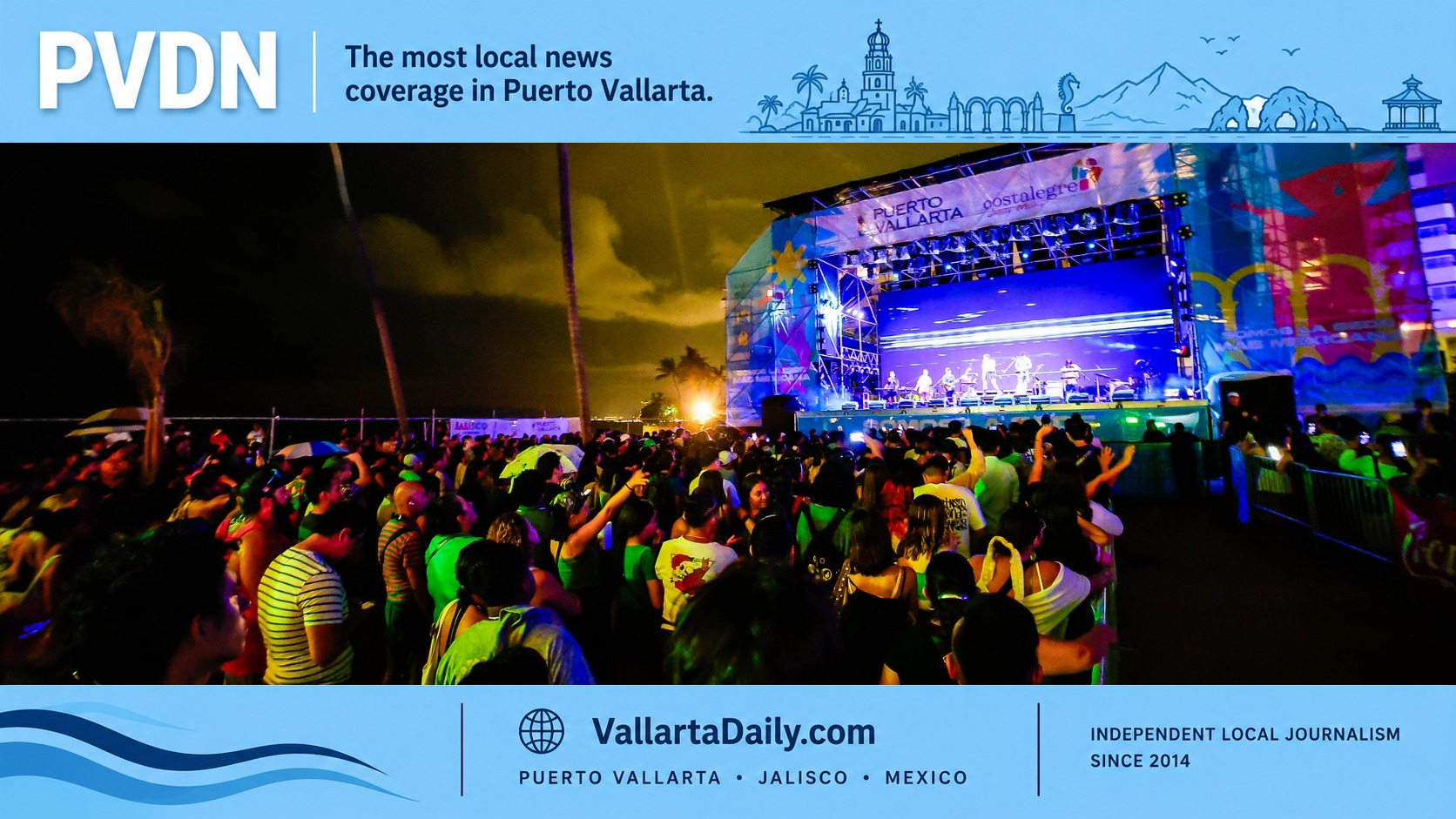
Not every World Cup story in Jalisco ends in the stadium district. Planning also points to Puerto Vallarta, where officials want a parallel public viewing experience on the waterfront. The concept is simple: big screens facing the bay, a festive perimeter, and programming that borrows from the host-city playbook. Organizers have described concerts, local food, artisan showcases, and family activities around the match broadcasts. The city is being promoted as the state’s World Cup beach. It is a place to decompress between games in Guadalajara and beyond. For Vallarta residents, the promise is also practical. That matters for anyone who calls Vallarta home year-round. You could watch a midday match without hunting for a crowded bar or paying a cover. What remains unclear is scale. Authorities have not published a single confirmed beachfront site or a full calendar. Still, planners have used the phrase frente al mar. It points to the Malecón and other open coastal spaces.
What expats should plan for now
If you live in Puerto Vallarta, the early takeaway is not to wait for an official label before planning. The tournament lands in peak summer travel season. Even a modest public viewing program will pull visitors toward the waterfront. Flights will tighten around big match dates, and room rates usually climb when cities advertise special programming. Local businesses will feel it first, from sports bars to grocery delivery. For residents who would rather avoid the crush, it helps to treat match days like holiday traffic days. Run errands early, and lock in dinner plans before the week gets busy. Public viewings may be the easiest way to join the atmosphere. They let you skip stadium prices and long travel days. Expect security rules that look more like a concert than a casual plaza visit. Bags may be searched, glass may be restricted, and entrances may close when capacity is reached. Heat and sudden rain are part of June and July, so comfort will matter as much as team colors.
What to watch as details firm up
Guadalajara’s blueprint is detailed enough to picture a full day. You can move from lunch in Plaza de Armas to the main screen in Plaza de la Liberación. Puerto Vallarta is still at the promise stage, but the direction is unmistakable. Officials are talking about an oceanfront version of the same idea, built around giant screens and curated programming. The next milestones should be municipal. Watch for permits and road-use plans. They will show if Vallarta gets one signature venue or several nodes. Timing will matter, too. The tournament opens on June 11, and Guadalajara hosts Mexico’s group match on June 18. Those dates could drive travel surges across the state. Security planning is also moving in parallel, with talk of bilingual policing and staff training tied to inclusion and tourism. For expats, the smartest approach is to treat this as a rolling announcement cycle. The fan experience is being designed now, but the practical details will decide whether it feels effortless or chaotic.
With information from Líder Empresarial, Milenio, El Economista, Global Media, Reuters, Federación Mexicana de Futbol