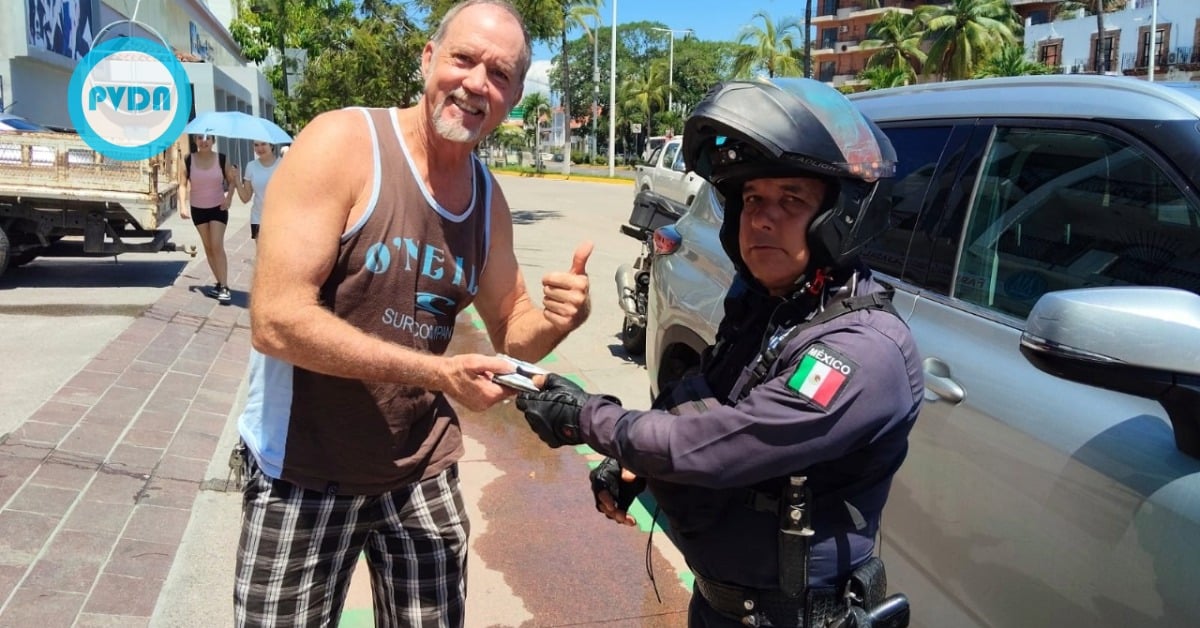
A visitor feared his cash and IDs were gone for good after losing his wallet in Puerto Vallarta’s historic center. Minutes later, a municipal officer with the city’s Jaguar Group tracked him down and handed everything back—cash, documents, and some peace of mind. The quiet act reveals something significant about how the city addresses everyday problems for residents and visitors. Here’s how that return unfolded, why it matters, and what to do in Vallarta if you misplace something important.
Puerto Vallarta police
The story is simple and human. Municipal officer Salvador Beltrán López found a wallet on Guatemala and Bolivia streets in downtown Puerto Vallarta, reported it, located the owner, and returned it. The owner, identified as Joseph Clifton, thanked the officer and the department. The wallet held 9,500 pesos and personal IDs.
The location matters. Guatemala and Bolivia are a busy corner near the core of the old town, where foot traffic is heavy and small lapses—like a wallet left on a bench—are common. That an officer not only reported the find but also personally reunited the owner and property is the policing that residents expect and visitors remember.
A small act with outsized civic value
Honest stories are easy to oversell. Still, they carry weight in a city that depends on visitor trust and locals’ sense of order. Puerto Vallarta’s public safety department stresses day-to-day conduct as much as big operations, and the Jaguar Group—often cited in recoveries and street-level patrols—sits at the practical edge of that promise.
Legally, the act also lines up with Jalisco’s rules on lost property. State civil law says anyone who finds a lost item must deliver it to municipal authorities within three days; the city then follows notice and return steps. An immediate, same-day hand-back is even better, as it cuts red tape and anxiety for the person who lost it.
What visitors should know if something goes missing
Puerto Vallarta has several tourist-facing safety tools worth knowing before trouble strikes. The city operates a 24/7 police and traffic line, alongside 911, and also offers a WhatsApp channel for quick contact. The “Botón Turístico” emergency totems—about 120 of them across key corridors—connect people directly to monitors for fast help. These aren’t headline-grabbing gadgets; they’re basic infrastructure that helps minor problems stay small.
If documents are lost, people can also file an “extravío” report with the Jalisco state prosecutor online. That record often speeds replacement or cancellation of credentials. It’s a mundane step, but it prevents a bad day from turning into weeks of bureaucratic cleanup.
Safety perception, in context
Perception surveys are not the same as crime stats, but they shape how people feel on the street. In the most recent national urban security survey, Puerto Vallarta ranked among Mexico’s cities with lower perceived insecurity—about 27.3% in the June 2025 release—placing it in the country’s top tier and the only beach destination in that group. Individual incidents still happen, but the city’s day-to-day experience trends more stably than many peers.
That’s why an uneventful return of a wallet matters. It reinforces habits that keep a tourist city running: officers following procedure, residents reporting finds, and visitors learning where to turn when something goes wrong. These quiet, routine moments—the ones that never go viral—are what people remember when they decide whether a place feels safe enough to return.