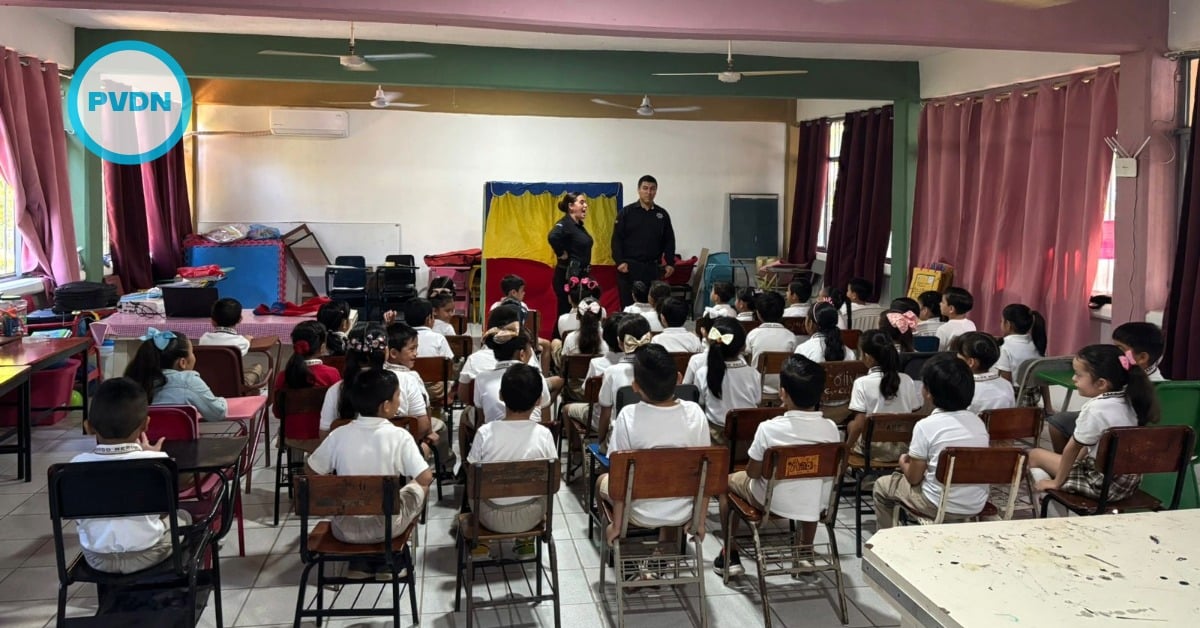
State and city teams brought a coordinated round of prevention classes to two Puerto Vallarta schools, giving students practical tools against phone extortion, risky social media behavior, dating abuse, trafficking, and recruitment. The sessions also connected families to reporting lines and local help. It’s a small program with high stakes as scammers and recruiters increasingly target teens online, and schools look for simple ways to keep kids safer. The early focus is awareness, confidence, and knowing when to ask for help.
Students at Amado Nervo Elementary and General Secondary School No. 60 took part as the Jalisco State Center for Social Prevention joined Puerto Vallarta’s Public Security Department and local liaisons from Cabo Corrientes and Tomatlán. The approach was simple and direct. Officers and prevention staff spoke in plain language about how extortion schemes work, what to do when a strange call or message arrives, and how to protect a friend who may be in danger. The message was consistent: hang up, don’t share, report, and lean on trusted adults.
Puerto Vallarta prevention workshops
The workshops fit inside Jalisco’s long-running push to reduce everyday risks through community work, not only patrols. The state’s social prevention program prioritizes school spaces, family involvement, and early help before violence takes root. That framework is now reaching classrooms on the North Coast through simple activities, short talks, and guided conversations tailored to each age group. It’s less about lecture and more about practice: how to spot a grooming attempt, how to exit a toxic relationship, and how to keep a phone from becoming a trap. State social prevention programs offer the backbone, and cities adapt them to local needs.
This week’s sessions also acknowledged a changing threat. Extortion no longer arrives only as a menacing voice. Criminals use friendly tones, social media profiles, or fake emergencies to pressure teens and parents. In October, the Jalisco prosecutor warned of a new tactic spreading through gyms, salons, and even schools, where extortionists first pose as helpers to build trust before the shakedown starts. That’s why students practiced quick refusals, safe replies, and how to loop in adults fast. The rule is simple and repeatable: stop, verify with someone you trust, and report.
The school meetings did not hide harsher realities. Teachers and facilitators talked plainly about dating violence, harassment, and the ways social media can magnify harm. They tied every warning to a path out: where to go in school, who to call at city hall, and when to use 911 or 089. They also gave space for quieter questions. Teens asked how to help friends being controlled by a partner, or how to respond when an older teen promises money for “easy work.” No one pretended those pressures don’t exist in beach towns filled with visitors and seasonal jobs.
The bigger picture in Jalisco
Numbers help explain why prevention belongs in homerooms, not only on patrol routes. Official crime data show extortion remains widely underreported nationwide, but reports have climbed in recent years. Analysts estimate only a small fraction of cases reach an investigation, which means schools and families are often the first and best line of defense. The state’s open-data portal lets anyone track trends by month and by crime, a resource teachers can use to keep lessons current. Official crime data and independent analyses underline the stakes for families here on the coast.
Puerto Vallarta, for its part, isn’t starting from zero. The city has run school-focused activities for years, including its “Mi Amigo Policía” summer program, hosted at Secondary School No. 60. Those sessions blend fun with fundamental skills and build the familiarity that makes today’s classroom talks land. When a uniform shows up now, it’s a known face, not a stranger with a lecture. That trust is the quiet engine behind this week’s workshops.
Parents often ask what they can do tonight, not next semester. Facilitators kept it practical. Keep phones in shared spaces at home. Agree on a “pause and verify” rule before reacting to money demands. Save key numbers, including the anonymous 089 line. Check in after any strange call or message, and treat shame as a red flag, not a reason to stay silent. And for kids, the core skill is knowing that asking for help is not snitching. It’s staying safe.
As the school year moves on, organizers say the goal is steady contact, not one-off assemblies. Short refreshers, teacher toolkits, and parent chats keep the guidance alive. The format will vary by campus, but the aim doesn’t change. When teens understand how schemes start, they are harder to corner. When families know where to call, they report faster. And when schools and police stay present, problems surface earlier, when they’re easier to fix. That’s how a few hours in a classroom can ripple out into safer streets.