Puerto Vallarta sea turtle nesting
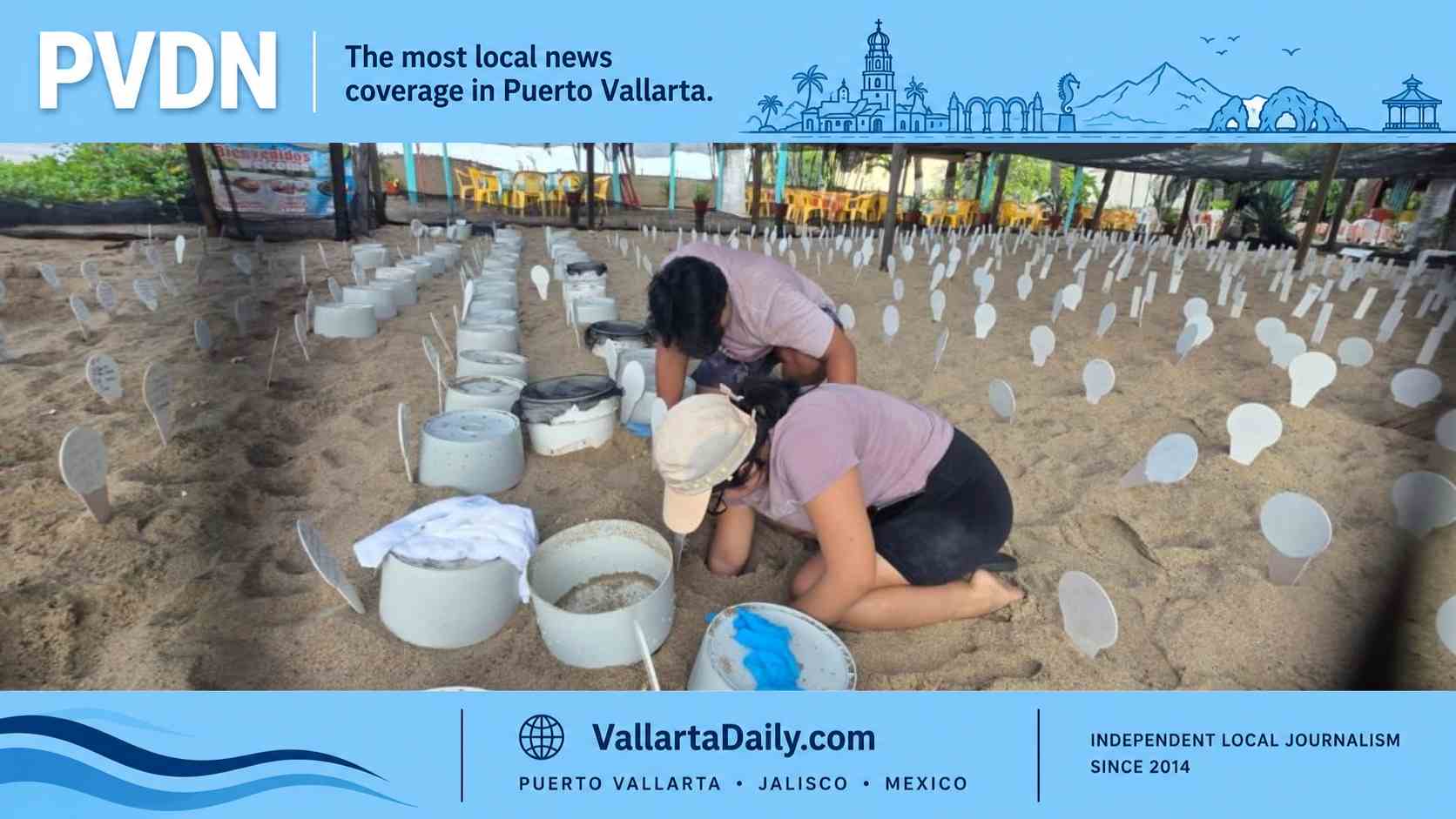
The night work begins when beach umbrellas turn into dark shapes and the tide tugs at loose sand. At Boca de Tomates, teams trained by Nacabe AC fan out with red lights and practiced steps. They are finding tracks almost every shift. Some nights bring more than 30 nests in four kilometers, a pace that signals a rebound after two thin years linked to La Niña.
Carlos Alberto Hernández Mora, director of Nacabe AC and the camp’s technical manager, has watched the curve bend back up. He remembers a record patrol three years ago on the same sands: 64 nests in one night. He does not promise a repeat, but he does expect a strong season.
More news about Puerto Vallarta sea turtle nesting
A season returning to form
The nest surge is not a quirk of one beach. In a good year, between Boca de Tomates, Marina Vallarta, and the municipality, camps and trained staff collect around 4,000 nests along roughly 20 kilometers of coastline. That scale matters. Each clutch moved to guarded corrals avoids trampling, poaching, headlights, and dogs. It turns an uncertain start into a measurable chance at life.
Inside the hatcheries, the results show up in the numbers. Managers report a hatching rate above 92 percent. That outperforms what happens when eggs stay in place on busy beaches, where success ranges from the high seventies to the low nineties and drops fast with human pressure. The camp method is not flashy. It is consistent, repeatable, and built on protocols that have been refined for years.
What changes on a crowded beach
Crowds alter sand compaction, light, and noise. Patrols adapt by starting early, rotating routes, and moving clutches quickly to marked corrals. The system only works when the people doing the work know the protocols. Hernández Mora stresses ongoing training for municipal personnel, because staff rotation is common and a single missed step—like mishandling a clutch or misreading a tide window—can wipe out gains.
That training extends beyond technique. It builds a culture where each team member understands why a red light is safer than white, why footprints matter near the high-tide line, and why relocation requires speed but never rough hands. In a high-activity season, the difference between good practice and guesswork shows up in hatch counts weeks later.
The human factor
Tourists rarely mean harm. A flash meant for a keepsake blinds a turtle for a second. A curious child cups a hatchling for a photo. Small choices add up on a beach that hosts thousands of nests in a strong year. The guidance is simple for a reason. Keep your distance. Use the night sky, not your phone, for light. Choose awe over contact. If you want to help, make a call, not a commotion.
The camp’s confidence this year rests on that partnership. Patrols can move eggs and monitor corrals. They cannot control every step on the sand. The rebound after La Niña hints at what the bay can produce when people and policy row the same direction. It is not just a win for biology. It is a win for a city that sells sunsets and needs its beaches to be alive, not only scenic.
Looking ahead
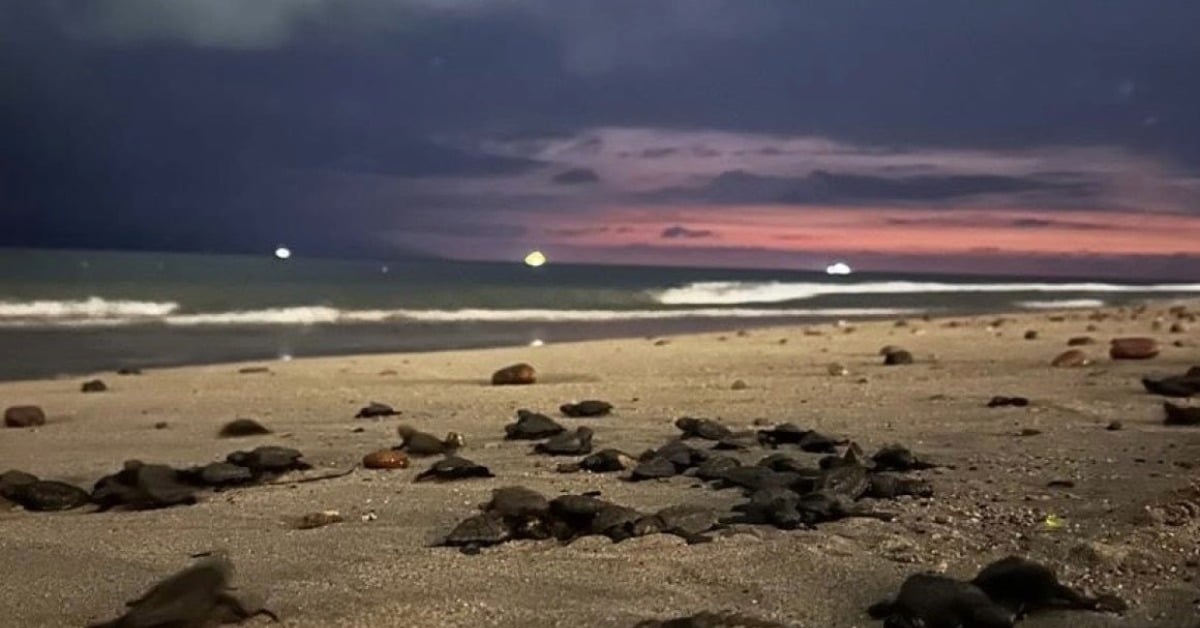
Peak months will test capacity. A stronger season means fuller corrals, longer patrols, and more moments when a single call to 911 can save a clutch. It also means more chances to turn visitors into allies. The work is local, patient, and repetitive by design. That is how you get from a nest dug in darkness to a hatchling hitting foam. It is also how you sustain the return now unfolding on these twenty kilometers of sand.
If the pace holds, Boca de Tomates could approach those standout nights again. Whether it does or not, the measure that matters most is simple: hatchlings crossing wet sand under a moon that needs no flash. When that happens by the hundreds, a season becomes a story worth telling—and protecting.