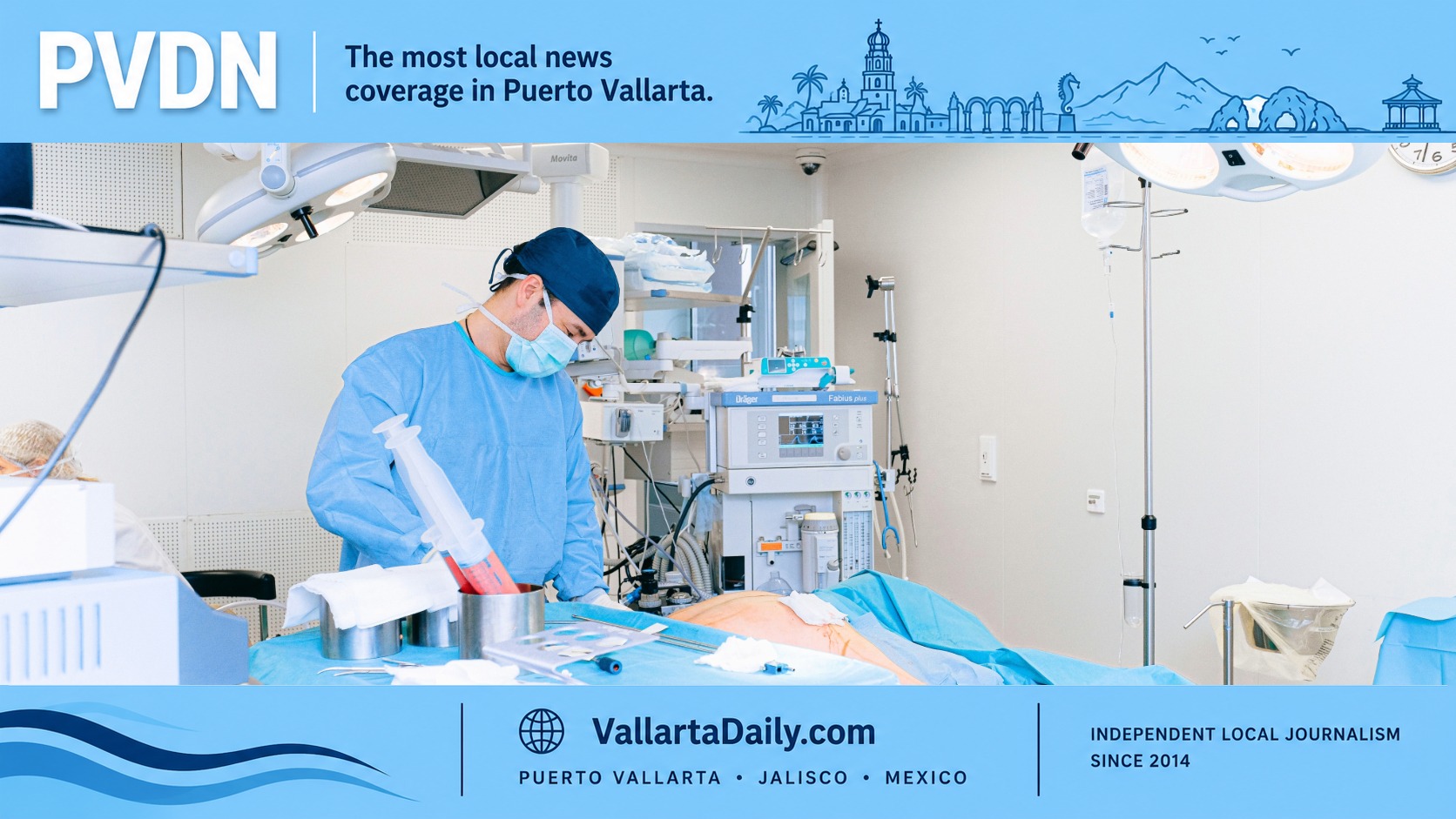
Puerto Vallarta, Jalisco, June 26, 2026 – Puerto Vallarta has begun work on a medical tourism “excellence” catalog aimed at identifying private healthcare providers with verified credentials, as the city’s health, tourism, and business sectors try to bring more order to a fast-growing part of the local economy.
The project moved forward this week after local authorities, doctors, hospital representatives, and business leaders agreed to hold working sessions on a proposed Catálogo de Excelencia de Turismo Médico, a tool intended to classify clinics, hospitals, physicians, and support services related to medical travel in Puerto Vallarta and Riviera Nayarit.
The announcement came during the presentation of a new edition of MedTravel, a Puerto Vallarta-based medical tourism platform focused on connecting patients, providers, hospitals, and other service partners in the region.
A catalog, not a medical license
Local reports on the agreement describe the catalog as a means of identifying providers that meet quality, ethics, and safety standards. The stronger version would help patients sort through a crowded market of hospitals, specialists, recovery services, medical facilitators, and aesthetic providers.
I would not treat the catalog as a substitute for checking credentials. Not yet. The criteria have not been published, and officials have not announced a launch date, an inspection process, an appeals system, or a public database.
That distinction is important because medical tourism often blends healthcare, lodging, transportation, translation, recovery care, and marketing. A polished website or a package price is not proof that a doctor is legally qualified to perform the procedure being offered.
Patients can already verify several basics on their own. Mexico’s Registro Nacional de Profesionistas allows searches for professional licenses. The CONACEM site allows patients to check whether a specialist is currently certified through the national medical specialty council system. For plastic, aesthetic, and reconstructive surgery, the Mexican Council of Plastic, Aesthetic, and Reconstructive Surgery maintains a certification directory.
Why the project is being built now
Puerto Vallarta has promoted medical travel for years, and PVDN covered earlier efforts when Jalisco prepared to promote medical tourism in Puerto Vallarta more than a decade ago.
Private care in Puerto Vallarta now serves several overlapping groups: medical travelers, retirees, long-stay homeowners, tourists who need care while visiting, and locals who use private clinics for faster access. A medical tourism catalog could help organize that market, but only if it is transparent enough to separate verified providers from aggressive marketing.
The local push also comes as medical and aesthetic procedures in Mexico face more scrutiny. Federal health officials have warned that some programs marketed as “master’s degrees” in cosmetic surgery do not authorize doctors to perform plastic, aesthetic or reconstructive surgery. COFEPRIS and health education authorities have urged patients to verify professionals’ licenses, specialty training, and authorization with the relevant facilities before undergoing procedures.
Puerto Vallarta benefits from private hospitals, direct air access, and a hospitality network that can support recovery stays. But those same advantages can attract weak actors if promotion outpaces oversight.
How patients can check credentials now
Until the catalog is public, patients should treat credential checks as part of the procedure rather than an optional step.
A safe starting point is asking for the doctor’s full legal name, professional license number, specialty license, current board certification, and the name of the facility where the procedure will take place. Then, verify those details through official portals before paying a deposit.
For surgical or invasive procedures, the facility should be able to explain its emergency protocols, anesthesia team, hospital privileges, recovery plan, and follow-up care. Patients should also ask who handles complications after departure, especially if they return to the United States or Canada shortly after surgery.
Medical facilitators and recovery services should be checked with the same care. A concierge can help with language, transportation, and logistics, but a facilitator is not a substitute for a licensed physician or hospital. The catalog should make that difference clear.
The local health economy behind the plan
Puerto Vallarta’s tourism office already presents the city as a comprehensive destination, listing hotels, restaurants, tour providers, hospitals, spas, and other visitor services in its official destination directory. The municipal tourism department also lists visitor assistance and tourism promotion as part of its public role.
Medical tourism adds a different layer because the trip is built around risk, recovery, and trust. A patient may travel with a partner or family member, stay longer than a leisure tourist, and spend across hotels, restaurants, pharmacies, transport, and private care.
That is one reason health-sector leaders are now pushing organizations. A credible catalog could help patients find verified options and help strong providers stand apart from lower-quality marketing.
It also arrives while Puerto Vallarta’s public healthcare capacity is under discussion. The planned Civil Hospital of the Coast is a separate public project, but both stories point to the same larger shift. Healthcare is becoming part of Vallarta’s infrastructure conversation, not just a private service within tourism.
Puerto Vallarta has the ingredients to compete in medical tourism: air connectivity, private hospitals, bilingual providers, hotels suited for recovery stays, and a large population already using private care.
If the new catalog gives patients a reliable way to check who is qualified, where procedures are performed, and how safety standards are reviewed, it could become more than a marketing project. It could become a practical filter in a healthcare market that badly needs one.