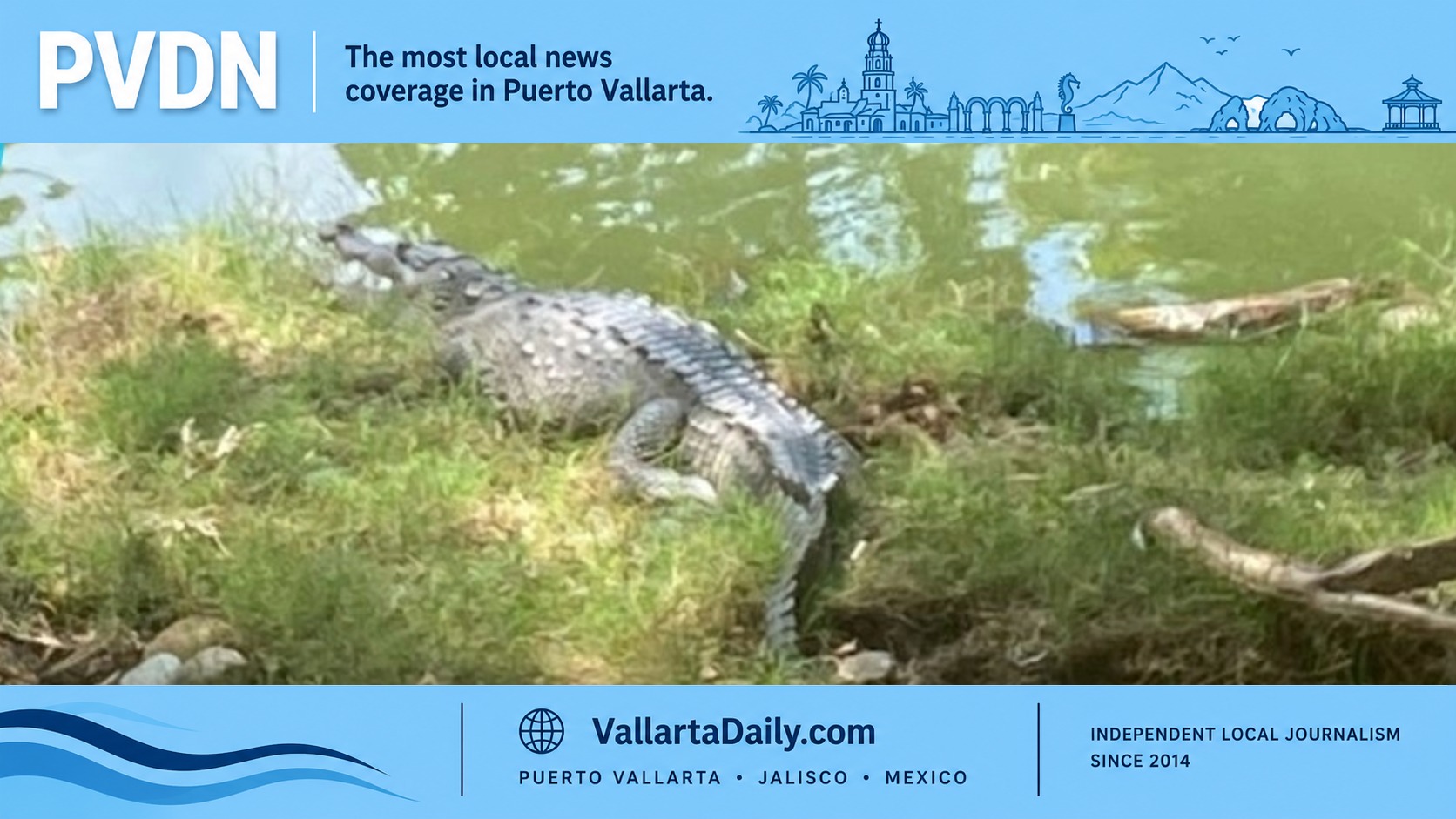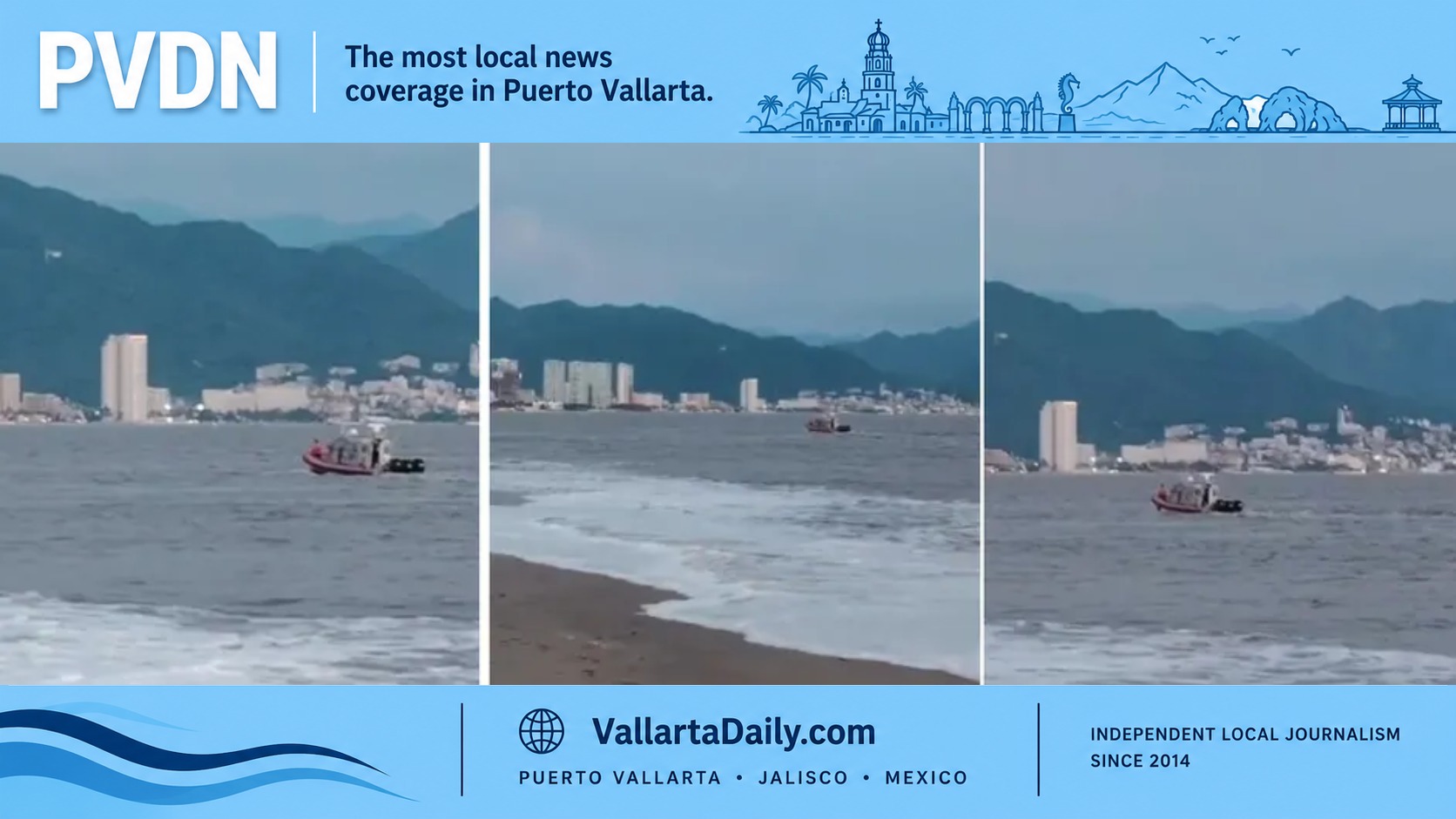
Puerto Vallarta, Jalisco, June 27, 2026 – Search teams continued looking for a 28-year-old Mexican tourist after witnesses reported that a crocodile dragged him into the sea Friday evening from the beach in front of the Marriott hotel in Marina Vallarta.
The report came in around 6 p.m., prompting a search involving Puerto Vallarta Civil Protection and Firefighters, Jalisco Civil Protection, municipal lifeguards, and the Navy. The man’s identity had not been released by authorities as of the latest confirmed reports.
Witnesses told emergency crews the animal pulled the man away from shore. Puerto Vallarta Civil Protection director Misael López Muro said the account was still being treated with care because specialists described the reported behavior as “very unusual” for a crocodile.
Search focused on Marina Vallarta shoreline
The search began along the beach in front of the Marriott and extended through nearby coastal areas. Jalisco Civil Protection said crews were working both the shoreline and surrounding zones, with support from federal and local agencies.
By late Friday night, the man remained missing. Early Saturday reports still listed him as not located, and search work was expected to continue through the overnight hours.
We are not publishing the man’s name because authorities have not released it, and there has been no public confirmation that his family has been notified.
Warning signs were already posted in the area
Civil Protection said the beach area has permanent signs warning about crocodiles. A warning flag was also in place to signal the risk to beach users.
In Puerto Vallarta’s beach flag system, red means entering the water is prohibited, while purple signals potentially dangerous wildlife. City beach reports earlier this month also reminded people to call 911 if they see wildlife in recreational areas.
Crocodiles are part of the city’s coastal map
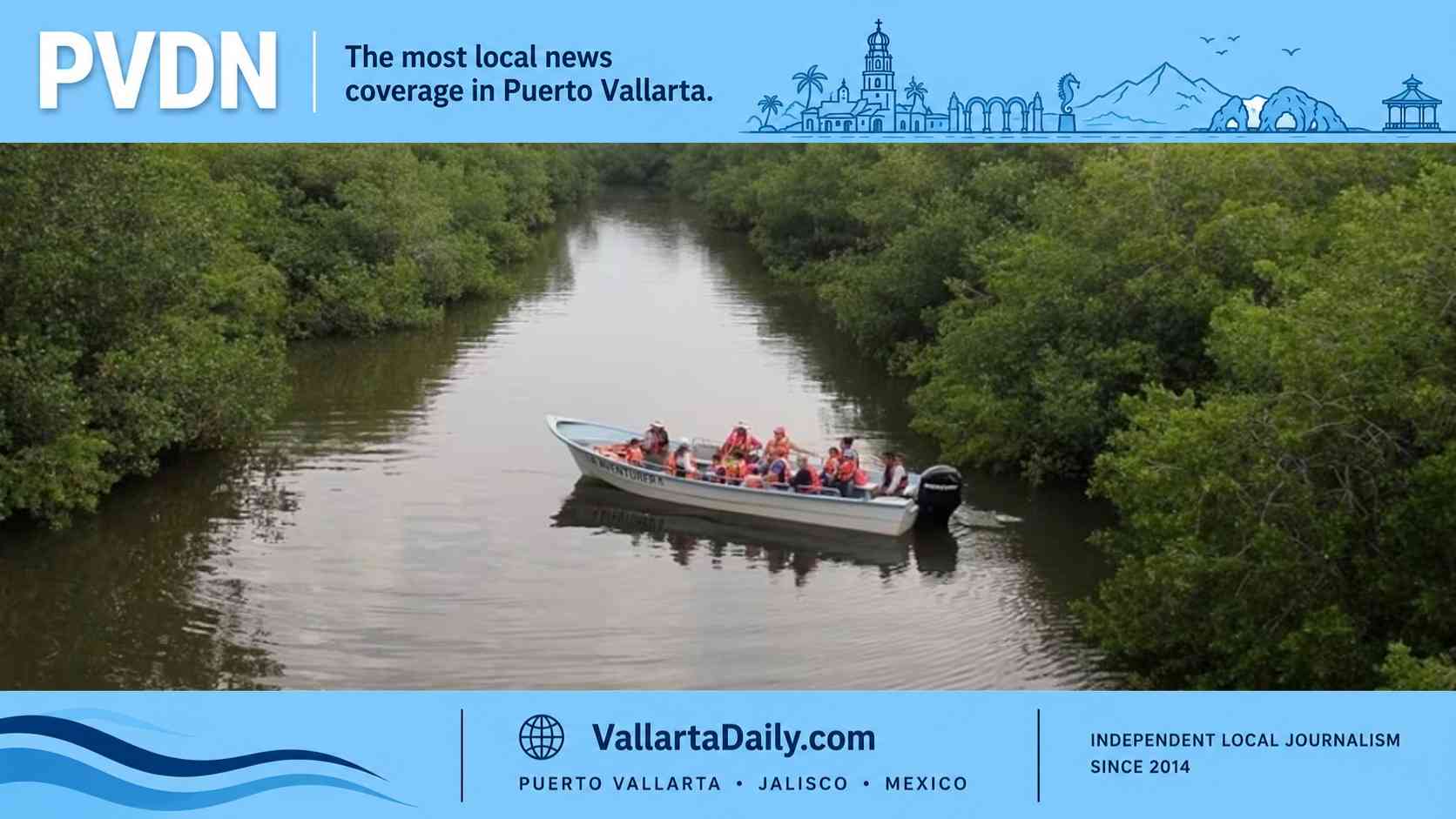
Puerto Vallarta is built around wetlands, river mouths, canals, and mangrove systems. Marina Vallarta and the North Hotel Zone sit near El Salado Estuary, a protected urban estuary known as a habitat for American crocodiles.
University of Guadalajara crocodile specialist Pablo Hernández Hurtado has described Puerto Vallarta as a transit zone for crocodiles, especially as old wetland routes have been reduced by urban growth. He said crocodiles may move through the sea when estuaries and channels no longer provide the same routes they once did.
The American crocodile can live in brackish coastal habitats, including mangroves and coastal lagoons, and has been observed entering the sea. The species is also listed in Mexico under special protection.
Safety steps after a sighting
Anyone who sees a crocodile near the beach should leave the water, move away slowly, keep children and pets back, and call 911. Do not approach the animal, throw objects, try to take close photos, or assume it will stay in one place.
PVDN’s recent guide on what to do when you see wildlife in Puerto Vallarta is worth keeping handy during the rainy season, when animal movement around rivers, canals, and beaches can increase. PVDN also covered how rainy season pushes crocodile watch to bay beaches and why Puerto Vallarta lifeguards are training for crocodile encounters.