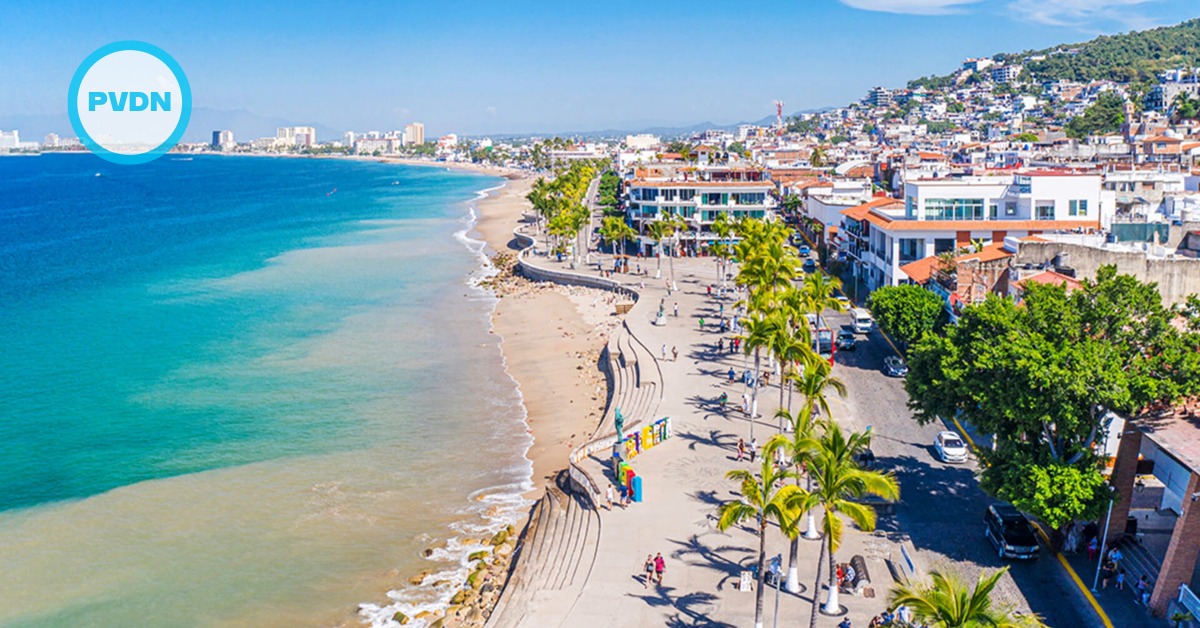
Officials signal limited vehicle access may return to Puerto Vallarta’s Malecón on a trial basis, with strict hours and pedestrian priority.
Puerto Vallarta may be heading toward a careful, limited return of Malecón vehicle traffic, after a public consultation produced a razor-thin result and a lot of political pressure from both sides.
City officials say the Malecón is not likely to swing back to “cars all day, every day.” Instead, the mayor has described a model that would allow vehicles only on specific days and during short time windows, while keeping the boardwalk’s identity as a public, walkable gathering place.
That distinction matters. For residents and expats who live near downtown, the debate is not abstract. It affects noise, safety, access for taxis and rides, and the simple question of whether Centro feels like a seaside promenade or a traffic corridor.
What officials are saying now
Mayor Luis Ernesto Munguía González has said the city is weighing a reopening, but only as an “eventual” measure with tight limits. He pointed to the recent public consultation as the clearest snapshot of local sentiment, then acknowledged the problem: the city does not have a clear mandate either way.
The preliminary numbers described by the mayor show a near tie, with only a slight edge for reopening. In other words, the city is looking at a community split down the middle, with one side wanting easier access for vehicles and business circulation, and the other defending the Malecón’s pedestrian character.
Officials have also emphasized that the consultation is not legally binding. That gives the city room to decide, but it also raises the stakes. If the government moves too far in either direction, it risks a backlash from a large block of residents who feel ignored.
How Malecón vehicle traffic could work
What does “eventual” vehicle access actually mean? Based on what officials have said so far, the working idea is not a permanent reopening. It is a controlled opening that might happen once a week, or once or twice per two-week period, during reduced hours.
The city has also indicated it wants to keep pedestrian mobility as the priority. That suggests any plan would need visible guardrails: clear limits on when vehicles enter, how long they stay, and what areas would be affected.
Right now, the public still has a major information gap. Officials have not published a street-by-street diagram, a timeline, or a final set of rules. Even the mayor has framed the next step as a technical review, tied to the full breakdown of the consultation results.
Those results matter because the consultation did more than ask a simple “yes or no” question. Officials have indicated it also gathered opinions about related issues, including security, patrol presence, and possible access schedules if vehicles are allowed back. That kind of detail is what will shape the day-to-day reality, especially for anyone who walks the Malecón regularly or lives nearby.
Why downtown businesses are pushing for change
This debate is happening while the downtown core is already dealing with disruption. Business owners and merchants in the central areas have complained about the impact of ongoing works near the Malecón corridor and surrounding streets, saying delays and access constraints have hurt sales during a key season.
For some, reopening vehicle circulation is seen as a practical fix. The argument is simple: if cars can move more easily, more people can reach downtown businesses, and the area feels less “cut off” during construction and congestion.
But that logic collides with the Malecón’s other role. It is not just a sidewalk next to the ocean. It is where families gather, where tourists wander, where street performances happen, and where many locals and expats go to breathe when the city feels crowded.
A plan that brings back cars, even occasionally, will have to answer a basic question: does it improve access without damaging what people love about the place?
What happens next
Officials have said the full, official results of the consultation will be released later, with a more detailed look at how residents answered each part of the survey. The mayor has pointed to next year as the moment when the city expects to publish the complete breakdown and use it to shape a formal plan.
For expats, the most useful takeaway right now is that nothing has been scheduled publicly as a permanent change. What’s on the table is a limited test-style approach, paired with future adjustments and added measures in the Malecón area—especially around the sections officials have referenced as priorities for pedestrian flow.
If the city does move forward, the biggest signals to watch will be the first announced operating rules: the exact days, the hours, the specific section affected, and how the city plans to enforce pedestrian safety during any vehicle window. Until those details are in writing, the “reopening” remains a political direction, not a finished policy that residents can plan around.