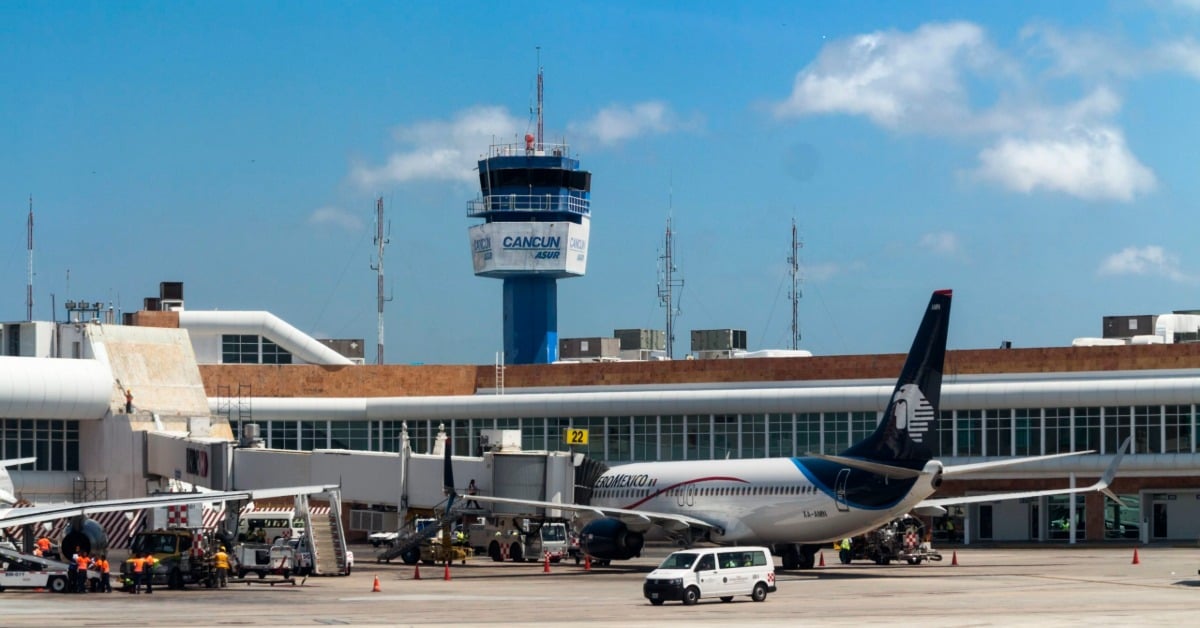
Quintana Roo wants Brazilians back in force, and the state is moving before the rules change. With Mexico set to restore a streamlined e-visa for Brazilian visitors in early 2026, tourism officials say they’re pressing airlines and tour operators to expand service and rebuild a market that slid after visa hurdles returned in 2022. The pitch is simple: make it easy to reach Cancun again, then ride the World Cup lift in the region. What happens next depends on the aircraft, the seats, and the speed at which the e-visa goes live.
Quintana Roo – Brazil flights
Quintana Roo’s tourism secretary, Bernardo Cueto Riestra, says the state will seek more lift to Brazil after Mexico confirmed the return of an electronic visa for Brazilian nationals. The goal is to restore demand and connectivity that weakened under the consular-only visa regime. He framed the change as an opportunity to regain a strategic market and to advocate for similar facilitation with other South American countries that currently require visas.
What changes in February 2026
Mexico’s regulatory agency (Conamer) published the agreement that enables a temporary e-visa for Brazilian citizens entering by air as visitors without permission to work. The start date is set for February 5, 2026, with the option for authorities to suspend the measure for security or public-order reasons. The e-visa follows the July 2025 rulemaking that placed visa authorization under the Foreign Ministry’s new digital system.
The move reverses a 2022 policy shift that ended Brazil’s electronic authorization and forced travelers to apply in person at Mexican consulates—a change widely blamed for depressing leisure demand from Brazil.
Airlines, routes, and a baseline to build on
Direct service between Brazil and Cancun vanished during the 2023 downturn but partially returned when Gol Linhas Aéreas resumed Brasília–Cancún in December 2024, initially twice weekly on 737 MAX 8s—at the time the only nonstop link from Brazil to Cancun. State promoters now say they will meet with Gol and major wholesalers to increase frequencies.
Most Brazilian travelers still reach Cancun via hubs in Mexico City (Aeroméxico) or through Panama City and Bogotá (Copa and Avianca), adding time and friction to leisure itineraries. More nonstop seats would meaningfully change that calculus for packages sold in São Paulo and Rio.
Why the state is pressing now
Local hotel leaders say the visa shift since 2022 has triggered cancellations and heavy losses. They estimate more than US$400 million in lost revenue amid the collapse of direct flights—part of why Cancun-area hoteliers pushed hard for the e-visa’s return.
Traffic data show the slide. Direct arrivals from Brazil to Cancun fell to 81,934 in 2023 from 140,663 in 2022, well below 2019 levels, underscoring how fragile air links became under the consular process. Officials now aim to capitalize on pent-up demand by tying promotions to the 2026 World Cup momentum across North America.
The playbook from here
Quintana Roo’s promotion arm (CPTQ) has scheduled meetings with top Brazilian tour operators—CVC and Orinter among them—and with Gol to lock in more capacity. The team will also court other Latin markets facing visa frictions, while highlighting recent gains in visitor flows to the Mexican Caribbean.
Expect a push around ABAV Expo 2025—Brazil’s biggest travel trade fair—set for October 8–10 in Rio de Janeiro. That’s where state and hotel executives typically announce seat additions and charter programs ahead of the southern-summer peak.
What to watch
The e-visa’s rollout speed and stability will matter. Conamer’s filing makes clear the system is temporary and can be paused, so airlines will weigh that risk before adding aircraft. If policies hold and bookings rise, Brasília–Cancún frequencies could grow, and São Paulo could return to the map.