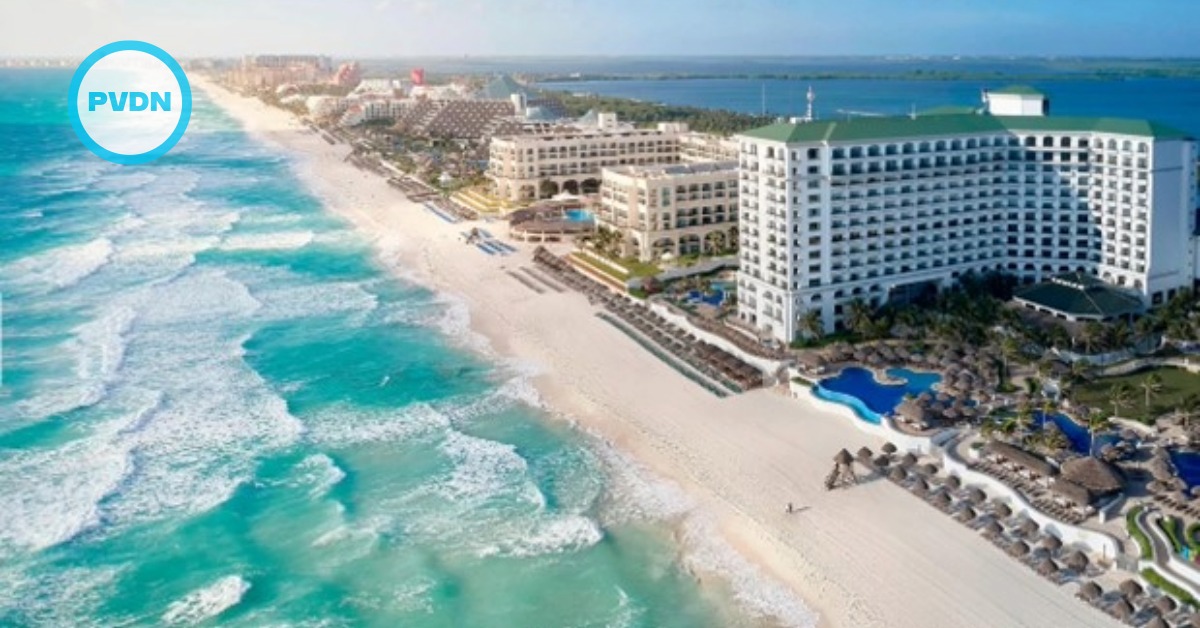
Cancún’s hotel sector is closing the year with a sense of unease it has not felt in a while. After a post-pandemic boom, Quintana Roo hotel occupancy has softened in key markets, especially among visitors from the United States, the state’s main international source of tourists. Industry data show a six percent decline in U.S. arrivals to the Caribbean Mexico region this year, a steeper fall than the national average drop in U.S. air passengers, even as international arrivals to the country as a whole remain near record levels. At the same time, federal tourism statistics report that average hotel occupancy across dozens of major Mexican destinations has slipped by about a point and a half compared with last year, suggesting a broader cooling that feels sharper on the Caribbean coast.
For hotel owners and managers in Cancún, Puerto Morelos, Isla Mujeres, and Tulum, the numbers translate into more empty rooms in shoulder months and heavier discounting to keep staff employed. In Tulum, state figures show occupancy falling from the high sixties last year to below fifty percent this September, one of the sharpest declines in recent years. That shift has turned what was once a scramble for inventory into a tug-of-war for every booking, with local operators saying they are spending more money to secure the same or even fewer guests.
Local industry says it is carrying the load
The most vocal critic in recent weeks has been Jesús Almaguer, long-time leader and now adviser within Quintana Roo’s hotel associations. Speaking to local media, he has warned that the Caribbean Mexico corridor cannot sustain a six percent drop in its U.S. market while competing destinations in the Dominican Republic, Cuba, Aruba, and South America keep running visible promotional campaigns abroad. In his view, the main problem is not the demand for sun and beach holidays, but the absence of a strong national brand pushing Mexico in those same markets.
Almaguer and other business leaders argue that, in practice, hoteliers and state authorities have been left to do the heavy lifting. Since the federal government shut down its national tourism promotion council in 2019 and redirected those funds to flagship infrastructure projects, local trusts in states such as Quintana Roo have raised their own money for marketing. Airlines, hotels, and tourism businesses now co-finance stands at international fairs and pay for their own campaigns in cities like Madrid, Berlin, and London. Hotel associations say those efforts help, but they do not replace the reach of a coordinated national strategy.
That frustration has now been directed squarely at the Sheinbaum administration. Hotel representatives complain that, nearly a year after the new president took office, federal tourism promotion still relies on embassies, occasional roadshows, and the visibility generated by big projects such as the Maya Train, but not on sustained brand advertising for Cancún or the Mexican Caribbean. They insist that local campaigns can keep occupancy high in peak periods, yet leave the region exposed in slower months when a stronger national presence might smooth out the swings.
The hotel sector’s tension with Mexico’s federal government has also spilled into other debates. Business groups in Quintana Roo have criticized recent foreign policy moves, such as the break in diplomatic relations with Peru, warning that sudden political decisions risk key regional markets that the Caribbean coast has spent years cultivating. For many hoteliers, the current dispute over tourism promotion is part of a broader feeling that national decisions are being made without enough consideration of their impact on destinations that depend almost entirely on visitor spending.
Quintana Roo hotel occupancy and Sheinbaum’s response
The federal government rejects the idea that it has abandoned Quintana Roo. President Claudia Sheinbaum has repeatedly highlighted record-high international tourism revenue and growth in domestic travel, arguing that the sector remains one of Mexico’s strongest engines. When reports of a tourism slump in Tulum gained national attention in October, she acknowledged the local downturn and ordered a review of how Jaguar Park and other attractions are being managed, including concerns about access fees and beach entry.
Her tourism secretary, Josefina Rodríguez, has also tried to cool talk of a crisis. Federal officials point out that around fifty percent occupancy in some Quintana Roo resorts during low season is in line with historical patterns, even if it feels painful after the extraordinary peaks seen during the recovery years. They emphasize that demand is shifting inside Mexico as well, with more domestic tourists choosing lesser-known destinations and colonial cities, not only the Caribbean coast. In that reading, Quintana Roo’s softer numbers reflect diversification and seasonality more than a collapse in interest.
At the same time, Sheinbaum’s government has unveiled a large tourism investment portfolio that includes hundreds of projects nationwide, from airports and train stations to urban image improvements and environmental works. Officials frame this as a long-term bet: better infrastructure, they argue, will shore up Mexico’s appeal as a whole, even if it does not look like classic billboard advertising. Hotel owners in Cancún do not dispute the value of airports, trains, and roads; many of them have lobbied for exactly those projects. Their complaint is that guests still need to be persuaded to choose their destination over a rival island or resort, and that kind of persuasion costs money every single year.
The political backdrop is hard to ignore. Ever since the national tourism board was dissolved, industry leaders have warned that competitors would benefit from Mexico’s silence in key markets. Those warnings are now resurfacing in Quintana Roo, where hoteliers see their fears reflected in softer bookings and in airline decisions to reduce capacity on some U.S.–Caribbean Mexico routes. Federal statistics show that American air passenger arrivals to Mexico are down only slightly so far this year, yet the fall in the Caribbean Mexico share is more pronounced, feeding the perception on the ground that the region is losing ground while the country overall still looks healthy.
What comes next will likely depend on whether both sides can agree on a shared diagnosis. Hotel groups say they are ready to keep funding their own campaigns and to sit at the table with federal authorities, but they want a visible commitment from Mexico City that the Caribbean will not be left talking to itself in foreign markets. The Sheinbaum administration, for its part, appears more inclined to respond through targeted working groups, regulatory tweaks, and investment in infrastructure, rather than by rebuilding a large national marketing machine.
In the meantime, Quintana Roo hotel occupancy has become a proxy scoreboard in a wider argument over how Mexico should promote itself abroad. If winter bookings recover as expected and new air routes materialize, the pressure on Sheinbaum’s government may ease. If they do not, the complaints coming out of Cancún this low season are likely to grow louder, and the debate over who is responsible for filling hotel rooms on the Caribbean coast will only intensify.