Officials in Quintana Roo say 20 fake Visitax websites are overcharging travelers. Learn the telltale signs and the safest way to pay.
Quintana Roo officials are warning travelers after identifying at least 20 fraudulent websites that claim to collect the state’s Visitax tourist fee. The pages look official, charge far more than the legal amount, and leave visitors feeling cornered into paying for something they don’t understand—often right before they fly home.
For expats who live elsewhere in Mexico, this is worth a quick share with visiting friends and family. Cancún, Tulum, Playa del Carmen, and Cozumel are common entry points, and scammers know tourists are searching on their phones, in a hurry, and in a language that may not be their own.
What Visitax is and why scammers love it
Visitax is Quintana Roo’s online system for collecting a state fee from foreign visitors. The charge is tied to the state’s “Derecho de Aprovechamiento de Bienes de Dominio Público,” a mouthful that most travelers only encounter after they’ve booked a trip. The state rolled out the payment platform in 2021, and it has leaned on digital payment ever since.
That combination—an official fee with a confusing name, paid online, with a receipt you may need at the airport—is exactly what scammers look for. Travelers don’t always know what the right site looks like, what the right price is, or whether they can safely wait until the end of the trip.
Officials say the legitimate fee is 224 pesos per traveler. The scam sites often charge more than 500 pesos, dressing the difference up as “service fees,” “processing,” or “expedite” charges. The traveler pays, gets a flashy confirmation page, and assumes the problem is solved. In reality, the money may never reach the state, and the “receipt” may be useless.
How these fake sites trick travelers
Most victims aren’t acting carelessly. They’re doing what any responsible traveler would do: searching for the correct form, trying to pay ahead, and hoping to avoid airport hassles.
The scam pages typically borrow the look and language of government sites. They lean on urgency and fear. Some show warnings about fines. Others promise “instant validation” or a “guaranteed QR code” if you pay the higher amount. A few are built to look like a normal checkout, so the traveler doesn’t realize they’ve been routed through a private middleman.
Quintana Roo officials say travelers should verify the web address before entering passport details or card information. Their warnings point to one simple pattern: the official portal is a government domain ending in “dot gob dot mx,” while scam pages often use “dot com” addresses or slightly altered names, such as “visitaxmex dot com,” designed to catch hurried clicks.
Officials also caution travelers not to let anyone pressure them into paying a suspicious site at the airport. The official process can be completed online, and the state has also provided airport assistance for travelers who haven’t paid in advance.
How to pay safely and what to do if someone already paid
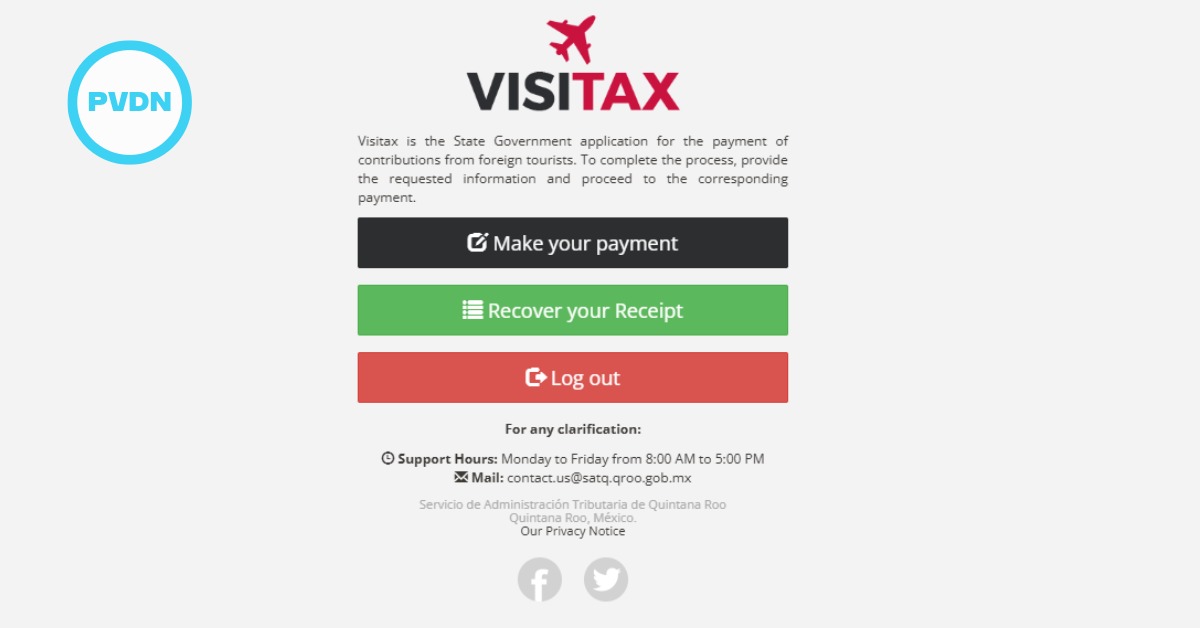
The lowest-risk option is to use the official Visitax portal on the government domain and pay the fixed fee. The process is meant to be straightforward: enter traveler details, pay the official amount, and keep the receipt that includes the QR code.
If someone already paid through a site that now looks questionable, treat it like any online payment scam. Save screenshots and confirmations, and contact the bank or card issuer quickly to dispute the charge. Officials have said the fraudulent pages have been reported for investigation and takedown efforts, so reporting helps build the trail cyber investigators need.
For expats, the practical takeaway is simple. Visitors are most vulnerable to this scam on day one and on departure day. A quick note—“only pay the official Visitax.gob.mx site, and it’s 224 pesos”—can prevent a headache that hits right when people should be enjoying the last hours of a vacation.