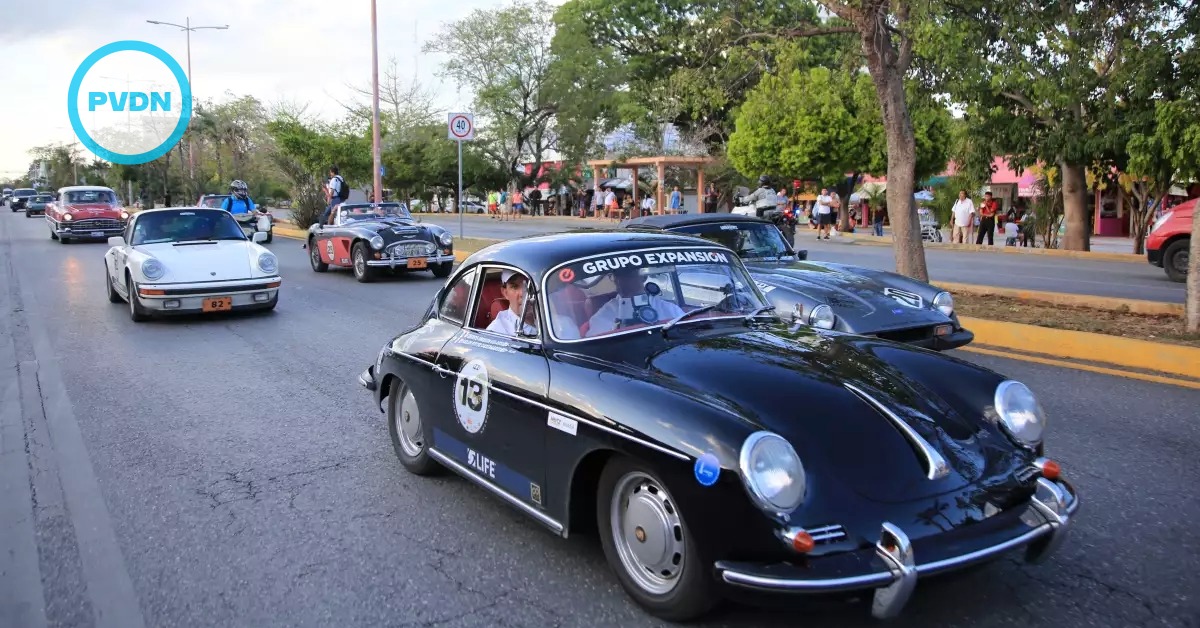
A convoy of polished classics is headed back to the southeast, and this time, Cancún gets the checkered flag. Rally Maya México has locked in its 2026 dates and a fresh route that threads jungle roads, colonial streets, and cenote country before reaching the Caribbean. For residents and winter visitors, it’s one of those rare weeks when a city can feel like an open-air museum—plus a reminder that the rally isn’t only about chrome and stopwatches. Here’s what’s confirmed so far.
Cancún gets the finish line
Rally Maya México is bringing its rolling gallery of classic cars back to the southeast. In 2026, the finish line is set for Cancún. Organizers say the 12th running will take place from February 27 to March 7, 2026. The route crosses Chiapas, Campeche, Yucatán, and Quintana Roo in five stages. This is a regularity rally, not flat-out racing. Teams chase precision and consistency over long stretches on public roads. That format keeps the spotlight on the cars themselves, from restored icons to well-kept survivors. It also turns many overnight stops into a temporary outdoor show. Organizers call it a moving museum that mixes heritage motoring with regional culture. Porsche México is again listed as a major sponsor. For expats, the dates are a clear calendar marker. Late February into early March is when the convoy should pass jungle roads and colonial plazas. It then settles into its Cancún finale, putting the city in the spotlight for the closing days.
The 2026 route, stage by stage
According to the published itinerary, the rally starts in Palenque, Chiapas, and then heads into Campeche. Stage one runs from Palenque with a stop in Escárcega before ending at Calakmul. The opening leg is set at 362 kilometers. Stage two leaves Calakmul, pauses in Champotón, and finishes in Campeche. That day covers 301 kilometers. The third stage is the week-long cultural hinge. It departs Campeche, passes through Acanceh, and visits the Santa Bárbara cenote complex in Homún. The day ends at Chichén Itzá after 354 kilometers. From there, stage four pushes on to Cancún, with a stop at Hacienda Selva Maya. That run is listed at 216 kilometers. The final stage is a loop from Cancún to Puerto Morelos and back. It adds 183 kilometers to close the route. Across five stages, the total distance is 1,416 kilometers. The design links archeological zones, smaller communities, and the peninsula’s main cities. For residents, it is also a practical map showing where the cars are expected to arrive next.
What happens in the closing days
Cancún is more than a final pin on a map. It is the biggest stage on the route, and organizers are framing it as a showcase stop. The rally arrives after days spent inland, so the Caribbean finish offers a sharp change of scenery. It also places the last two stages in Quintana Roo, including the loop to Puerto Morelos. Because the event is built around regularity, the cars tend to travel in an orderly flow. They are not meant to run as a high-speed pack. That matters for anyone who may spot them on the road, or near a hotel entrance, during arrival windows. The official program also stacks key ceremonies toward the end of the week. An awards night is scheduled around stage four, followed by the closing dinner the next day. A final-day golf tournament is also on the calendar. For residents and long-stay visitors, those signposts help narrow down when the rally’s most visible moments may cluster in town.
A rolling museum with a giving streak
Under the chrome, Rally Maya México sells itself on real purpose as much as performance. The organization says each edition includes a social component tied to communities on the route. In its official materials, the rally reports more than MXN 14.3 million in donations across 11 editions. It also lists 1,105 wheelchairs, 300 bicycles, and 80 hearing devices delivered through partner foundations. Organizers say they have funded 10 camps for children and youth living with type 1 diabetes. They also report distributing 100 crutches and other mobility aids. Sponsors and partners are part of that model, including foundations that accompany the convoy. A watch partner also dedicates a share of special-edition sales to social programs. The 2026 route, with stops from Palenque to Puerto Morelos, is built to keep that outreach moving in parallel. For many expats, that community-facing layer is what separates the rally from a simple car parade.