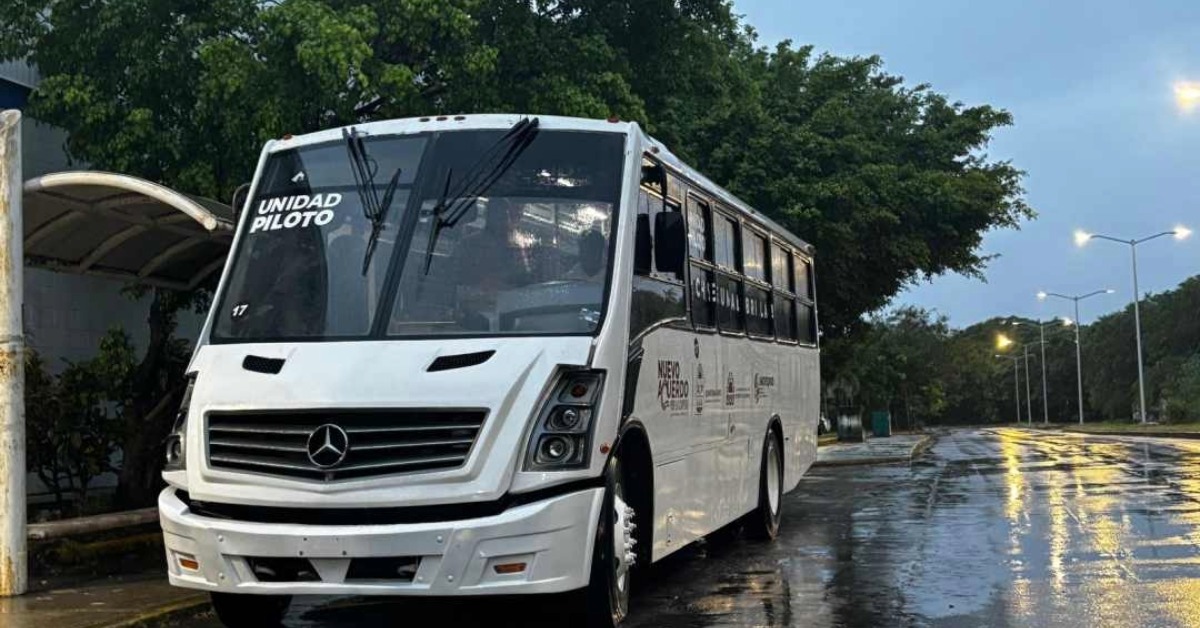
Chetumal’s first mass-transit pilot rolls out today, Monday, August 18. IMOVEQROO calls it Ruta Caribe, and it comes after a month of neighborhood roundtables, surveys, mailboxes, and a public forum with mobility experts. The goal is straightforward: a dignified, efficient, and sustainable way to move across the capital.
Service runs daily from 6:00 a.m. to 10:00 p.m., giving workers, students, and families an option beyond private vehicles and piecemeal rides. The first week, from August 18 to Sunday, August 24, is free. The state is asking riders to test it, then say what works and what doesn’t, before any final design.
Ruta Caribe Chetumal
The pilot connects everyday destinations rather than tourist snapshots. Buses link the Centenario de la Revolución elementary school, El Manatí Water Park, Nohoch Suku’n Gymnasium, the General Hospital and the Carranza Clinic, the Municipal DIF of Othón P. Blanco, and the 34th Military Zone. It also reaches Sam’s Club, the State Health Services (SESA), Las Casitas Park, the 10 de Abril Stadium, the Fire Station, the Chetumal Technological Institute, the Payo Obispo Zoo, and the Armando Escobar Nava middle school.
That chain of stops reads like a map of a real day in Chetumal—school drop-offs, medical appointments, shift work, groceries, and green space. The promise here isn’t sleek buses. It’s time saved and stress reduced.
How the pilot will work
IMOVEQROO frames the route as part of a broader Strategic Mobility Plan for the capital. Planners say this design follows what residents asked for during the consultation period. It’s a pilot by definition, which means schedules, stop spacing, and even alignment can change if feedback shows better options.
The state also positions the project under the New Agreement for the Well-being and Development of Quintana Roo. That policy banner matters; it ties transit to quality of life and safer streets, not just to moving vehicles faster.
What residents can expect on the street
Service starts with a compact fleet. Local reporting indicates five buses will cover the line during the initial phase, which is typical for a pilot in a midsize city. Frequency will define the rider experience as much as the map. The agency hasn’t published headways yet, so the first week will serve as a live test of spacing and layover times.
The alignment leans into essential trips. Linking hospitals and clinics supports predictable access to care. Hitting schools and the Technological Institute ensures students can count on morning and evening runs. Tying in the Fire Station and the 34th Military Zone improves the network’s reach across public services and major employment anchors.
What happens after the free week
The state says rider input will shape the final version. That includes comments on reliability, comfort, and whether the bus actually matches daily travel patterns. Expect adjustments to stop spacing and timetables. Expect data collection on boarding counts, peak times, and on-time performance.
If the route proves its value, officials can scale, add trips, or introduce a second corridor. If it doesn’t, the pilot’s job is to reveal what to fix. Either way, this week is the baseline the city has lacked: a real, measurable test of a bus line designed around daily life in Chetumal.