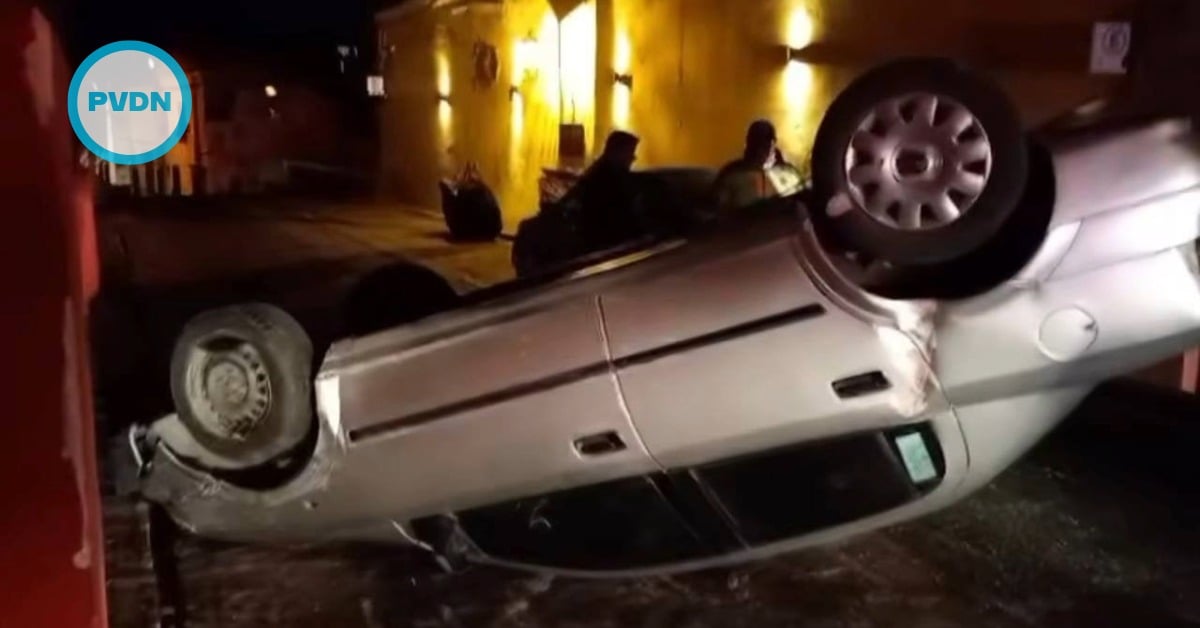
Just before sunrise, a compact car ended up wheels-up on Quebrada, a narrow street two blocks from the Jardín in San Miguel de Allende’s historic core. First responders reached the Puente de los Héroes within minutes and found no life-threatening injuries, but the image of an upside-down sedan on a sleepy cobblestone bridge stopped passersby in their tracks. Early reports suggest the driver struck a parked car and flipped. The scene underscored how tight colonial streets magnify small mistakes into big moments.
San Miguel de Allende woke to an image that didn’t make sense: a compact sedan resting perfectly upside down on Quebrada, the cobblestone climb that crosses the Puente de los Héroes just a short walk from the Jardín. The rollover happened in the early hours of Monday, November 3, and, against the odds, responders reported no serious injuries. According to the first account published by local outlet Periódico Correo, the car clipped a parked vehicle and then flipped 180 degrees, scuffing the bridge walls before coming to rest.
Neighbors described the immediate aftermath as eerily quiet. The street was mostly empty, the city still shaking off a busy holiday weekend. Emergency personnel moved quickly to block the bridge and evaluate the occupants. Images and brief notes circulated on local community feeds overnight indicated a single adult with minor injuries, assessed on scene, and no transport required, consistent with what crews found at the site. The municipal volunteer fire brigade’s page acknowledged a pre-dawn callout to a volcadura (rollover) on Quebrada by the Puente de los Héroes, matching the time and place.
San Miguel car rollover
What happened here is familiar to anyone who drives Centro’s colonial grid. Quebrada is steep and narrow, with stone walls that leave little margin for error. Even at low speeds, a glancing blow can ricochet into something larger. Correo’s initial write-up points to speed and an inexperienced maneuver as probable factors, and the scene—an upside-down compact on a one-lane bridge—tracks with that explanation. No official reconstructive report is available yet, but the pattern matches other recent non-fatal rollovers around town: a quick loss of control, a hard edge, and nowhere for the energy to go except up and over.
The setting matters. San Miguel’s UNESCO-listed historic center is a tight weave of cobblestones and slopes. Streets like Quebrada funnel traffic between stone buildings and short bridges, where curbs and walls act like ramps when hit at the wrong angle. Travel guides and municipal profiles alike warn that Centro’s lanes are narrow and unforgiving—picturesque for walking, tricky for drivers. The core zone’s boundaries even use Quebrada as a reference line on the west side, underscoring how central this corridor is to daily life.
First responders cleared the scene without major disruption, though the upside-down car created a choke point while a wrecker flipped and removed it. That work is standard playbook: seal the bridge, check for fuel leaks, stabilize the vehicle, then rotate it carefully to avoid prying stonework. The Cuerpo de Bomberos de San Miguel de Allende has handled similar calls before, from rollovers on the Libramiento to jackknifed cargo trucks at rural turnoffs, and the measure-twice approach shows in how quickly Centro reopens after small-scale incidents like this. Their feed indicated the pre-dawn Quebrada response, in line with community posts that flagged a single patient with minor trauma.
A narrow bridge and a crowded week
Context helps explain timing as well. The city’s calendar was packed through the first days of November, when visitors and locals share sidewalks for Día de Muertos altars, parades, and late-night events. Even as streets empty before dawn, the carryover from busy nights—parked cars on slopes, delivery vans edging curbs, decorations hugging corners—shrinks lanes that are already tight. It doesn’t take much to turn a routine bump into a bigger scene on a narrow bridge. Public listings show that November 3 carried a full slate of performances and gatherings, following the holiday spike, adding to the ebb and flow around Centro.
If there’s a takeaway, it’s a simple one. Slow down on Centro’s climbs and bridges. Quebrada looks wider than it is, and the Puente de los Héroes invites small misreads, especially in the half-light before sunrise. A parked car inches into the lane; a driver dips a mirror; a stone does the rest. For pedestrians, the morning was a reminder that even a quiet block can change fast—listen for crews, give them space, and take the long way around when tape goes up.
By mid-morning, the bridge had its normal rhythm back. The upside-down car was gone, the only clues a few scuffs on the stone, and retold stories about a surreal picture at dawn. The city moved on, as it usually does, and the lessons—go slow, read the road, mind the margins—remain evident in the cobbles.