San Miguel de Allende joined a nationwide emergency drill this week, but the local exercise was more than a routine evacuation. Across the city, schools, businesses, plazas, gas stations, and other establishments tested how quickly people could move, where they should gather, and how staff should respond during a real emergency. For residents who are new to Mexico, the drill also offered a useful look at how the country treats civil protection as part of daily public safety.
San Miguel Runs 147 Emergency Drills Across the City
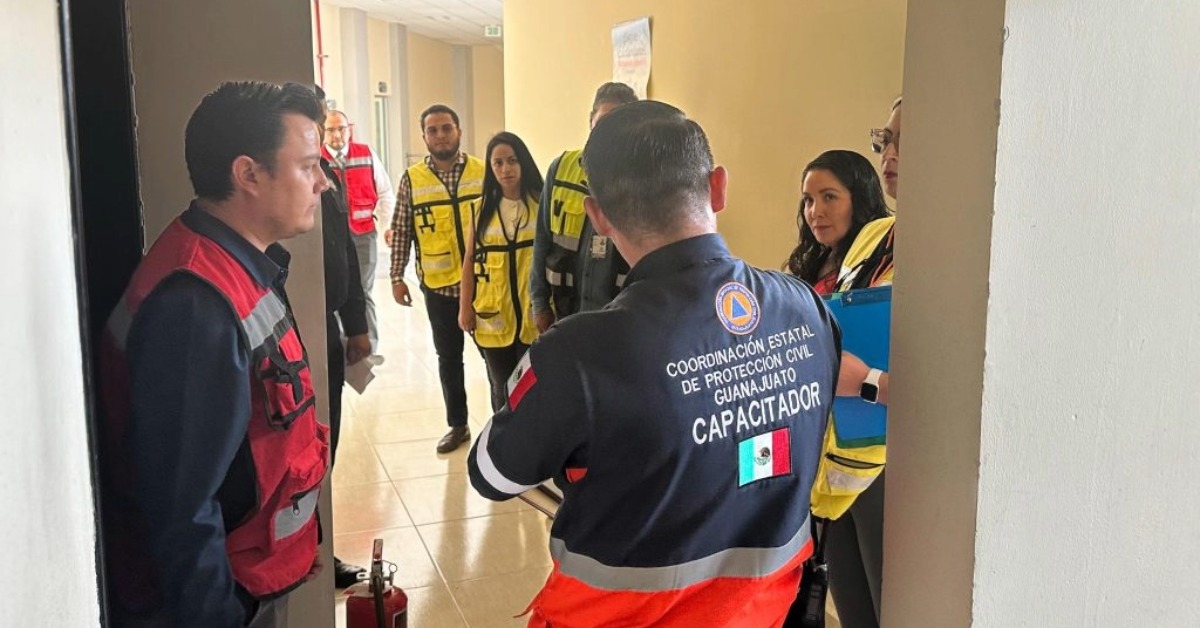
San Miguel de Allende participated Wednesday in Mexico’s First National Drill 2026, with 147 local establishments carrying out evacuation and emergency-response exercises across the city.
The participating sites included businesses, schools, shopping plazas, gas stations, and other public-facing establishments. The local exercises were part of a national civil protection effort intended to test evacuation routes, response times, meeting points, and coordination between staff, brigades, and emergency authorities.
The drill took place at 11:00 a.m. on May 6, the time set for the national exercise across Mexico. In San Miguel de Allende, the activity was visible in several parts of the urban area as people left buildings and moved to designated assembly zones.
A local exercise tied to a national system
Mexico’s national drills are coordinated through the country’s civil protection system. They are designed to prepare people for emergencies before they happen, rather than leaving the first response to panic or improvisation.
For many foreign residents, these drills can seem unusual at first. In Mexico, however, simulacros, or emergency drills, are a normal part of public life. They are held in offices, schools, government buildings, hospitals, shopping centers, and private businesses.
The goal is not only to practice leaving a building. The larger purpose is to confirm that each site has a working plan. That includes knowing who gives instructions, which exit routes are safe, where people should gather, and how emergency teams communicate during a crisis.
What the 2026 drill tested
At the national level, the First National Drill 2026 used different emergency scenarios depending on local risk. In many parts of the country, the main scenario was a major earthquake. Other areas used scenarios such as fires, flooding, hurricanes, tsunamis, structural collapse, or multiple threats.
That approach matters because Mexico’s risks vary across states. Coastal areas may prepare for hurricanes or tsunamis. Central and southern states may focus more heavily on earthquakes. Individual buildings may also use scenarios linked to their own operations, such as fire prevention at gas stations or evacuation at schools.
In San Miguel de Allende, the participation of 147 sites shows how the drill reached beyond government offices. The inclusion of schools, plazas, and service stations made the exercise relevant to daily routines. These are places where residents, workers, students, and visitors may be present during an emergency.
Why drills are treated seriously in Mexico
Mexico’s civil protection culture is shaped by past disasters, especially major earthquakes. The 1985 Mexico City earthquake changed the country’s approach to disaster response and led to the creation of stronger civil protection systems. Later earthquakes, including those in 2017, reinforced the need for regular practice and public awareness.
For people living in San Miguel de Allende, the lesson is simple: preparedness is expected, not optional. Many buildings are required or encouraged to maintain evacuation routes, emergency signage, meeting points, and response procedures.
These exercises also help authorities identify weak points. A drill can reveal blocked exits, unclear instructions, slow response times, or confusion among staff and visitors. Finding those problems during a drill is safer than discovering them during an actual emergency.
What residents may notice during a drill
During national drills, residents may hear alarms, see people evacuating buildings, or notice temporary activity around schools, businesses, and public spaces. In some parts of Mexico, cellphone alerts and loudspeaker systems may also be tested.
The message is usually clear that the event is a drill. Still, anyone unfamiliar with Mexico’s emergency-alert culture may be surprised by the sound or the scale of participation.
In San Miguel de Allende, the drill served as a reminder that public safety procedures apply across many ordinary locations. A resident may encounter a drill while shopping, attending a medical appointment, visiting a government office, or picking up a child from school.
What foreign residents should understand
For foreign residents, the most useful takeaway is to follow emergency instructions even during a drill. Staff may ask people to leave a building, avoid elevators, move to a meeting point, or wait for an all-clear notice. These steps are part of the exercise.
It is also worth learning basic Spanish terms used during emergencies. Words such as “evacuación,” “punto de reunión,” “salida de emergencia,” “protección civil” and “simulacro” are commonly used during these events.
Apartment residents should also know their building’s own plan. That means understanding where to exit, where to gather, whether gas or electricity shutoffs are in place, and who coordinates the building response. In older buildings or mixed-use properties, this information is not always obvious.
A citywide check of readiness
The participation of 147 establishments provided San Miguel de Allende with a broad assessment of local preparedness. It also placed the city within a much larger national exercise involving millions of people and thousands of registered buildings across Mexico.
For San Miguel, the drill was not a crisis event. It was a rehearsal. But rehearsals are how emergency systems improve. Each evacuation, each meeting point, and each response time gives local authorities and building managers information they can use before a real emergency occurs.
The drill also reinforced a practical point for residents and visitors. Emergencies are easier to manage when people already know what to do. In a city with schools, hotels, restaurants, shops, public plazas, and a large international community, that kind of practice is part of keeping daily life safer and more organized.