San Miguel de Allende will once again host Millesime Weekend, but the bigger story is what the event says about the city itself. The new dates point to more than chef dinners and cocktail bars. They reinforce San Miguel’s position as a destination built around premium food, hospitality, and experience-led travel. With Rosewood, NUMU, and Pirules back in the mix, the 2026 edition looks set to test how far luxury culinary tourism has now come to shape one of Mexico’s best-known heritage cities.
A date announcement with a bigger message
Millesime GNP Weekend 2026 is scheduled for May 21 to 24 in San Miguel de Allende. Organizers say this will be the fifth edition. Official event materials say the main venue will again be Rosewood San Miguel de Allende. Other programs are planned at NUMU Boutique Hotel and Pirules Garden Kitchen. Organizers expect more than 3,000 attendees over the four-day program. The mix includes chefs, sommeliers, bartenders, premium drinks, and branded hospitality experiences.
That matters because this is more than a date announcement. For San Miguel, events like this help sell a specific version of the city. The message is clear: heritage, boutique hotels, wine, weddings, fine dining, and experience-led travel. State tourism officials have described this kind of event as a tool for economic spillover, media visibility, and new business for the local industry.
What the 2026 program includes
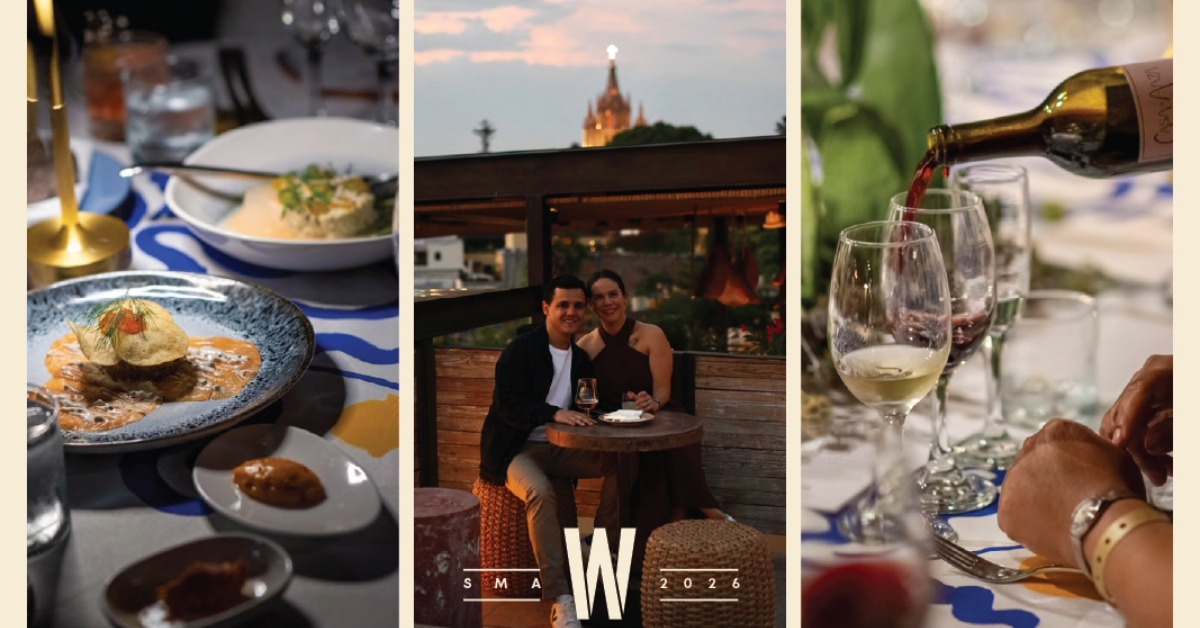
Official material shows two main formats for the 2026 edition. The Garden program at Rosewood is scheduled for May 22, 23, and 24. The organizer’s brochure describes it as live cooking by 20 national chefs. It also promises premium cocktails, top wines, live music, and DJs. The Cenas de Altura program is set for May 21, 22, and 23 at NUMU and Pirules. Those dinners are being sold as six-course tasting menus, preceded by rooftop cocktails, with just 120 guests per sitting.
State tourism promotion around the event also points to a Guanajuato Gastronómico component. That is meant to showcase local talent and regional flavors inside a heavily branded luxury format. That local layer matters because it ties the event to Guanajuato’s own producers, restaurants, and culinary identity, rather than treating San Miguel as only a scenic backdrop.
That structure helps explain why Millesime works in San Miguel. One part behaves like a food festival. Another behaves like ticketed luxury hospitality. The organizer describes the San Miguel edition as less corporate and more social than the Mexico City version, while keeping the same attention to detail. In practice, the format is meant to feel exclusive without being limited only to industry invitees.
Why San Miguel fits the model
The city has been building this profile for years. Official tourism promotion for San Miguel de Allende leans heavily on gastronomy, hotels, weddings, and vineyards, not only on architecture. Its UNESCO World Heritage status gives it global visibility. Its connectivity through nearby Querétaro and León airports adds to that appeal. That makes San Miguel a logical host for events that sell experience as much as food.
This also helps explain why the story matters beyond the event calendar. Luxury culinary weekends are not only about meals. They influence hotel demand, restaurant visibility, and the kinds of travelers a city tries to attract. When organizers, brands, and tourism officials push the same message, the event becomes part of a broader destination strategy.
What to watch next
The dates are now set, but the fuller picture will come later. The next signals to watch are the final chef lineup, the balance between imported prestige and local participation, and the public ticket options. For now, the message is straightforward. San Miguel de Allende is still doubling down on the combination that defines much of its tourism economy: heritage, hospitality, and high-end food experiences.
With information from Millesime GNP Weekend 2026 brochure, Guanajuato Travel, Visit San Miguel