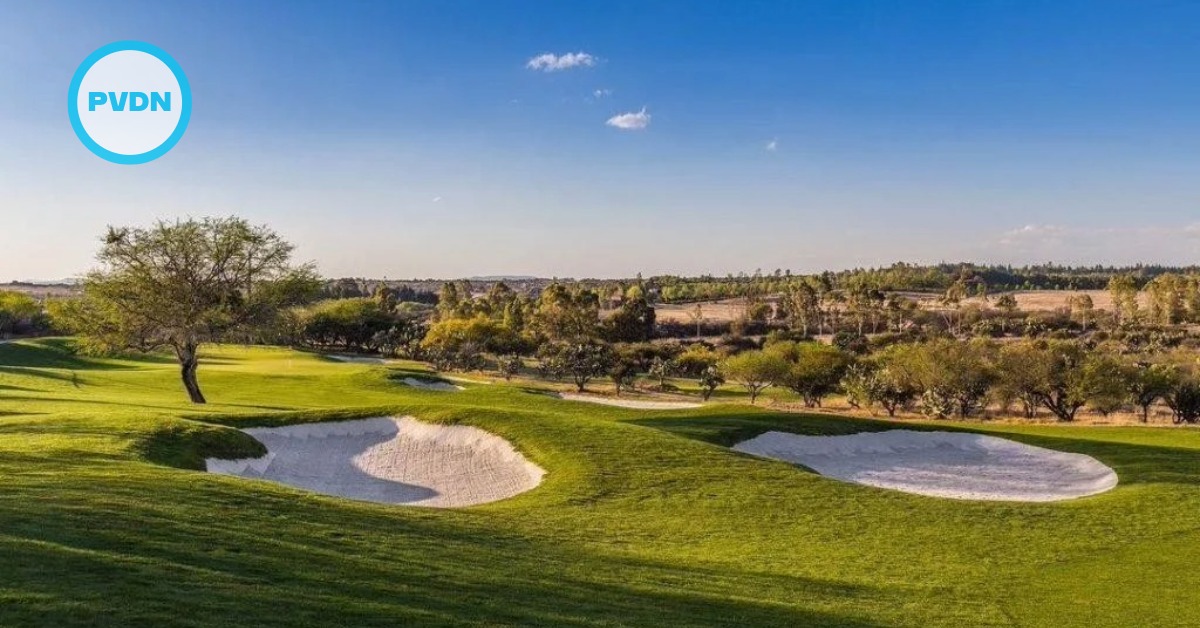
A proposed fourth golf course in San Miguel de Allende has ignited warnings that tapping an already overdrawn aquifer could deepen a water crisis.
San Miguel de Allende’s push to grow as a golf destination has run head-on into its deepening water crisis. Just one day after Mayor Mauricio Trejo confirmed that City Hall is reviewing a proposed fourth golf course promoted by former world number one Lorena Ochoa, a leading water specialist warned the project could worsen over-extraction of the San Miguel aquifer and intensify health risks for surrounding communities.
Mario Hernández, director of the El Charco del Ingenio botanical garden and an expert in watershed management, said there is no site in the wider Independence Basin where a new course would avoid serious environmental damage. The region is a semi-desert, he stressed, where native vegetation supports wildlife adapted to dry conditions. Replacing that landscape with year-round green fairways would demand large volumes of irrigation water in a basin already flagged as overexploited by federal studies.
Hernández also described the project as a form of “water injustice.” While investors seek new luxury amenities, many rural communities in the same basin rely on tanker trucks because they lack consistent access to piped drinking water. In his view, authorizing another high-consumption development under those conditions would deepen existing inequalities rather than help resolve them.
How the San Miguel aquifer reached crisis levels
The warning does not come out of nowhere. The aquifers that supply San Miguel de Allende and nearby municipalities have been classified as overexploited for years. Technical reports prepared for climate-adaptation programs in the city estimate that, by 2030, reduced rainfall could cut the aquifer’s natural recharge by around 14 percent, even as the cost of providing water rises.
At the same time, groundwater extraction has accelerated. Research by water-advocacy organizations working in the Upper Río Laja watershed shows the number of wells in the region has increased from hundreds to several thousand over recent decades. As drilling has gone deeper, the water table has dropped an estimated two to three meters per year in some areas, making this one of the most heavily exploited groundwater systems in Mexico.
That depth brings a second problem. Studies in northern Guanajuato have documented high concentrations of naturally occurring arsenic and fluoride in deep groundwater, along with other toxic metals in some wells. These contaminants are invisible and tasteless yet associated with serious, long-term health impacts, including skeletal and dental fluorosis, kidney disease and increased cancer risk. Local and international observers say more than 700,000 people across the wider basin now depend on water sources affected by some degree of over-exploitation and contamination.
In many rural communities around San Miguel, wells have already run dry or become unreliable, forcing residents to ration deliveries or rely on trucked-in supplies. When supplies fail, families may turn to unsafe sources, exposing children in particular to higher doses of contaminants. For Hernández and other specialists, that is the context in which any new high-demand project must be evaluated.
San Miguel aquifer and the golf course debate
The new controversy was triggered in early September, when Lorena Ochoa revealed she was working on the design of a golf course in San Miguel de Allende. The announcement prompted an immediate backlash from local environmental groups, which cited the city’s water scarcity and the contamination of existing sources. Ochoa later removed the promotional posts, but investors continued to develop the proposal and recently submitted a letter to the municipality seeking an opinion on feasibility.
On November 30, Mayor Trejo confirmed that his administration is reviewing that letter. He emphasized that the city cannot yet give a green light and said any decision will hinge on whether the project can be placed in an area that does not face water shortages. Allowing a golf course where nearby communities lack potable water, he said, would be unsustainable and an insult to residents. San Miguel already has three courses: two 18-hole facilities and one smaller par-three layout.
Hernández’s response suggests that even that condition may not be enough. From his perspective, the key issue is not the precise location of the project but the shared nature of the aquifer. He argues that withdrawing large additional volumes of groundwater anywhere in the Independence Basin is like inserting another straw into the same glass: the impact is felt across the entire system, not just under one property line.
The specialist also points to the chemistry of the water itself. Municipalities that form part of the Upper Río Laja basin, including San Miguel de Allende and several neighboring towns, already extract water that in many wells contains elevated levels of fluoride, arsenic, lead and mercury. He warns that pulling more water from depth without addressing the root causes of over-use and contamination could push more communities into health emergencies, even if urban consumers can pay for filtration or bottled water.
What this decision means for San Miguel’s future
The dispute over a single golf course is part of a larger debate about what kind of city San Miguel de Allende wants to be. Tourism and luxury real estate have transformed the local economy, and golf has become part of that branding. At the same time, climate projections for the region show shorter rainy seasons, more intense storms and longer dry spells, all of which will further strain groundwater reserves if current extraction patterns continue.
Local and international programs have begun promoting alternatives: restoring degraded reservoirs, reforesting hillsides, capturing rainwater and shifting toward more efficient, less water-intensive development. These efforts seek to slow the “death spiral” of the watershed, in which deforestation, erosion and deep-well pumping feed into each other, making the land hotter and drier while contamination rises. For many residents, the golf debate is a test of whether those long-term strategies can truly guide policy when confronted with short-term investment opportunities.
For now, the project remains under review. City Hall has said it will study where, if anywhere, such a course could be considered feasible and has promised to put local communities first when weighing water impacts. Specialists like Hernández argue that the starting point must be an honest accounting of how little flexibility remains in an aquifer already falling fast and tainted in many places by toxic minerals. The choice San Miguel faces is whether to double down on water-hungry projects or to align new development with the limits of the land beneath it.