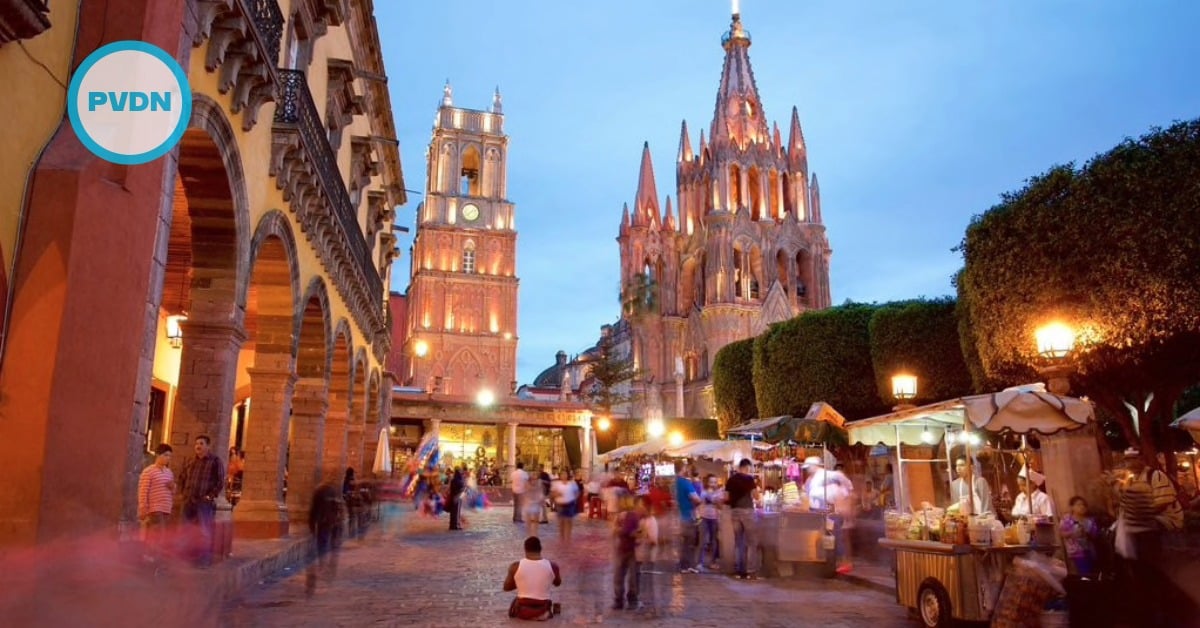
San Miguel de Allende lines up bird walks, art, classes and Christmas festivals as neighbors shape the city’s holiday season.
San Miguel de Allende has barely put away its Day of the Dead altars and wrapped up its annual blues and jazz festival, and the city is already shifting gears. Banners for Christmas concerts, neighborhood posadas and holiday bazaars are appearing on stone walls. Behind that seasonal rush is a quieter story about how local organizations, volunteers and artists keep the city’s cultural life moving long after the tourists go home.
A good part of that life starts at dawn, out by the water. Audubon de México, founded here in 1967, continues to run monthly bird walks from January through November, along with regular cleanups and kayak outings on the Presa Allende. The group also brings public school students into contact with the countryside through nature programs, giving city kids a chance to see the wildlife that shares their valley. This month is peak migration season, which means flashes of oropendolas, vermilion flycatchers, blue grosbeaks, warblers, blue-gray gnatcatchers, hawks and the distinctive crested caracara in the fields around town.
The cornerstone of the group’s year is the Christmas Bird Count, part of an international citizen science project coordinated through Cornell University’s Lab of Ornithology. In San Miguel, local volunteers will fan out to three sites on December 20, counting birds from 7:45 a.m. until midday and later logging their sightings into the regional database. No experience is required and binoculars can be provided, which turns the event into an easy entry point for newcomers who may know little about birds but a lot about their neighborhoods. It is the kind of low-key community ritual that makes residents read the landscape with fresh eyes.
Those birds may be distant specks in the sky, but they are connected to what happens back in the historic center. When people talk about “community” in San Miguel, they inevitably end up at places that offer a stage, a classroom or a garden as a meeting point. Taken together, they sketch out a city that is far more than a weekend backdrop for selfies at the Parroquia.
From bird walks to cultural stages
One of those anchors is El Sindicato, the community cultural center on Recreo 4. The building once housed the textile workers’ union tied to the old La Aurora factory, a reminder that San Miguel’s art scene sits on top of an industrial past. When the factory closed and the complex eventually became the Fábrica la Aurora art and design center, union families and local residents pushed to keep a social and cultural space of their own. The result was El Sindicato, formally founded in 1995 and now celebrating three decades of performances, classes and workshops.
Inside, the center offers two main halls, a 120-seat auditorium and a literary café, where theater troupes, dance companies, chamber ensembles and neighborhood groups share the same stage. This anniversary season has included a Thanksgiving-week classical and opera concert and a closing Cuban music show, all priced to stay within reach for residents who cannot afford festival tickets. Early December brings a dedicated Christmas program at the center, with choral music aimed at families and children as well as regulars. For many Sanmiguelenses, these evenings at El Sindicato feel less like “going out” and more like being in an extended living room.
Visual art is part of that same ecosystem. A new exhibition in town by artist and local resident Tamanna Bembenek is framed as a “pilgrimage” between India and Mexico. Her mixed-media work, shaped by a background in science and years spent between continents, explores themes such as anxiety, healing, solitude and personal growth while weaving together Indian and Mexican symbols. The show is deliberately non-commercial, presented as a work in progress rather than a polished sale. Visitors are invited to sit with the pieces rather than rush through them, mirroring the slower pace that many newcomers say drew them to San Miguel in the first place.
On the northeastern edge of the city, another long-running project is enjoying its own milestone. El Charco del Ingenio, the botanical garden and protected natural area overlooking the canyon, recently reopened its Conservatory of Mexican Plants after a renovation that began earlier this year. The greenhouse, first built in 2000, houses an extensive collection of cacti and other succulents from semi-arid regions across Mexico, including species that are rare or threatened in the wild. Alongside the desert plants, visitors can see native fish and aquatic vegetation that illustrate the contrast between the reservoir and the dry hillsides around it.
The reopening was marked by guided tours of the restored conservatory, the herbarium and a special presentation of a new plant species documented in San Miguel: Viridantha minuscula, popularly dubbed the “bromelia del Charco.” The small bromeliad was first spotted on the cliffs of the reserve by biologist José Viccón and later confirmed as a new species in scientific publications. For the garden, it is a powerful reminder that local conservation work can have global scientific relevance. To support that mission, El Charco is running a membership campaign through mid-December, offering discounted annual memberships that include daily admission for members and two guests, plus reduced prices on tours and special events.
San Miguel community events
If El Charco and the bird walks speak to San Miguel’s natural side, the classrooms of Instituto Allende tell a parallel story about learning. The school, which has trained artists since 1950 and forms part of the University of Guanajuato, is once again opening registration for its Lifelong Learning Program. From its campus on Ancha de San Antonio, the program offers short courses from January through March, both in person and online, with fees that range from free to about 400 pesos. Subjects cover politics, literature, history and cultural topics, many taught by long-time residents with deep roots in the city. Several courses are already full, a sign of how hungry locals and seasonal residents are for structured, affordable learning that fits around their work and family commitments.
All of this unfolds as San Miguel starts dressing up for Christmas. Strings of lights are going up around El Jardín, and shop windows in the center are trading orange marigolds for poinsettias and paper stars. On December 6, restaurant and music venue Paprika, on Ancha de San Antonio, hosts a Christmas bazaar that brings together live music, food, art, jewelry and crafts in one courtyard. The same weekend, a two-day Heart-to-Heart charity bazaar raises funds for Patronato Pro Niños, the long-standing nonprofit that supports medical and dental care for children, turning seasonal shopping into a direct contribution to local families.
The Biblioteca Pública, on Insurgentes 25, is preparing a full December program of its own. The schedule includes a Nativity play on December 18, a combined Nativity posada and staging of “The Nutcracker” on December 19, and a Christmas carol concert on December 22, all designed to pull together children, teenagers and adults who use the library year-round. The library is also planning a longer evening posada on December 19 as part of a broader Christmas festival on its patio, with traditional music, performances and sweets. Most events are either free or donation-based, which makes them accessible to families across the city.
Music lovers who are not yet ready to let go of festival season have another date circled on their calendars. The International Jazz & Blues Festival, which wrapped its main program earlier this fall, returns on December 20 with a Christmas jazz concert featuring singer Tenoch Niño de Rivera at Cent’anni on Canal 34. It is a smaller, more intimate counterpart to the festival’s main stages, giving residents a chance to hear holiday standards and local arrangements in a packed restaurant rather than a formal venue. Elsewhere in town, independent bazaars and craft markets, including those inside Fábrica la Aurora, are advertising one-day events with local designers and makers.
As the month goes on, neighborhood streets will echo with traditional posadas, children will carry paper lanterns through the lanes and visitors will discover that not all of San Miguel’s magic happens in front of the Parroquia. Behind the headlines about awards and rankings, this is what keeps the city feeling lived-in: early-morning birders, volunteer guides at the botanical garden, artists testing new ideas, librarians planning plays and bazaar organizers taping up flyers. Taken together, these San Miguel community events show a place that is constantly renewing itself from the inside out.