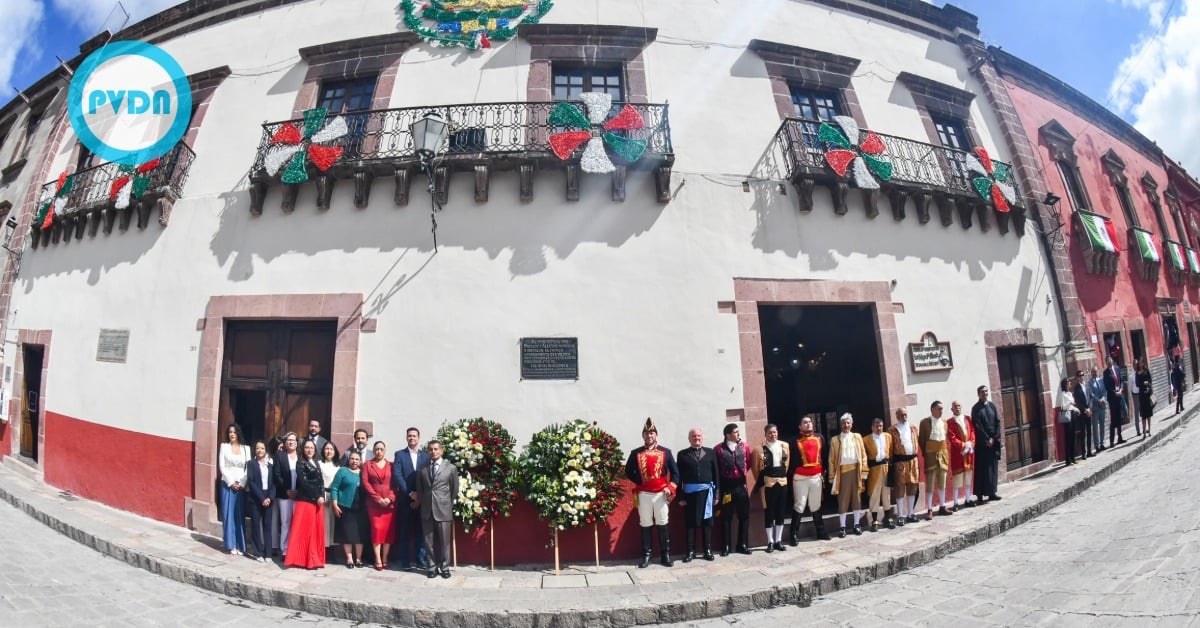
San Miguel de Allende didn’t just wave flags this week. It retraced a civic origin story. Actors restaged the formation of the San Miguel first council, then officials and neighbors walked the same path toward the Palacio Municipal, where flowers and an honor guard waited. The city’s legal representative spoke about self-rule and the role Ignacio Aldama played when local government first took shape during the 1810 uprising. The ritual wasn’t nostalgia. It was a reminder that Mexico’s independence also began at a council table.
San Miguel first council
San Miguel de Allende marked 215 years since the installation of the first local council of the independence era, an act the city calls the birth of civic life in a free Mexico. Officials and residents gathered first in the Jardín Principal, where a community theater troupe restaged the 1810 installation of the council led by Ignacio Aldama, a San Miguel native and insurgent figure.
From the plaza, the event moved on foot. Participants took a symbolic route to the Palacio Municipal, where they placed floral offerings and mounted a guard of honor—gestures meant to connect present-day residents with the rooms where early local authorities once met under insurgent control.
Why this anniversary matters
City leaders framed the date as more than pageantry. Speaking for Mayor Mauricio Trejo, municipal syndic Miriam Yaneth Sandoval Aguado told the crowd that the 1810 council represented a people’s decision to govern themselves during the first days of the revolt. Her remarks echoed the city’s line that San Miguel was not only a waypoint between Dolores and the broader campaign, but the place where municipal self-government first took shape under the insurgents.
That’s the historical claim at the core of this tradition. On September 17, 1810, a day after Miguel Hidalgo’s call to arms in nearby Dolores, insurgent leaders in what was then San Miguel el Grande moved to establish a local council headed by Ignacio Aldama. The act is remembered as the first ayuntamiento of an emancipating Mexico and is part of how the city explains its role in the country’s political birth.
The anniversary also fits into San Miguel’s Patrias calendar, which includes the Entrada de los Insurgentes and the handover of national symbols by the Cabalgata along the independence route. These rituals, stitched together, try to portray independence not only as a battlefield story but as a civic one.
What residents saw on the ground
The program leaned on living history. The group Aficionados al Teatro opened with a dramatization of the 1810 council’s installation, putting faces to the names often buried in textbooks. Then came the walk from the Jardín to the Palacio, the floral offerings, and the guard of honor—simple but deliberate staging that mirrored descriptions in municipal records and local press.
Meganoticias and regional papers described the crowd as a mix of officials and neighbors, with the syndic’s speech emphasizing “the will of the people to govern themselves.” That language is consistent with how San Miguel’s government has presented the date in past commemorations and reflects the city’s effort to anchor its identity in the origins of municipal democracy.
Context helps here. The war for independence began on September 16, 1810, and concluded in 1821. In between, towns like San Miguel became laboratories for improvised governance, adapting Spanish institutions such as the ayuntamiento to insurgent needs. Marking the council’s formation, then, isn’t just hometown pride; it’s a nod to how independence required building civil authority alongside military momentum.
San Miguel’s commemoration keeps that thread alive. It asks residents to walk the same steps, stand in the same hall, and remember that Mexico’s push for freedom also ran through a council chamber—where neighbors argued, chose officers, and tried, however briefly, to govern themselves.