San Miguel de Allende is among 13 Guanajuato municipalities named in a new push to expand electric vehicle charging stations. The proposal does not mean chargers will appear immediately, but it signals where state lawmakers believe infrastructure planning should begin. For residents, visitors, and businesses, the issue goes beyond electric cars. It touches tourism, public parking, future development rules, and how prepared Guanajuato is for a changing auto market.
Guanajuato lawmakers push EV chargers in 13 municipalities
Guanajuato lawmakers are urging 13 municipalities, including San Miguel de Allende, to begin planning additional electric-vehicle charging stations in busy public areas.
The proposal was presented as a formal request in the state Congress. It asks local governments to consider charging infrastructure in areas with heavy vehicle and pedestrian traffic. It also calls on state institutions to strengthen charging access at major public service centers.
The measure is not an order to install chargers immediately. It is an exhorto, meaning a formal legislative request. Municipalities and state agencies would still need to review costs, locations, rules, and budgets before any new stations are installed.
For San Miguel residents, the proposal is still worth watching. The city attracts domestic and international visitors, has growing regional traffic, and depends heavily on tourism, hospitality, and services. As more drivers use electric and plug-in hybrid vehicles, charging access can become part of how visitors choose where to stop, shop, stay, or park.
What the proposal asks municipalities to do
The request names León, Irapuato, Celaya, Salamanca, Guanajuato, Silao, San Francisco del Rincón, San Miguel de Allende, Pénjamo, Dolores Hidalgo, Valle de Santiago, San Luis de la Paz, and Acámbaro.
These municipalities were chosen because they have larger populations, important traffic flows, or regional economic activity. The proposal asks them to prioritize charging points in high-demand urban areas and to include electric mobility in planning rules.
That could eventually affect public parking areas, municipal buildings, shopping zones, transport corridors, and new developments. It could also influence how cities think about hotels, commercial plazas, and mixed-use projects that serve drivers from outside the municipality.
The request also includes the state Executive Branch and the Poder Judicial de Guanajuato, or state judiciary. The idea is to add or strengthen charging infrastructure at public offices with large numbers of visitors.
The judiciary has already answered that it supports the goal, but said progress would depend on available budget. That response is important because it shows the main limit facing the proposal. Planning may be politically easy, but installation depends on money, electrical capacity, permits, and long-term maintenance.
Why San Miguel is part of the discussion
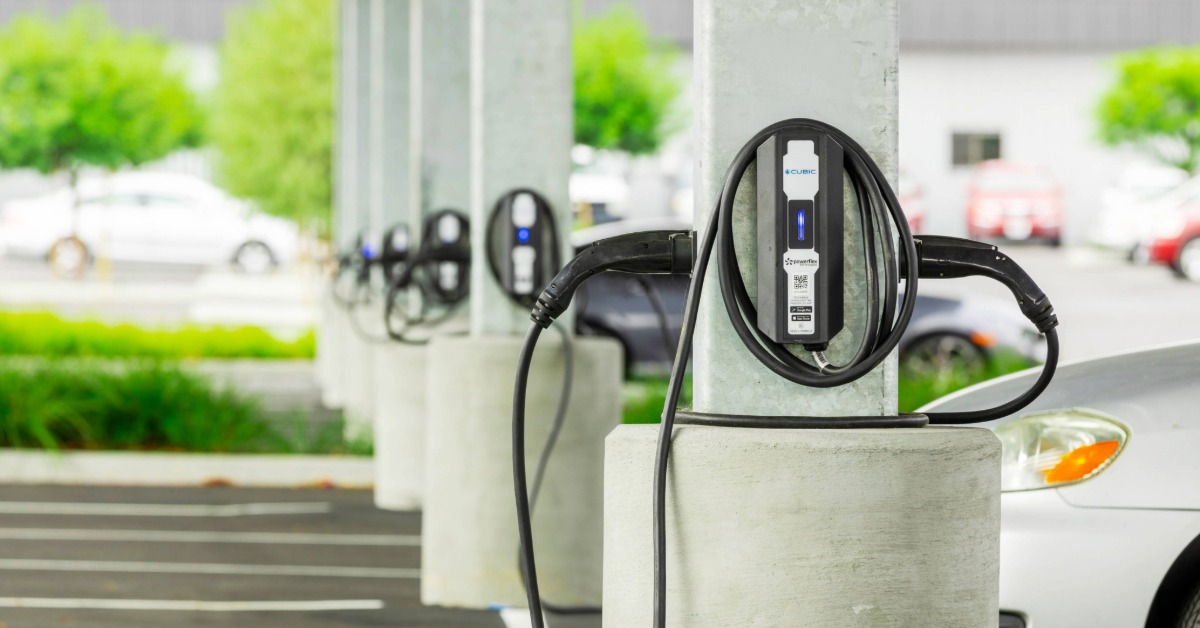
San Miguel already has some EV charging infrastructure, including chargers at Plaza La Luciérnaga. That means the city is not starting from zero.
Still, a few chargers in private commercial areas are different from a broader public charging strategy. A citywide approach would require decisions about where chargers are most useful, who pays for them, how drivers access them, and whether they serve residents, tourists, municipal vehicles, or all three.
For a destination like San Miguel, charging access can also become a tourism service. Visitors driving from Mexico City, Querétaro, León, Guadalajara, or the Bajío may be more likely to stay longer if charging is convenient and predictable.
This does not mean electric cars are about to dominate local streets. In Mexico, electric vehicles still represent a small share of total vehicle sales. But growth is moving fast enough that local governments are being pushed to prepare before demand becomes harder to manage.
Guanajuato is already an auto state
Guanajuato is not just another state in this conversation. It is one of Mexico’s major automotive manufacturing hubs, with vehicle plants, suppliers, logistics corridors, and industrial parks spread across the Bajío.
That matters because the state’s economy is tied to the future of the auto industry. As manufacturers move toward hybrids, electric vehicles, batteries, power systems, and charging components, local infrastructure becomes part of the same shift.
Recent market data also shows Guanajuato among the top states for sales of hybrid and electric vehicles. In March 2026, the state recorded 611 hybrid and electric vehicle sales, placing it among the country’s top five markets for that segment.
That demand is still modest compared with traditional gasoline vehicles. But it shows that electromobility is no longer only a Mexico City or Monterrey issue. It is spreading into regional markets where income, tourism, industry, and long-distance driving all matter.
Charging stations are growing across Mexico
Mexico’s charging network has expanded over the last year. Industry data for the first quarter of 2026 showed more than 4,300 public charging points nationwide, along with a much larger private network.
That growth helps, but access remains uneven. Chargers are often concentrated in large cities, shopping centers, hotels, dealerships, and private developments. Drivers still need to plan carefully when traveling between cities, especially on routes with fewer fast-charging options.
This is where Guanajuato’s proposal fits. It is less about one charger in one parking lot and more about whether cities should plan public charging access before demand becomes a daily problem.
For expats and foreign residents, the issue may become more familiar over time. Many people moving to Mexico from the United States, Canada, or Europe are already familiar with electric vehicles. Some may eventually want the same convenience here, especially in cities with a large international population.
The budget question remains open
The biggest question is funding. Chargers require more than a place to plug in.
A public charging station may need electrical upgrades, a dedicated meter, technical studies, permits, payment systems, maintenance plans, signage, and safety protections. Fast chargers can be more complicated because they may need stronger electrical infrastructure.
CFE already provides information for businesses and households interested in electrolineras, including the option of a separate meter for some installations. But a municipal charging network would still require local planning and coordination.
That is why the judiciary’s budget response matters. Public agencies may agree with the idea, but they still need money assigned for equipment and operation. Municipalities would face the same issue.
For San Miguel, the first practical step would likely be a review of existing chargers, traffic patterns, tourism zones, public parking areas, and municipal facilities. From there, officials could decide whether chargers should be public, private, or built through partnerships with businesses.
What happens next
The proposal now places EV charging infrastructure on the agenda for Guanajuato municipalities. It does not guarantee new chargers or set a construction schedule.
For San Miguel, the measure creates pressure to think ahead. The city has a strong tourism economy, a large foreign-resident community, and steady regional traffic. Those conditions make charging access more relevant than it may seem at first glance.
The real test will be whether local and state officials move from general support to specific planning. That means identifying locations, estimating costs, setting rules, and deciding who will operate and maintain the stations.
Electric vehicles are still a small part of Mexico’s roads. But the direction is clear enough that cities like San Miguel are being asked to prepare now, rather than wait until charging becomes another infrastructure gap.