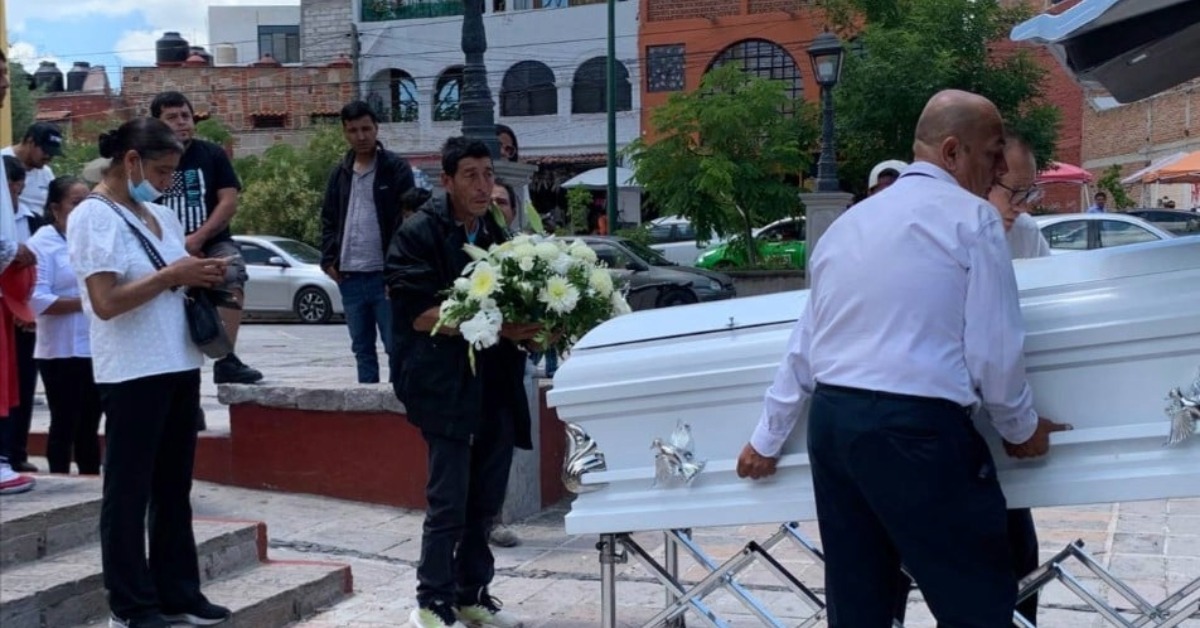
Neighbors in white carried a simple coffin through a packed parish and a quiet street. San Miguel mourns a teen killed at a church feast, and grief is now tied to a complicated question: who keeps families safe when fireworks turn into gunfire? The 17-year-old, Luis Ángel, died after Sunday night’s attack in Infonavit Malanquin. Mourners want answers and protection before the next fiesta begins. Authorities say the gunmen were hunting three men with criminal histories. Families say they were only there to celebrate.
San Miguel mourns teen killed at church feast
The crowd fell silent as the bells rang for Luis Ángel, 17. His family, friends, and classmates filled Our Lady of the Light parish on Wednesday morning. They came with flowers and a request that feels basic and urgent: to be able to celebrate their faith without fear.
The priest spoke of peace and responsibility. He asked families to help protect the young, and he asked officials to show up where it counts—outside every chapel, not only after a tragedy. The parish network he helps lead includes dozens of small communities. Each holds its patron feast. Each now feels exposed.
What happened Sunday night
On Sunday, August 17, the fiesta honoring the Virgen de San Juan drew hundreds to the temple in Infonavit Malanquin, on the city’s edge. Near the end of the celebration, gunmen opened fire. Panic followed. People ran for cover behind vendor stands, cars, and church walls. When the shots stopped, two men were dead, and at least 17 people were hurt. Among the wounded was Luis Ángel. He did not survive his injuries.
City police and state investigators moved in. Helicopters swept the area. Patrols stayed through the next day. The temple square, once a market of food and fireworks, became a taped-off crime scene. Residents began to plan a march for security and justice. The tone was calm but firm: enough.
The official line on motive
Mayor Mauricio Trejo later said the shooters were after three men with serious criminal histories, nicknamed El Chato, El Mane, and El Junior. One of them was reportedly wounded and placed under guard. The suggestion is chilling and familiar in Guanajuato: a targeted hit carried out in a crowded public space, with regular people in the line of fire.
Church leaders condemned the attack, and the state prosecutor’s office promised to bring “the full weight of the law” against those responsible. That promise will be tested by the complexity of this case, which unfolded in seconds in a chaotic plaza, after fireworks and before families could react.
A painful pattern across Guanajuato
This was not an isolated outrage. Mass-casualty attacks linked to criminal rivalries have struck multiple communities this year, including other fiestas. Authorities and independent monitors count Guanajuato among the states with the most homicide victims in 2025, even with some improvement in daily averages. For residents, the numbers matter less than the lived reality—parents checking exits and looking over shoulders during town traditions that once felt untouchable.
San Miguel’s identity rests on shared spaces: chapels, barrios, plazas, and neighborhood patron feasts that knit the city’s social life. When violence punctures that fabric, the damage is more than physical. It changes where people go, when they bring children out at night, and whether elders feel safe walking to Mass.
What security should look like at fiestas
San Miguel licenses public events and coordinates with Protección Civil and police. Those steps exist on paper to reduce risk: defined hours, site plans, emergency access, and communication with nearby residents. After Malanquin, the question is whether staffing levels and tactics match the threat. That means visible patrols before and during key moments, quick control of entry points, and a predictable chain of command that organizers and clergy can reach in seconds.
The city can move now, before the next celebration. Publish the safety checklist for fiestas. Set clear minimums for police, traffic control, and medical teams tied to expected crowd size. Put liaison officers in direct contact with chapels and neighborhood committees. Tell the public which measures are in place and where to find help on the night itself. People deserve to see the plan—not only hear promises.
A city asks for presence, not platitudes
At the funeral, applause rose through the nave for a quiet teenager whose name now carries a heavier meaning. Outside, neighbors traded stories about the last time they felt truly safe at a fiesta. Some want more patrols. Others wish organizers to shift schedules or limit fireworks. All agree on one point: the burden cannot sit on families alone.
San Miguel is at its best when streets belong to everyone. That is the goal people asked for at the church doors—a simple return to customary rituals without guns in the background. It starts with visible, steady security and ends when residents can focus on the music, the food, and the saint, not the exits.