San Miguel de Allende is moving to stop future building in Los Picachos, a hillside officials call essential to the city’s water recharge. The measure sounds local now, but it opens a wider debate over growth, groundwater, and how a city under constant development pressure decides which land must remain open. The next steps will unfold in planning documents and council votes, which is why the legal wording matters as much as the political message.
San Miguel starts with land-use rules
San Miguel de Allende has opened a formal push to block future development in Los Picachos. Local officials say the zone, on the eastern side of the municipality, is critical for groundwater recharge. The first step is administrative, not physical. City Hall says it is modifying territorial-ordering rules to more clearly restrict the area. Once that language is finished, the document is expected to go to the state for validation and then to the Ayuntamiento for a vote. Officials say the timeline could range from weeks to several months, and the municipality says it already has technical studies.
Officials are framing the move as a water decision first and a real-estate decision second. The mayor said the goal is to prevent any development, of any size, in the area. He also acknowledged the tension behind that goal. San Miguel de Allende has a strong property market, and that success creates pressure on land at the urban edge. The municipal message is simple. Growth can continue, but not everywhere and not under every condition.
Why Los Picachos matters
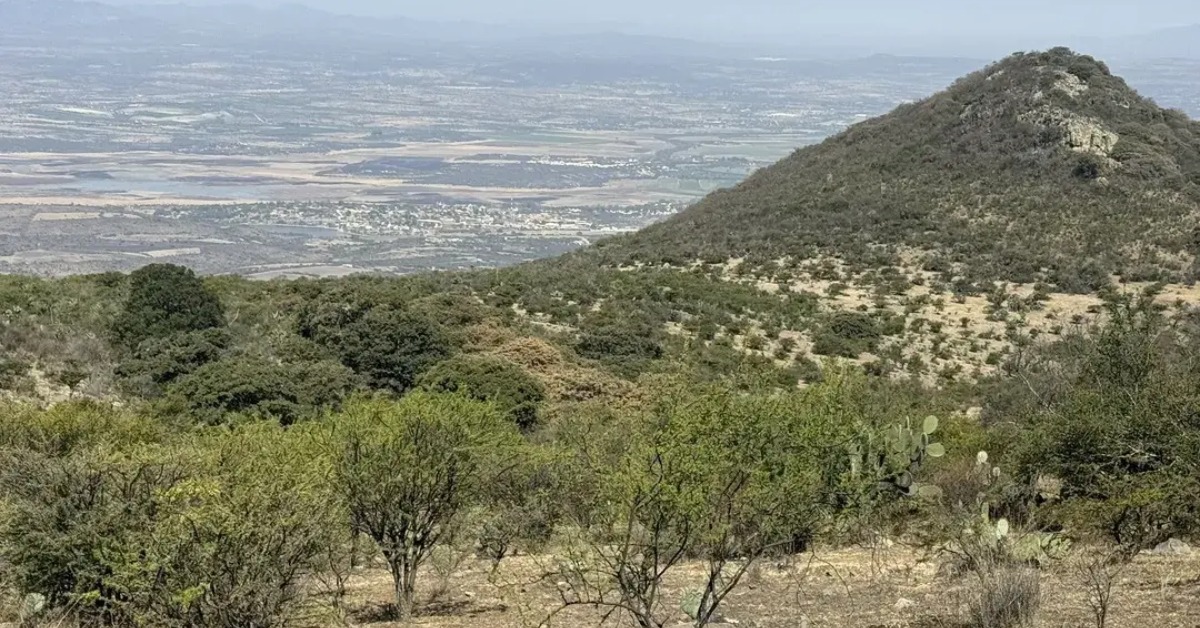
For readers outside Guanajuato, Los Picachos may sound like a distant ridge with local symbolism. In practice, the municipality describes it as one of the most important places for capturing and filtering rainwater before it reaches underground reserves. The area sits near Jalpa, Alcocer, and the road toward Querétaro. Local descriptions point to old volcanic formations, natural vegetation, and habitat for deer, foxes, eagles, and other wildlife. Those details are not decorative. Recharge depends on what happens on the surface.
That point matters because building changes the ground. Roads, pads, paving, retaining walls, and soil compaction can alter how rainwater infiltrates. Once land is urbanized, it often sheds water faster and stores less. That is why recharge zones usually become planning fights. The argument is never only about scenery. It is about whether a city protects the land that helps refill the water it later consumes.
The wider water context
The broader water context is hard to ignore. A recent CONAGUA availability update for the San Miguel de Allende aquifer indicates no water is available for new groundwater concessions under the current official calculation. The report places average annual recharge at 28.6 million cubic meters. It calculates an annual deficit of about 12.38 million cubic meters. The study uses a data cutoff from late 2022, and CONAGUA notes that future evaluations may change as better information becomes available.
That does not mean taps are about to run dry tomorrow. It means something narrower and still important. Under current federal calculations, the aquifer does not show spare groundwater for additional concessions without further pressure. In that setting, a municipal decision to defend a recharge zone stops looking symbolic. It starts to look like a land-use response to a water-balance problem.
More than a single zoning dispute
The current step is narrower than a full protected-area declaration. What the municipality is describing now is a change in territorial ordering. That matters. A land-use change can shape which permits are considered, how sensitive land is mapped, and which restrictions apply before a more ambitious conservation figure is in place. In other words, the town is trying to give legal force to a principle it has been discussing for months: some land must stay open because the water system depends on it.
That approach fits the municipality’s own planning documents. The Programa de Gobierno Municipal 2024-2027 calls for continued work on a new PMDUOET 2050, updated zoning, and a review of how subdivisions and condominium projects are processed. The broader program also mentions a microbasin management plan and reforestation in upper and middle watershed zones. The same program goes further. It proposes groundwork for a future Área Natural Protegida in San Miguel de Allende and links that idea to stopping land speculation and protecting aquifer recharge. That does not prove Los Picachos will become a protected area soon. It does show the current move is part of a broader planning line.
What readers should watch next
The next question is not whether City Hall can make a statement. It already has. The next question is how the boundaries and rules will be written. That is where the real consequences will appear. If the language is broad, future housing, mixed-use, or tourism projects in and around the corridor could face tighter scrutiny or outright limits. If the language is narrow, the municipality may protect only the most sensitive recharge areas while leaving nearby parcels open to other uses.
For residents and potential buyers, this is best understood as a fight over where growth belongs. San Miguel is not renouncing development. Officials have said the property sector remains important. What they are signaling is that water security now has to sit closer to the center of land-use decisions. In a city under steady development pressure, that is a notable shift. Whether that shift survives state validation and a council vote will determine whether Los Picachos becomes a real planning boundary or just another place invoked during a water debate.