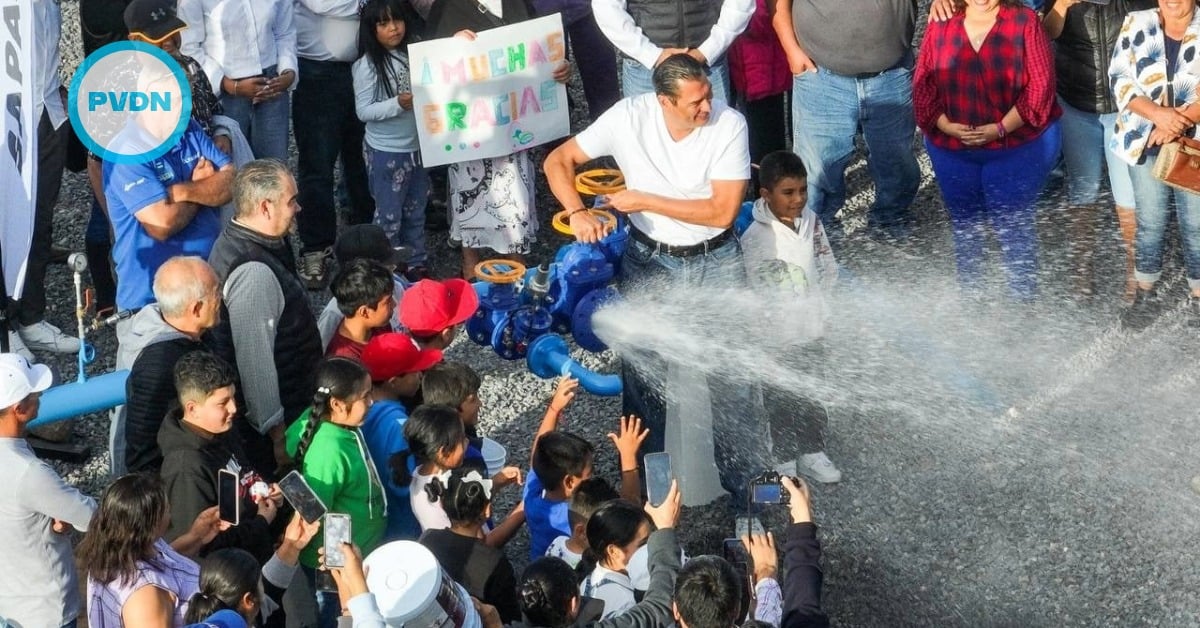
Water is running again in Los González, and City Hall wants you to see more of where that came from. On Monday, Mayor Mauricio Trejo launched a “works tour,” promising to announce one project every day until the city hits fifty. The kick-off was a new potable-water well meant to stabilize supply across nearby rural communities. The push comes after criticism that the administration lacked visible results. If the city can turn daily announcements into finished work, neighbors could feel relief beyond the photo ops—starting with reliable water.
Families in Los González turned on the taps and saw water flow again on Monday. City Hall chose that moment to launch a new push: a “works tour” that will unveil one project every day until the count reaches fifty. Mayor Mauricio Trejo framed the plan as proof of progress after weeks of public criticism that the administration wasn’t delivering enough tangible results. San Miguel public works are now the headline, by design.
The first deliverable is substantial for the communities it serves. The new well is roughly 400 meters deep, with the pump located about 280 meters down. City engineers say the system can produce up to 24 liters per second—well above local demand estimates—after a reported investment of nearly 13.8 million pesos. City figures indicate about 1,396 residents stand to benefit across seven rural communities, including Los González, Loma de la Purísima, Cerritos de los Chávez, San Agustín del Bordito, and San Javier. For households that have faced years of inconsistent service, any week with steady water can feel like a turning point.
San Miguel public works
A daily drumbeat of project announcements is not new for this administration. Trejo ran earlier “one-work-per-day” sprints in prior terms, bundling road fixes, school upgrades, lighting, and water infrastructure into a tight calendar. The new tour repeats the strategy but with a sharper message: here is a list of concrete works—some starting, some finishing, some mid-stream—after critics blasted the mayor’s recent government report for thin detail and few measurable outcomes.
The timing intersects with a more complicated truth. San Miguel de Allende sits in one of Guanajuato’s most water-stressed regions. Groundwater extraction outpaces recharge, and many rural wells show creeping contaminants like arsenic and fluoride. Even a strong rainy season that tops up area dams does little to ease chronic aquifer stress. In that context, a single high-capacity well helps, but it does not solve the basin-wide math. Residents and hydrologists alike will ask how the new supply is balanced with conservation, treatment, and maintenance, and how the city plans to protect quality over time.
City Hall argues this tour is the answer to the “where are the results?” question. The political wager is simple: if neighbors can see a project every day—pipes in trenches, pumps humming, classrooms painted—momentum might replace skepticism. That depends on the details. Water works demand transparent specs, realistic timelines, and routine reporting on flow rates and outages. Road and school projects should outline their scope and budget, not just present a ribbon and a plaque. The administration can help itself by posting a living tracker of all fifty works, updated as milestones are met and problems arise.
What to watch next
The well at Los González sets a bar for the following forty-nine announcements. People will seek more water solutions where shortages hit hardest. They will watch if rural communities continue to see first-day attention rather than getting pushed to the back of the line. And they’ll judge the tour by what’s still working six months from now, not just what’s trending this week. If daily announcements align with completed projects that stand the test of time, the San Miguel public works tour could transition from a press release to a live improvement. If not, the spotlight will turn back on City Hall.
For now, the signal is clear. The city chose to start with running water, not a road stripe or a photo wall. In a region where water defines comfort, health, and dignity, that choice matters. Neighbors will decide if the following forty-nine choices matter just as much.