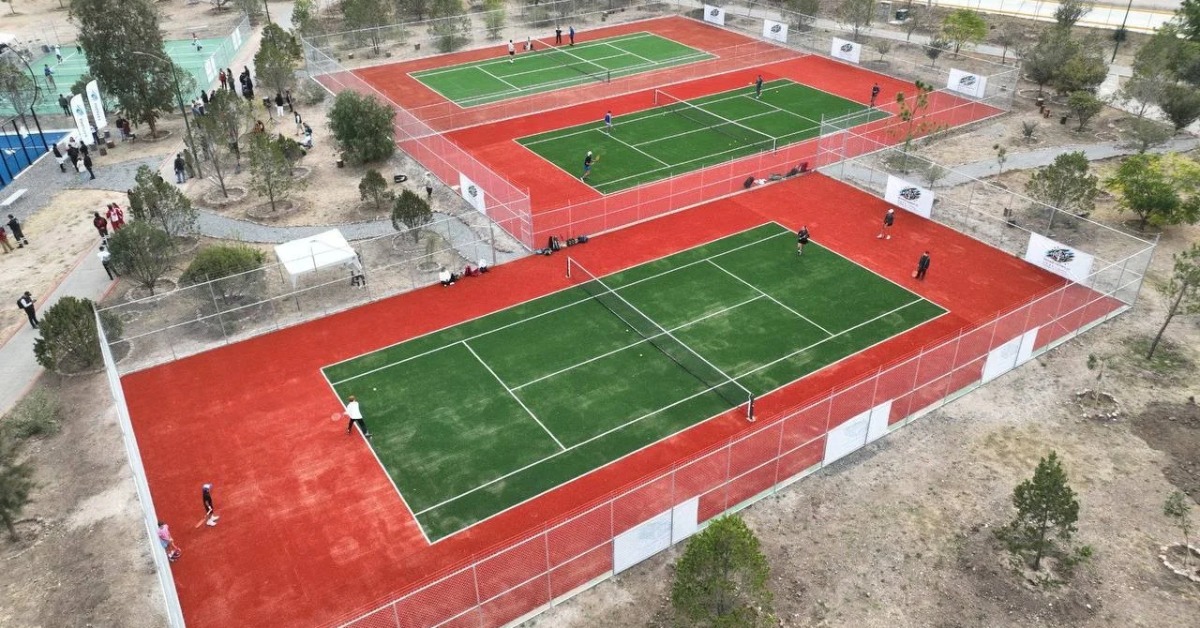
Environmental advocates in San Miguel de Allende are asking the Guanajuato state government to stop financing any additional works at Bosque Deportivo, a sports and recreation project on the city’s upper edge. Their request follows public statements that the state would help build at least three more courts there.
Their argument is direct. They say the site already includes infrastructure built inside the core area of a protected ecological zone connected to El Charco del Ingenio, the well-known botanical garden and reserve. In their view, the problem is not only that construction happened, but that it happened in a space whose legal purpose is conservation.
The latest appeal was sent to Governor Libia García in early March. By Sunday, the advocates said they had not received a response. They are now pressing for a halt to state money before any new phase begins.
At the center of the complaint is a basic question that matters far beyond one sports project. Can a municipal government keep expanding public infrastructure inside land that has long been presented as protected, or must that work stop until the legal and environmental rules are fully addressed?
What Bosque Deportivo is supposed to be
The municipal government has presented Bosque Deportivo as a public project that blends sports, recreation, and tree planting. When the complex opened in January 2025, city officials described it as a new family space and even called it a new urban lung for San Miguel.
That message remains central to the government’s defense. Supporters see the project as a way to provide public amenities instead of turning municipal land over to private development. The mayor has also argued that the reforestation component will produce long-term environmental benefits.
That framing helps explain why the dispute has become politically sensitive. This is not a fight over a private subdivision or a hotel. It is a conflict between two ideas that often attract public support simultaneously: more public space for residents and stronger protection for ecologically important land.
The difficulty is that these goals do not automatically fit together. A project can be public and still face legal questions if it alters land that is subject to environmental limits. That is why the current debate is less about whether sports facilities are useful and more about whether this is the right place to keep adding them.
Why El Charco del Ingenio matters
For readers unfamiliar with San Miguel, El Charco del Ingenio is not just a botanical garden. It sits inside a much larger 392-hectare Zone of Ecological Preservation that local conservation groups have defended for years. Official materials from El Charco state that the garden itself covers only 67 hectares within that broader protected territory.
That wider zone includes areas of ecological, landscape, and hydrological value. It also functions as a barrier against unchecked urban expansion. Supporters of the reserve describe it as a wildlife habitat, a runoff and infiltration area, and one of the city’s remaining ecological buffers.
The legal structure behind the reserve is also important. The area was designated a protected area by the municipality in 2005, and the governing regulation was published in 2011. That regulation states that works and activities within the zone must not disrupt the ecological balance or alter the area’s integrity.
Environmental advocates say the current conflict cuts directly against that purpose. They argue that courts, paved surfaces, access works, and unsuitable tree planting are not small changes. They say those interventions disturb the original ecosystem and shift the use of land away from conservation, research, restoration, and environmental education.
Why this did not begin this month
The current appeal did not appear out of nowhere. Complaints around Bosque Deportivo have been building for months. Last year, environmental advocates argued that at least two courts and part of the related civil works were already inside the reserve’s core zone. This year, those concerns sharpened after the mayor said more courts were coming with state support.
The dispute also sits atop an older legal struggle over the reserve itself. Civil groups challenged earlier efforts to alter the protected area’s boundaries and land-use treatment. El Charco later said a tribunal ruling upheld a suspension and confirmed the invalidation of changes that would have reduced protections or opened the door to urban development inside the reserve.
That history matters because it changes how the new works are being read. For environmental advocates, this is not an isolated planning disagreement. They see it as part of a longer pattern in which the reserve is repeatedly pressured by infrastructure and development interests, even after prior legal fights.
That is one reason the tone has hardened. The latest request to the governor is not just a complaint about design choices. It is an effort to stop new public spending before the project grows further.
What comes next
The immediate question is whether the state government intervenes. Environmental advocates want Guanajuato to withhold funding and open a formal dialogue. They are also pressing the case that any new intervention should be reviewed under the rules that apply to the protected zone.
The municipal government, meanwhile, has given no sign that it sees the project in those terms. Its public narrative has emphasized recreation, reforestation, and family use. That leaves both sides operating from very different definitions of the same land.
For residents, the outcome could shape more than one project. It could influence how San Miguel handles other environmentally sensitive spaces, especially in a city where water stress, land-use change, and conservation are already major concerns.
For international readers living in San Miguel, this dispute is a useful window into how local growth battles often work in Mexico. They are rarely simple fights between development and nature. More often, they involve public land, overlapping authorities, older decrees, contested interpretations of the law, and competing claims about what counts as the public good.
In that sense, the fight over Bosque Deportivo is about more than new courts. It is about whether protected land in San Miguel still carries binding limits when a popular public project is involved.
With information from Periódico Correo, El Sol del Bajío, Gobierno Municipal de San Miguel de Allende