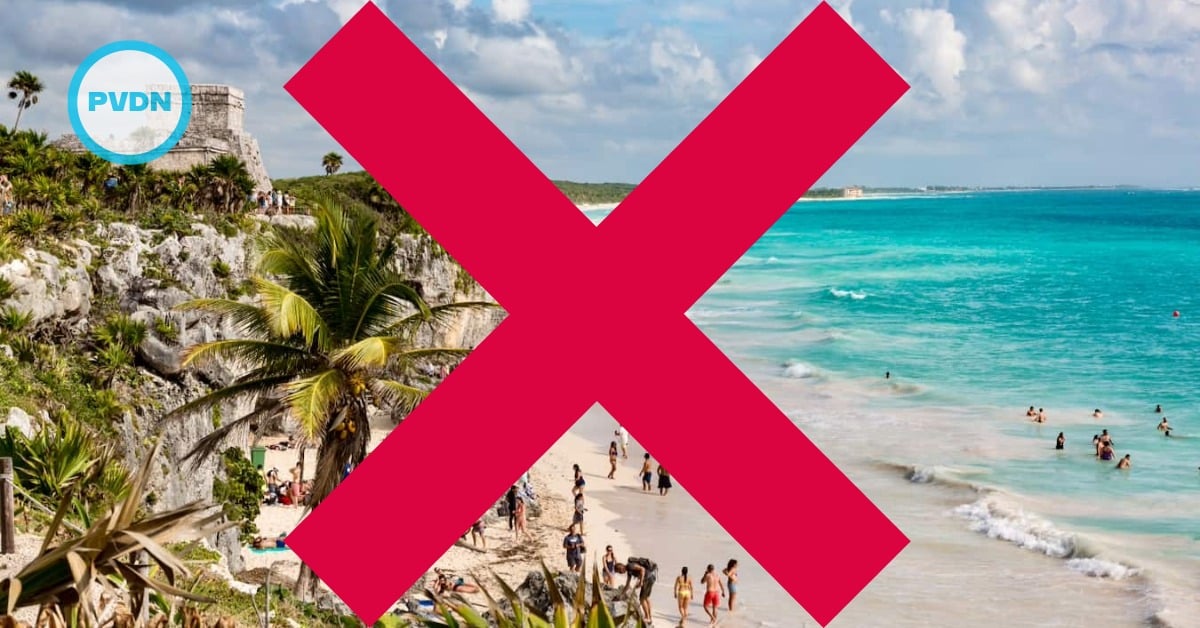
“Free to enter” doesn’t feel free if you can’t sit, shade, or snack. Tulum’s mayor is promoting open beaches while rolling out bans on chairs, umbrellas, and outside food—policies that critics say funnel visitors into paid services. Supporters frame it as order and safety; locals call it pay-to-stay. Federal law says access can’t be conditioned, yet new “rules” blur that line. Hotels now pledge free walk-throughs to the sand, but the fine print matters. What’s legal, what’s spin, and what happens on the ground?
Tulum beach access rules
If Tulum has the goal of being the worst beach destination in the Caribbean, they might have just achieved that award.
Tulum’s mayor is selling a win: no entry fee to reach the sand. At the same time, the city is moving to ban chairs, umbrellas, and outside food, a set of restrictions that turns “free access” into a purchase-once-you’re-there experience. Local outlet Luces del Siglo reported the new line from the city hall and the backlash it sparked among residents and domestic tourists.
Major Mexican media echoed the announcement and the controversy. Coverage described a policy that invites people to the beach while nudging them to rent shade or buy food on-site, a shift critics say favors hotels and beach clubs over families who pack their own gear.
Here’s the legal backdrop. Mexico’s General Law of National Assets guarantees free, unconditioned access to maritime beaches and the adjoining federal zone; blocking or conditioning entry can trigger fines or even loss of concessions. Environmental or safety rules can exist, but they cannot morph into economic barriers at the shoreline. That’s the letter and spirit of recent reforms and federal guidance.
City hall’s message lands amid a parallel push: private properties and beach clubs opening paths to the sand. Travel outlets reported an agreement with a group of hotels to allow free public walk-throughs with no cover or minimum spend. If accurate and durable, this development improves access points—long a bottleneck in Tulum’s hotel zone—but it doesn’t answer whether people can enjoy the day without renting anything once they arrive.
The English-language Tulum Times spelled out the practical effect of the rule: yes, you can enter; no, you can’t bring the basics that make a beach day affordable. That’s precisely where federal guarantees and local “order” collide.
Free in law, costly on the sand
There’s recent history here. The Jaguar Park project—run by a military-owned operator and wrapped around Tulum’s ruins—has been criticized for fees and operational limits, with the mayor himself accusing the operator of failing to honor free entry commitments for locals at times. That dispute shows how “access” can be promised in policy and constricted in practice.
The state narrative also insists that beaches are open. Governor Mara Lezama and official channels have pushed back on the idea that Tulum charges to enter, framing any restrictions as safety or organization measures and reiterating a commitment to open access. That message aligns with federal law, but it doesn’t settle whether municipal bans effectively condition enjoyment of the beach on paid services.
The stakes aren’t abstract. Luces del Siglo ties the policy moment to a tourism slump, with empty beaches and struggling businesses across town. Whether bans help “order” the coast or deepen a downturn depends on what happens on the sand: if security and cleanliness improve without forcing consumption, public sentiment could shift; if families feel priced out, resentment grows.
Bottom line: Mexico’s law says access must be free and unconditioned. Tulum’s brand depends on honoring that—not only at the gate, but in the experience. Clear, published municipal rules, harmonized with federal guarantees, and consistent enforcement against any private blocking would go further than slogans. Until then, “free to enter” risks sounding like a promise with a bill attached.