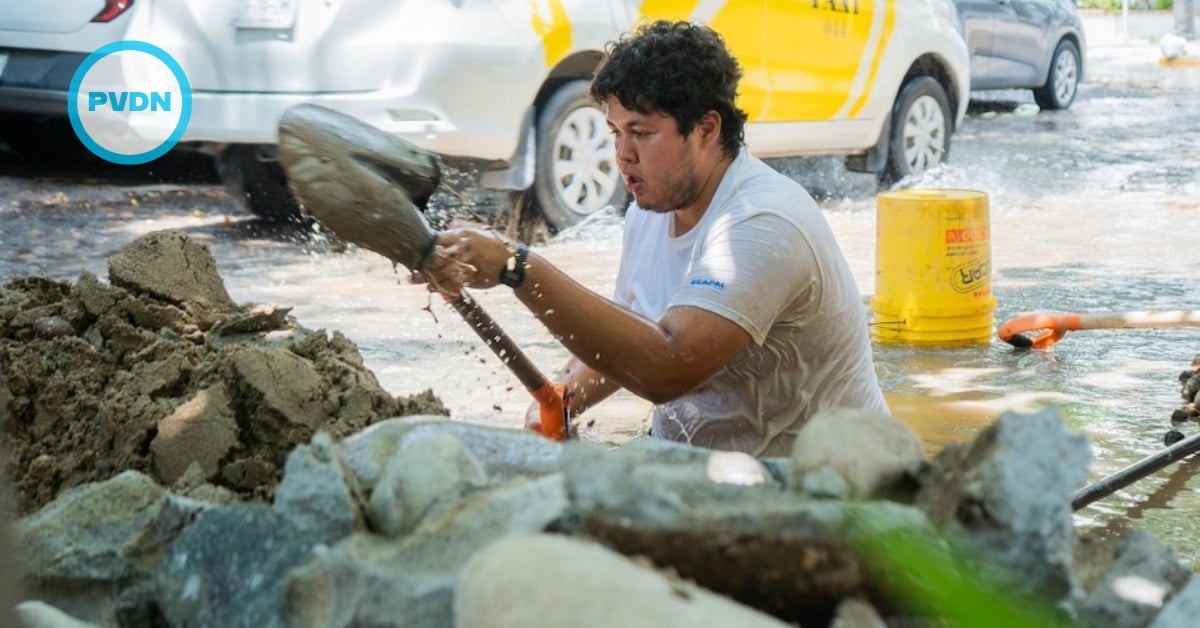
After a 13-hour job on Ecuador Street, SEAPAL Vallarta water crews cut out old asbestos-cement pipe, stopping two leaks in 5 de Diciembre.
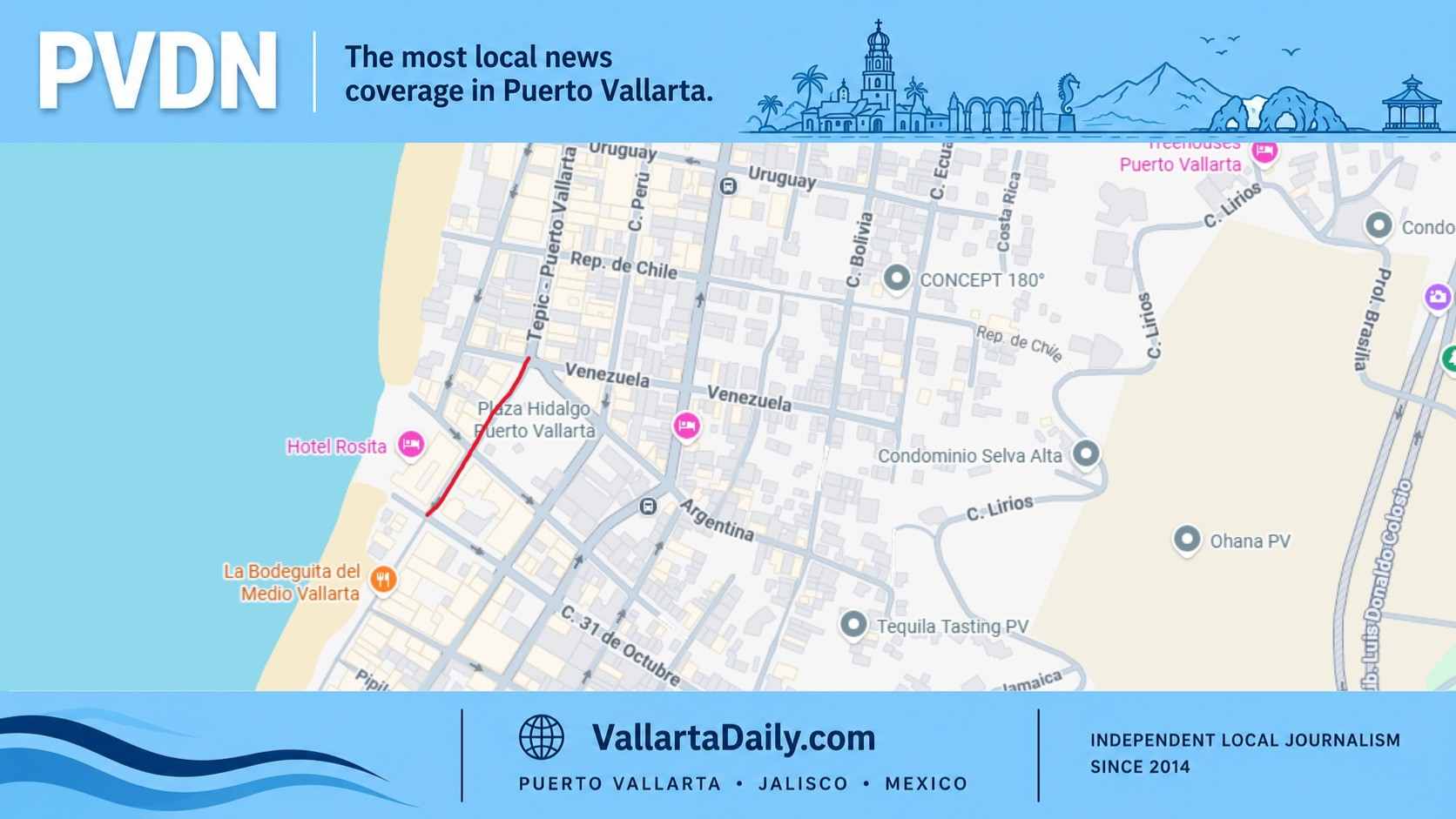
In late November, neighbors in Puerto Vallarta’s 5 de Diciembre neighborhood watched yet another trench open on their steep streets. This time the work came with a clear payoff. SEAPAL Vallarta crews moved in on Ecuador Street, between Panamá and Uruguay, to tackle a pair of leaks that had been stealing pressure from homes uphill and down.
The municipal utility removed about 20 meters of obsolete asbestos-cement pipe and replaced it with a new 4-inch PVC line. The work stretched across 13 hours without pause, as crews opened the street, cut out the damaged section, installed the replacement and tied it back into the existing network. By the end of the day, the two leaks were gone, the flow improved, and the line was reinforced against future breaks.
Once the pipe work was finished, crews stayed on site to clean up. They removed rubble, backfilled and compacted the trench and left temporary traffic signs in place so drivers could pass safely while the pavement settles. For residents, the most visible sign of the job may now be a fresh strip of asphalt. Below it, though, a small but essential piece of the city’s water system has changed.
SEAPAL Vallarta water
SEAPAL Vallarta is the public utility in charge of drinking water, drainage and sanitation across Puerto Vallarta. In public reports this year, the agency has described a broader push to replace older lines, especially those made with asbestos-based materials that have already reached the end of their useful life. A major project on Avenida Federación, for example, is replacing long stretches of asbestos infrastructure with PVC to reduce leaks and stabilize service in several Pitillal neighborhoods.
The work on Ecuador Street fits that pattern on a smaller scale. Asbestos-cement pipes were widely installed in Mexican water systems decades ago because they were inexpensive and easy to work with. Over time, those same pipes tend to crack, lose strength and break under shifting soil and vehicle load. Each break means lost drinking water, emergency repairs and unexpected shutoffs for nearby homes.
Federal technical documents and health advocates have also raised concerns about aging asbestos components in water systems. They note that as pipes deteriorate, asbestos fibers can enter drinking water and pose health risks, which is why many utilities are moving toward PVC and other materials for new projects and replacements.
For 5 de Diciembre, the Ecuador Street repair follows a series of recent fixes. Earlier this year, SEAPAL reported that some lines in the same colonia had been in service for several decades and had already exceeded their intended lifespan. That earlier work, on Venezuela Street, also required complex maneuvers and temporary cuts while crews worked to stabilize an aging line.
By contrast, the Ecuador Street intervention was planned as a targeted replacement. By cutting out a vulnerable segment and installing a modern PVC line, SEAPAL aimed not only to stop current leaks but also to reduce the risk of new failures at the same spot.
Old leaks and new expectations
The 5 de Diciembre neighborhood sits just north of Puerto Vallarta’s historic center and climbs quickly from the coastline into the hillside. That topography puts extra stress on water lines. Pressure changes along steep blocks and the weight of traffic on narrow streets can expose weak points in the network, especially where older materials remain underground.
Residents in the lower part of the colonia have seen this tension before. Emergency repairs in August temporarily cut service in several blocks while SEAPAL crews worked on a line described as having “several decades” of continuous use. Each job like that fixes an immediate problem but also highlights how much of the network was built in another era and under different standards.
This week’s work on Ecuador Street suggests a gradual shift from reactive repairs to selective renewal. Instead of patching the leaks alone, SEAPAL’s distribution team removed the obsolete asbestos-cement section and dealt with other unforeseen damage they found once the trench was open. That approach costs more time and effort in a single day but can spare the utility and residents repeated disruptions on the same block.
For people living and working in 5 de Diciembre, the benefit will show up in simple ways. Faucets that hold steady during peak hours, fewer surprise outages and less clean drinking water lost under the pavement all add up to a more reliable service. The change may feel modest for now, but it aligns with a larger list of projects the utility has outlined across the city, including new collectors and the rehabilitation of key supply lines.
The trench on Ecuador Street is already closed. Traffic is flowing again and the neighborhood’s daily rhythm has returned. Underground, though, the short new stretch of PVC marks one more step in a slow, block-by-block transition away from aging asbestos-cement lines. For a city that depends on steady taps in dense hillside barrios like 5 de Diciembre, that quiet change in material may matter as much as any ribbon-cutting.