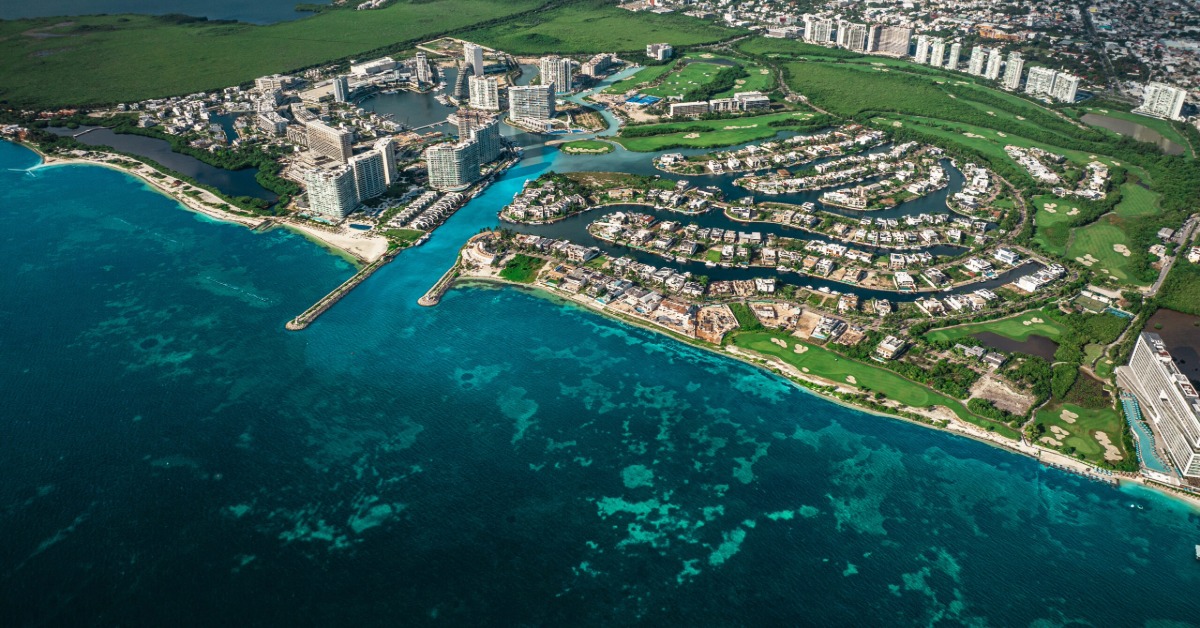
SEMARNAT has approved a long-term plan to rebuild a worn stretch of shoreline inside Puerto Cancún. The permit sets a five-year timeframe for the work. It also requires decades of maintenance. The design includes sand placement, dune shaping, and a small elevated wooden walkway. Supporters say the goal is to stabilize a beach that narrows after storms. Others say the details will decide the outcome. Where will the sand come from? How will seagrass and nearby beaches be protected? And what changes will residents notice once construction starts?
What SEMARNAT approved and why it matters
Mexico’s environment ministry (SEMARNAT) has authorized a beach reconditioning project in Puerto Cancún. It aims to rebuild an eroded stretch of federal shoreline. The approval sets a five-year window for the works. It also establishes a maintenance commitment that could last 50 years. The applicant is Condominio Puerto Cancún UC69, which filed the proposal on October 30, 2024. SEMARNAT had denied an earlier request in April 2023. Officials paused the review in August 2025 after requesting more information. The evaluation resumed in October 2025 and later received a favorable decision. The permit follows review of a Manifestación de Impacto Ambiental (MIA). That process is used to assess shoreline work in the federal zone. The decision was issued through DGIRA, the office that reviews impact and risk filings. The plan focuses on about 785 meters of coast between an existing breakwater and a nearby golf course. The site is along Avenida Bonampak in Puerto Cancún. Project documents describe a beach that has become thin and unstable after storms. Approvals can still draw scrutiny, but they set enforceable conditions. For residents and frequent visitors, the key question is how the shoreline will look and behave once the work begins.
What the shoreline work would add
The approved design pairs sand relocation with new structures meant to hold the beach in place. Plans call for moving about 28,000 cubic meters of sand to rebuild the beach profile along the 785-meter stretch. The sand would be spread across roughly 27,180 square meters, widening the usable area and giving waves more room to dissipate. Supporters argue this approach restores pedestrian passage along the shoreline. Work would take place in the Zona Federal Marítimo Terrestre, the federally regulated beach zone. A small wooden walkway is also part of the authorization. It would run about 55 meters long and 2.44 meters wide, supported by piles. Under it, the project proposes geotextile elements filled with sand that act as a reinforced edge. The documents also describe the shaping of a coastal dune about 3 meters wide and roughly 730 meters long. One section would sit back from existing walls, and another would front the golf course. Together, these features are intended to reduce the need for repeated emergency cleanups after storms.
Sand sources, costs, and what residents may watch
Project filings say the fill material would be taken from nearshore marine deposits located in front of the site. In federal records, the filing appears under key 23QR2024U0094. The applicant asserts those spots lack seagrass beds, and the plan includes measures to avoid disturbing nearby vegetation. Another source is the Puerto Cancún navigation channel, where sand buildup can complicate boat traffic. Moving that material to the beach is framed as a dual benefit: dredging maintenance and shoreline recovery. Even so, nourishment projects often raise technical questions about grain size, water cloudiness, and the timing of work. The permit package cites studies on currents and beach behavior and acknowledges potential effects on neighboring shorelines. For residents, that matters because a wider beach in one pocket can shift wave energy elsewhere. The authorized budget is about 16 million pesos, plus roughly 2 million pesos per year for upkeep. Long-term maintenance is crucial in a coast shaped by hurricanes and seasonal storms.
What this could signal beyond Puerto Cancún
Puerto Cancún’s approval lands amid a wider debate about how Quintana Roo should tackle beach loss. The state government has been preparing a separate, multi-municipality restoration plan covering more than 30 kilometers of shoreline. That broader effort still lacks a final federal ruling. Environmental organizations have urged regulators to require a new regional review. Against that backdrop, the Puerto Cancún permit shows how properties can move forward through the MIA process. It also highlights the difference between a site plan and a regional program. For expats who live near the marina or use the beaches regularly, the practical impacts are local. Work crews, machinery, and temporary access limits are common during nourishment projects. The long maintenance term also suggests that additional sand placements could recur over decades. In the short term, residents will be watching for the construction schedule and any posted conditions. Over time, success will be simple to judge. Does the beach stay wider after storm season?