Two utility-scale solar projects in Hidalgo and San Miguel de Allende enter Semarnat review, signaling fresh private investment in clean power.
The federal environment ministry has received two fresh proposals for utility-scale solar power in central Mexico. Together, the planned Parque Solar Tulancingo in Hidalgo and El Mezquital in San Miguel de Allende would add almost 150 megawatts of new capacity if they clear environmental review. For residents and businesses in the region, the projects land at a moment when clean electricity is both an economic opportunity and a flashpoint over how land is used.
The Tulancingo plant would be built in the municipality of Singuilucan, in eastern Hidalgo, with a nominal capacity of 118.88 megawatts. The project is promoted by a private developer and is designed as a full industrial complex, not just a field of panels. The environmental paperwork describes a site where equipment, access roads, a high-voltage substation and a transmission line share space with remaining open land.
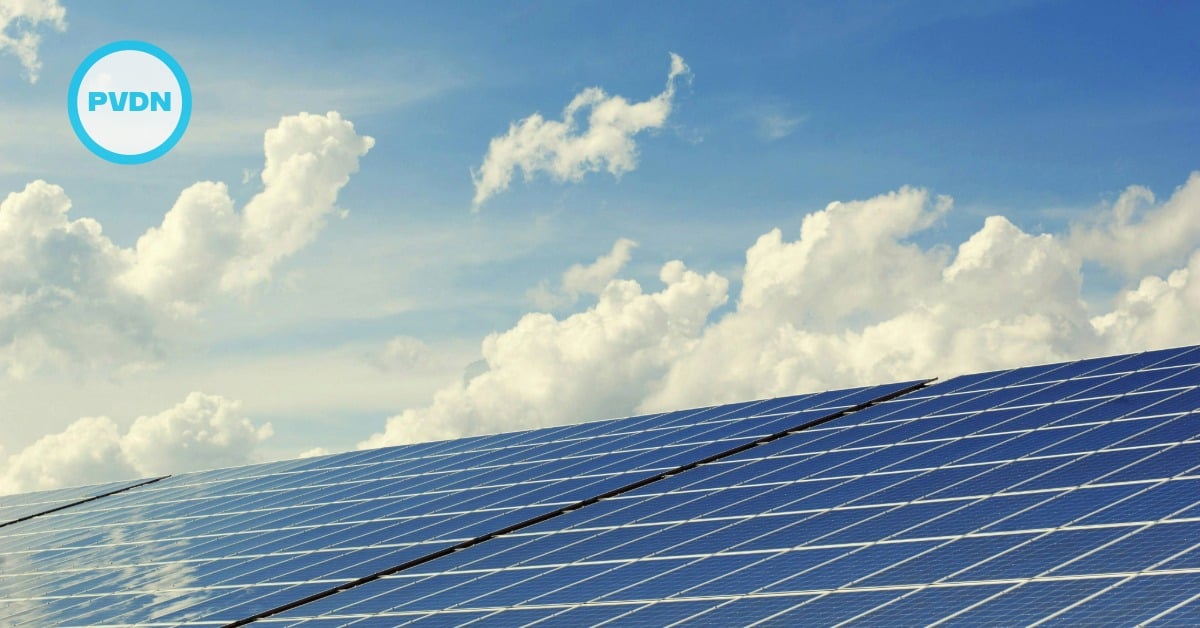
According to the project description, the Tulancingo facility would occupy just over 192 hectares. It would install roughly 167,000 photovoltaic modules of 650 watts each, paired with hundreds of inverters and a dedicated substation stepping voltage up from 34.5 to 230 kilovolts. The filing also includes a battery system to store part of the solar output and a new 230-kilovolt transmission line to move the energy into the national grid. The documentation walks through every phase, from site clearing and construction to eventual closure and abandonment.
Semarnat review for new plants
Both Tulancingo and El Mezquital have been submitted to the environment ministry as regional environmental impact statements, known as MIA-R. That classification reflects the size of the projects and the scale of expected changes in land use, vegetation and local infrastructure. Before any work can start, Semarnat must analyze how the plants would affect flora and fauna, soil and water, as well as nearby communities.
In central Mexico, that review is not a box-ticking exercise. Hidalgo and Guanajuato combine semi-arid ecosystems, farming zones and fast-growing towns. The Tulancingo project, for example, would convert pasture and agricultural land into an energy site for at least two decades. The developer proposes measures such as controlled vegetation clearing, wildlife rescue during construction and buffer zones, but officials will weigh whether those measures are enough to keep the project within federal environmental norms.
El Mezquital, the second project now on Semarnat’s desk, is planned in the municipality of San Miguel de Allende, Guanajuato, with a capacity of 29.9 megawatts. It is promoted by GR Energía Renovables and would cover about 69 hectares. The technical description speaks of 55,200 solar panels of 665 watts, supported by 23 inverters and an underground medium-voltage network connected to a substation that steps up from 34.5 to 115 kilovolts.
Unlike Tulancingo, the El Mezquital site would require clearing a smaller but sensitive strip of vegetation. The project foresees removing around 29.5 hectares of mezquital-huizachal scrub, a type of semi-arid shrubland, while leaving the rest of the property either in exclusion zones or for auxiliary works. That trade-off between new clean generation and the loss of native vegetation is likely to be one of the most closely examined aspects of the file.
Solar projects in San Miguel and Mexico’s energy goals
The solar projects in San Miguel are not appearing in a vacuum. Studies of central Mexico’s energy potential have repeatedly identified Hidalgo and northwestern Guanajuato among the regions with the strongest solar resource, with average daily irradiation close to 5.9 kilowatt-hours per square metre. That natural advantage has already drawn earlier investment, from large plants in western Hidalgo to new proposals spread across the state. Local authorities have publicly spoken of turning Hidalgo into a strategic solar hub by the middle of the decade, while framing renewable energy as one of their main tools against climate change.
At the same time, other recent solar proposals in the state have shown how contentious land-intensive projects can become when communities feel sidelined. Debates around maguey fields, ejido land and promised benefits have surfaced in previous environmental reviews. Those experiences are likely to shape how residents in Singuilucan and San Miguel de Allende read the new files, and what they ask for in terms of consultation, environmental safeguards and economic participation.
National policy adds another layer. Mexico’s Plan 2030 foresees adding almost 22 gigawatts of new electricity capacity between 2025 and 2030, with a strong emphasis on clean technologies such as solar, wind and hydro. Projects like Tulancingo and El Mezquital are modest in that context, but they show that private developers still see space to build grid-scale solar under the current regulatory framework, especially when they can bundle generation with storage and new transmission assets.
For local people, the stakes are practical. If approved, the Tulancingo and El Mezquital plants would bring construction crews, heavy machinery and new high-voltage lines into rural landscapes that are better known for agriculture and tourism than for energy infrastructure. They could also strengthen the regional grid, reduce dependence on fossil-fired plants and open the door for nearby industry to source more renewable power.
Semarnat’s decision will not settle every argument about Mexico’s energy future, but it will send a signal. A green light, perhaps with conditions, would show how far authorities are willing to go in aligning new solar investment with environmental protection and community demands. A rejection, or a request for major redesign, would highlight the limits of expansion in already stressed territories. For now, the two files sit in the ministry’s hands, and residents on both sides of the Altiplano are waiting to see whether the sun will power more of their electricity in the years ahead.