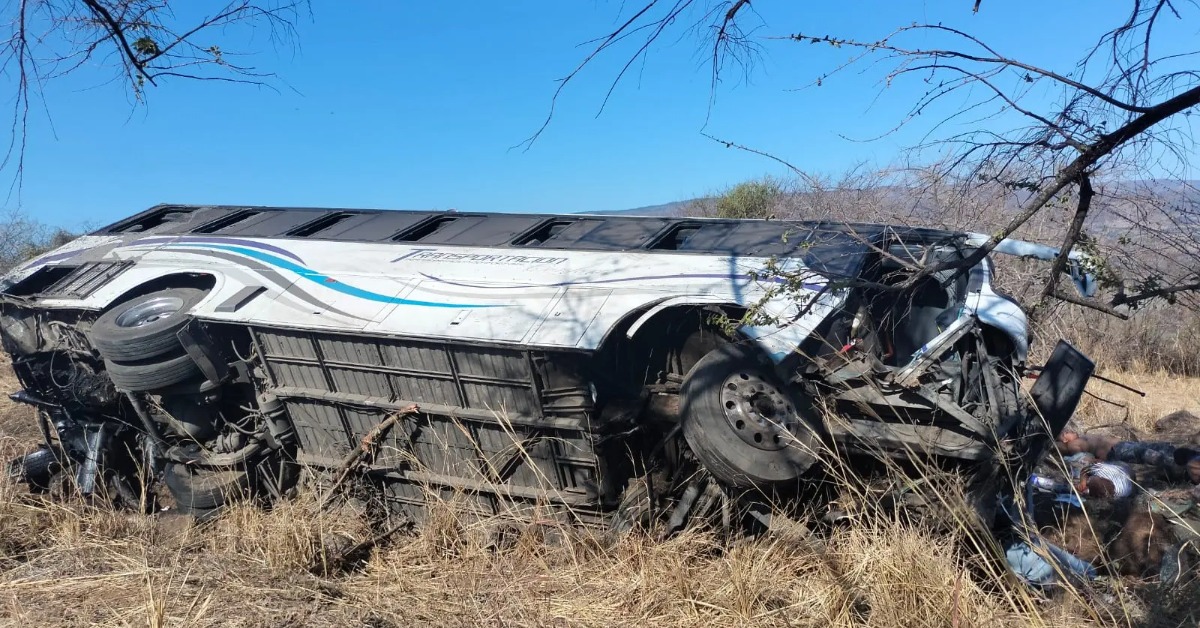
A new survivor account is raising more questions about the deadly tourist bus crash in southern Nayarit. The bus was carrying passengers from Jalisco toward a popular recreation area when it left the road near Amatlán de Cañas. Eleven people died, and more than 30 were injured. Authorities are still working through the investigation, while families in Jalisco continue funeral services and wait for confirmed answers about what happened in the final moments before the crash.
Survivor says Nayarit bus driver warned he had no brakes before crash
A survivor of the Amatlán de Cañas bus crash said the driver warned passengers that he had no brakes shortly before the tourist bus left the road and overturned in southern Nayarit.
The account adds a new detail to an accident that has left 11 people dead and more than 30 injured. Authorities have not confirmed brake failure as the official cause of the crash. The investigation remains open.
The accident happened on Friday, May 1, during Mexico’s Labor Day holiday weekend. The bus was carrying passengers from Jalisco toward El Manto, a recreational area in Nayarit. The crash occurred near the rural community of Pie de la Cuesta, in the municipality of Amatlán de Cañas.
Survivor account raises new questions
A survivor identified as Saúl Ríos Estrada said the bus began to accelerate before the crash. He said he approached the driver and asked him to slow down. According to his account, the driver responded that he no longer had brakes.
The survivor said he did not remember what happened after that moment.
That statement does not settle the cause of the accident. It does, however, give investigators an important line of inquiry. Mechanical condition, driver actions, road conditions, and the bus company’s responsibilities could all become part of the official review.
For now, the strongest confirmed facts are the location, the death toll, the number of injured, and the ongoing work by prosecutors and emergency agencies.
What happened in Amatlán de Cañas
The bus was traveling from Jalisco into Nayarit when it crashed on the road toward Amatlán de Cañas. The passengers were headed to Balneario El Manto, a recreation area often visited by families.
The vehicle went off the road and overturned near Pie de la Cuesta. Emergency teams from Nayarit and nearby areas responded to the scene. Rescue work was complicated by the location and the number of people involved.
Initial reports said several people died at the scene. Others died later while receiving medical care. More than 30 injured passengers were sent to hospitals in Nayarit and Jalisco.
Several of the injured were children. Some patients were later transferred to hospitals in Guadalajara for further treatment.
Families hold funeral services in Jalisco
By Monday, families had begun funeral services for several of the victims. At least some services were being held in Lomas del Cuatro, a neighborhood in San Pedro Tlaquepaque, Jalisco.
Authorities have been working to confirm identities and return remains to relatives. The process included forensic work in Nayarit and coordination with Jalisco agencies.
The victims were largely from Jalisco. Some belonged to the same families or neighborhood groups. The trip had been organized as a holiday outing, according to family accounts shared after the crash.
Publicly confirmed identities remained incomplete as of Monday. Nayarit authorities had confirmed several names, while other names were circulating through family networks and local reporting but had not been officially validated.
Investigation has not confirmed a cause
The survivor’s statement about the brakes is significant, but it remains an allegation within the broader investigation.
Authorities will need to determine whether the bus experienced a mechanical failure, whether the maintenance records were in order, and whether the driver or the company followed safety requirements. Investigators may also review the road, weather, passenger count, and vehicle condition.
The bus was described as a tourist or excursion bus, not a regular public transit route. These buses are commonly rented in Mexico for family trips, church outings, school groups, work groups, and holiday excursions.
For foreign residents in Mexico, that distinction matters. Many people use long-distance bus lines with fixed terminals and regular schedules. Charter buses can operate differently, depending on the company, contract, and oversight involved.
A rural road near the Jalisco border
Amatlán de Cañas is in southern Nayarit, near the border with Jalisco. It is inland from the better-known Riviera Nayarit coast, and far from the main tourist corridors many foreign residents know.
The area includes rural roads, small communities, and routes used by local traffic, visitors, and regional travelers. Emergency response in these areas can take coordination across municipal and state lines.
In this case, authorities in Nayarit and Jalisco became involved because the crash occurred in Nayarit, while many passengers were from Jalisco. Injured people were treated in both states.
What authorities are still working to clarify
The key unanswered question is whether brake failure caused the crash. The survivor account points in that direction, but official confirmation requires technical review.
Investigators will likely examine the bus itself, including the braking system. They may also review whether the vehicle was fit for service and whether it had recent inspections.
Authorities are also continuing to confirm victims’ identities and to support families through the legal and forensic processes. That work can take time, especially when several families are affected at once.
Until the investigation is complete, the cause should be treated as unresolved.
A tragedy during a holiday trip
The crash took place during a long weekend, when many families in Mexico travel by road. These trips are common, especially to beaches, balnearios, and mountain recreation areas.
For many families, charter buses are an affordable way to travel together. They are also common for people who do not want to drive long distances or who are traveling in large groups.
The Amatlán de Cañas crash shows how quickly those trips can turn dangerous when something goes wrong. It also puts renewed attention on vehicle maintenance, driver oversight, and safety checks for charter transportation.
Authorities have not said when the investigation will conclude.