Conexstur, which represents inbound tourism operators, said the response to the Teotihuacán shooting cannot stop with condolences. The group called for closer coordination with authorities and other tourism actors to help protect confidence in Mexico as a destination.
That message matters because Conexstur sits close to the part of the industry that serves international travelers directly. When that sector speaks publicly about traveler confidence, it is reacting to more than one crime scene. It is reacting to how global visitors, travel advisors, tour companies, and overseas media may interpret a violent event at one of Mexico’s most recognized heritage sites.
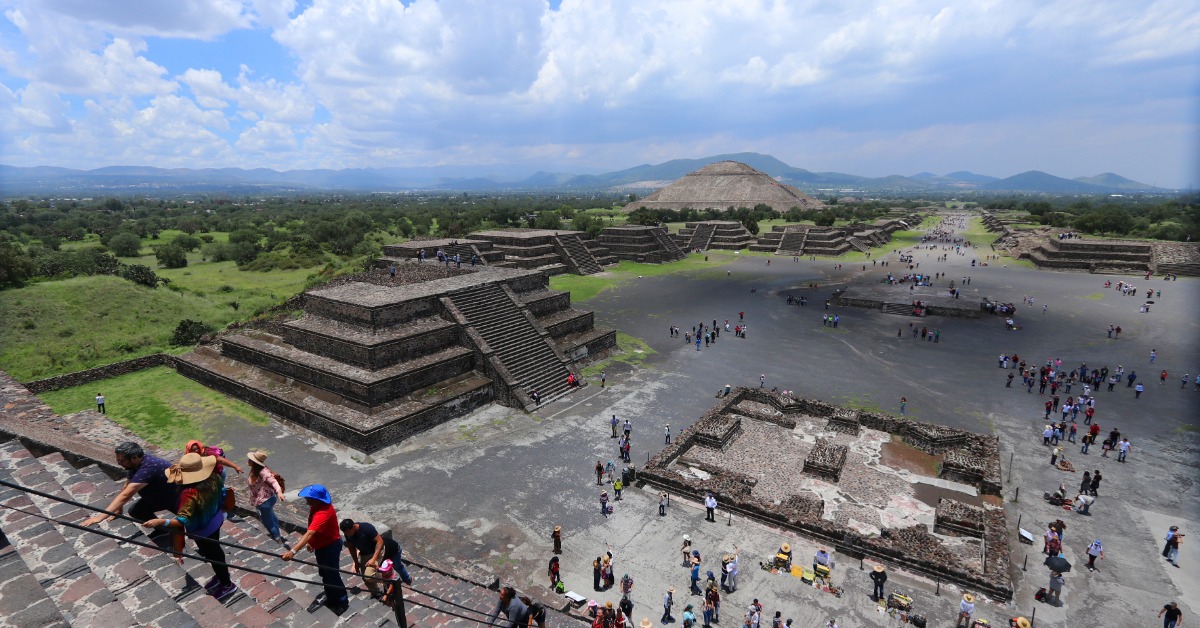
The attack itself was unusually shocking. Authorities said a gunman opened fire at the Pyramid of the Moon on April 20, killing a Canadian visitor and injuring at least 13 other people before dying by suicide. Officials later said the attacker acted alone and that the assault appeared to have been planned.
Why this reaches beyond one archaeological zone
For many foreign visitors, Teotihuacán is not a niche attraction. It is one of the country’s signature day trips from Mexico City. It draws large numbers of international travelers and sits close to the capital, not in a remote corridor that many tourists would avoid anyway.
That is why the incident quickly became a national tourism story. It touched a site associated with Mexico’s cultural identity, not only with leisure travel. It also happened at a moment when Mexico is preparing to welcome global attention for the World Cup 2026, which opens on June 11, 2026, in Mexico City.
In that context, the concern is simple. A single violent event at a landmark destination can shape how outsiders think about the country’s readiness, even if the attack was isolated. For expats and regular visitors, the issue is also practical. Many readers know that Mexico’s appeal depends partly on how easy it feels to move between cities, cultural sites, airports, and major events without constant uncertainty about security.
What changed after the shooting
The government moved quickly to show control. Teotihuacán reopened on April 22 under heavier security. National Guard personnel were deployed, bag checks were added at entrances, and authorities said metal detectors would also be incorporated. Access was slower, and visitors reportedly faced long waits, but the public signal was clear: the site would reopen with a more visible security posture.
The response also started to spread beyond Teotihuacán. Reports from the following days showed tighter screening and reinforced checks at other archaeological zones. That suggests officials view this not as a one-site problem, but as a warning that security protocols at heritage destinations now need to withstand greater scrutiny.
For the tourism sector, that shift matters more than reassurance alone. Travelers tend to judge safety through what they can see. More screening, clearer entry controls, and consistent enforcement are tangible. General safety statements, by themselves, are less persuasive after a widely shared attack at a major landmark.
What Mexico now has to prove
The next stage is not only about policing. It is about credibility. Authorities will need to show that the tougher measures announced after Teotihuacán are not temporary optics. Tour operators will want to see coordination, fast communication, and a consistent standard across high-profile destinations.
That is the space where Conexstur’s statement becomes important. The group is framing security as part of the tourism product itself, not as a separate government issue. In practice, that means visitor trust now depends on how well Mexico can connect public security, site management, tourism operations, and crisis communication.
There is also a wider reputational question. Mexico remains one of the world’s major travel destinations, and tourism performance has stayed strong. But strong demand does not erase the damage that a high-visibility event can do to perception. Ahead of the World Cup, Mexico not only needs visitors to arrive. It needs them to believe that the country can handle iconic public spaces, large crowds, and international attention without avoidable failures.
The bigger takeaway for international readers
For international audiences, the central point is not that Mexico has suddenly become off-limits. It is that Teotihuacán exposed how much pressure now sits on tourism security messaging. A country preparing for one of the world’s biggest events cannot afford confusion between official reassurance and visible conditions on the ground.
That is why this story matters beyond a single day of violence. It is about whether Mexico can turn a reactive security push into a durable standard that restores trust. Conexstur is effectively saying that protecting Mexico’s tourism image now requires shared responsibility, visible action, and proof that confidence is being earned, not assumed.