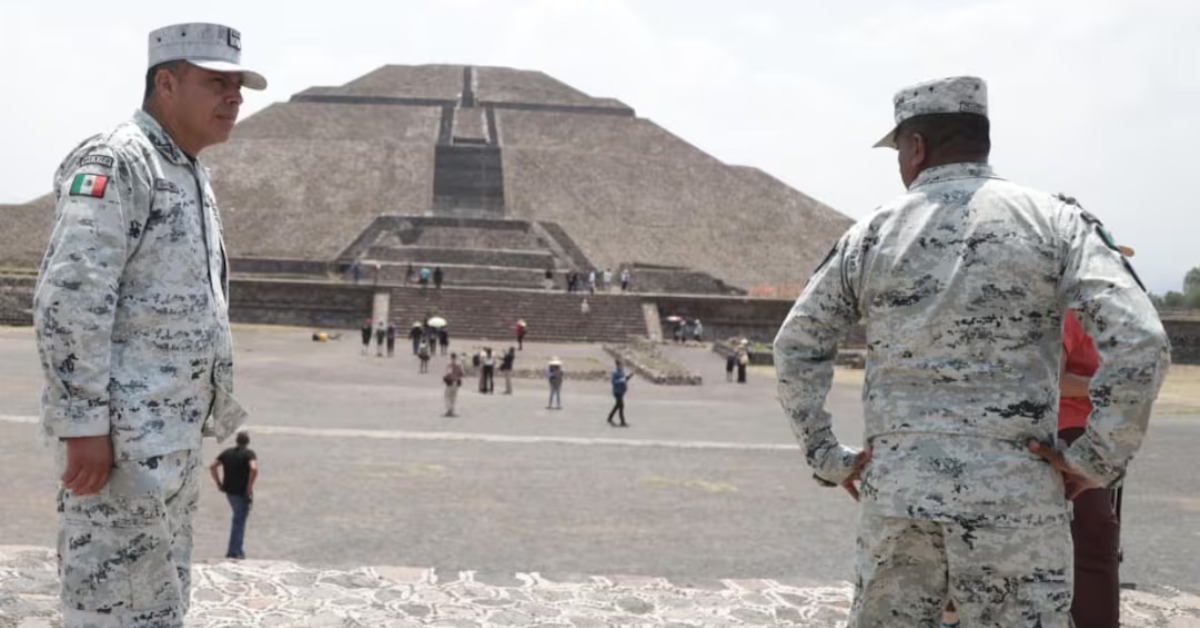
Tourist activity resumed on Wednesday at Teotihuacán after authorities reopened the archaeological zone under tighter security. The site had closed after Monday’s shooting, which killed a Canadian visitor, injured 13 other people, and shook one of Mexico’s best-known heritage destinations.
By late morning, travelers were moving through the entrances again. Some said they had considered canceling. Most decided to continue with plans they had already built into trips through central Mexico. That reaction matters because Teotihuacán is not a niche stop. It is one of the country’s most recognizable archaeological sites and a standard day trip for both domestic travelers and foreigners staying in or near Mexico City.
The reopening did not look like a routine tourism day. Visitors encountered bag checks, patrols, and a much more visible security presence. Authorities said National Guard personnel were deployed inside the site, with more officers outside and around the perimeter. Officials also said metal-detection arches are expected at the entrances in the coming days. The approach appears designed to do two things at once: reopen quickly and show that security will now be treated more seriously.
Why Teotihuacán matters beyond one day of tourism
For many international readers, Teotihuacán is more than a famous set of pyramids. It is a UNESCO World Heritage site about 50 kilometers northeast of Mexico City and one of the country’s most important pre-Hispanic landmarks. The monumental zone includes the Pyramids of the Sun and the Moon and the Temple of Quetzalcoatl. It has long served as both a major cultural destination and a practical day trip for travelers based in the capital.
That matters because what happens at Teotihuacán affects more than ticket sales. The site supports a wider tourism economy that includes guides, transport services, food stalls, and artisans. INAH’s visitor information also reflects that broader role. The site is set up for steady public access, with daily opening hours, guided tours, parking, shops, and museums. In other words, this is not an isolated monument in the distance. It is a working cultural destination closely tied to the surrounding livelihoods.
That local dependence became clear as soon as the site shut down. Vendors said even a short closure directly cuts into household income. One longtime artisan said that hundreds of sellers within the zone depend on the activity there. Food vendors near the entrances reported losses as well, noting that their strongest sales often come from the long weekend stretch between Friday and Monday. For them, a temporary shutdown is not a pause. It is an immediate financial hit.
What changed after the shooting
The most visible change was the security model. Officials said the reinforced operation included National Guard deployments inside the archaeological zone and added personnel outside the access points. State authorities also said the plan would include perimeter patrols, fixed inspection points, and tighter control around commercial activity near several gates.
For visitors, that means Teotihuacán is likely to feel different even if the route through the site remains familiar. The atmosphere now includes visible surveillance and more screening at entry points. For many travelers, that may be reassuring. For others, it is a reminder that the site is reopening while authorities are still responding to a traumatic event that was almost unimaginable in a place better known for school visits, guided tours, and holiday crowds.
The reopening also exposed a deeper issue. Heritage sites like Teotihuacán are built around public access. They are designed to receive families, student groups, foreign tourists, and large seasonal crowds. They are not built like hardened security zones. That tension now sits at the center of the story. Authorities want the site to remain open and welcoming. At the same time, they are under pressure to show that basic screening, prevention, and response measures can work at one of the country’s most visible landmarks.
What this means for travelers and residents
For foreigners living in Mexico, the immediate takeaway is not that Teotihuacán has gone off limits. The site has reopened, and visitors are returning. The more useful question is what kind of visit people should expect now. At least for the moment, the answer is a more controlled visit, with more visible security and a stronger official effort to project order.
The broader issue is confidence. A major archaeological zone can reopen in a day. Restoring trust takes longer. Visitors want to know they can move through a national landmark safely. Vendors want the return of tourists to continue after the first rush of attention fades. Officials want to contain the damage from an event they have described as isolated.
All of those pressures now meet at the gates of Teotihuacán. What happens next will matter beyond one site in the State of Mexico. It will shape how Mexico protects some of its most visible cultural destinations while avoiding disrupting the tourism economy that surrounds them.