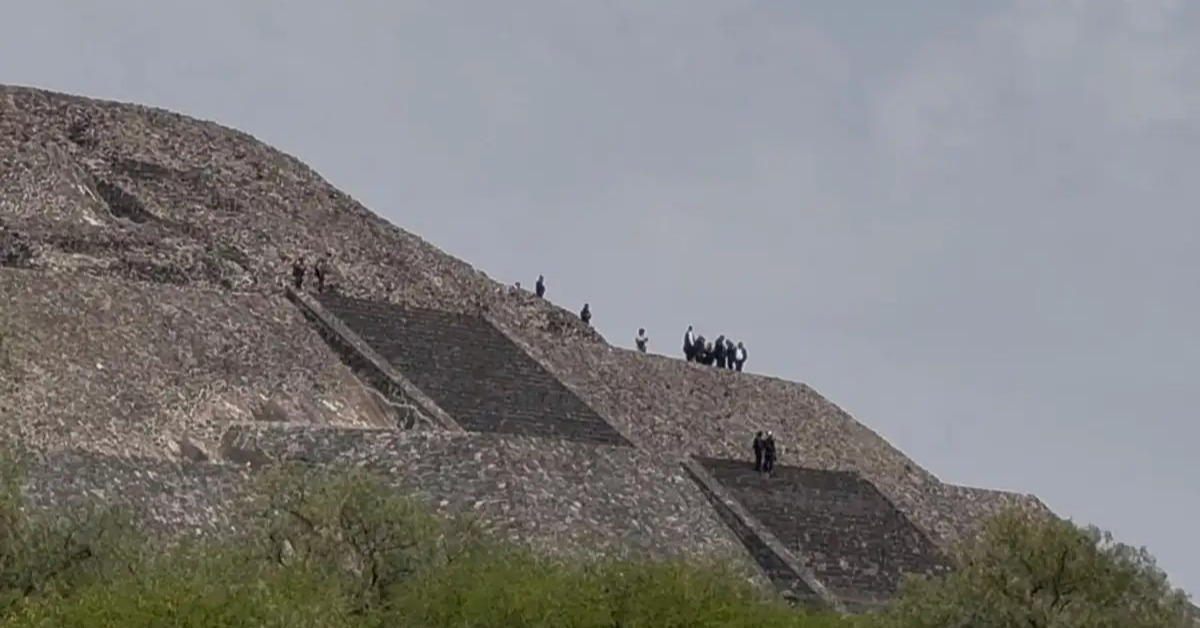
A shooting at Teotihuacán on Monday left two people dead, including a Canadian tourist, and injured other visitors as panic spread through the archaeological zone.
The violence unfolded near the Pyramid of the Moon, one of the site’s most recognized monuments. Authorities said a gunman opened fire in the area, triggering confusion among tourists who ran for safety. The suspected attacker also died at the scene. Officials later evacuated the site and shut down part of the complex while security forces and investigators moved in.
For many readers outside central Mexico, the location matters as much as the attack itself. Teotihuacán is not a remote ruin. It is one of the country’s best-known heritage destinations and a regular stop for foreign visitors based in Mexico City or traveling through the region. When violence reaches a site with that profile, the shock travels far beyond the immediate victims.
Early public reporting on the number of injured varied as authorities worked through the first hours of the response. What was clear was that several people needed medical attention. Some injuries were linked to the rush to escape after shots were heard. That detail matters because it shows how quickly danger can spread in a crowded tourist setting, even beyond the direct line of fire.
Why Teotihuacán matters far beyond the State of Mexico
Teotihuacán is one of Mexico’s most important archaeological zones and a UNESCO World Heritage site. Located northeast of Mexico City, it is widely known for the Pyramid of the Sun, the Pyramid of the Moon, and the long ceremonial avenue that runs through the ancient city.
For international readers, it helps to understand that this is not simply a museum-style attraction. It is one of the country’s signature cultural landmarks, tied to national identity, tourism, and the image Mexico presents to the world. It is also a place that receives large numbers of visitors, especially during holiday periods and seasonal events such as the spring equinox.
That profile makes Monday’s shooting especially significant. When violence happens in a place associated with history, family travel, and cultural tourism, it can alter public confidence quickly. It also brings scrutiny to how visitors are screened, how quickly security can respond, and whether existing controls match the scale of the crowds the site receives.
The setting also adds another layer. Public access to the Pyramid of the Moon had only partially reopened last year due to conservation-related restrictions. Visitors were again being allowed onto the first level of the structure, with rules meant to balance public access and preservation. Monday’s attack will now intensify discussion about whether site management needs stronger safety measures in addition to heritage protection.
What authorities have said so far
Federal and state authorities moved quickly to secure the area after the shooting. Security personnel, investigators, and forensic teams were sent to the site, while officials began piecing together what happened and whether anyone else may have been involved.
Mexico’s president said the federal government was in contact with the Canadian Embassy and directed the security cabinet to investigate the incident thoroughly. That response reflects both the seriousness of the attack and the diplomatic sensitivity that follows when a foreign national is killed at a major tourist destination.
At this stage, key questions remain open. Authorities still have to explain how the attacker entered the zone with a weapon, how much warning existed before the shooting, and whether existing checks were enough for a site that routinely receives foreign visitors. Those are not secondary questions. They go to the core of how Mexico protects people at locations promoted as national treasures and tourism anchors.
The answers will also matter for tour operators, hotels, guides, and expats who host visiting family and friends. Teotihuacán is often recommended as an easy cultural day trip from the capital. Any change in public trust can quickly affect travel decisions, even if the site reopens in short order.
What this means for visitors and residents
For foreigners living in Mexico, the incident lands on two levels. First, it is a public safety story with an international victim. Second, it involves one of the country’s most familiar visitor destinations, a place often treated as a dependable cultural outing rather than a setting where violence might erupt.
That does not mean the event should be read as a blanket measure of safety at every archaeological site in Mexico. But it does mean travelers and residents will likely pay closer attention to practical details that once felt routine. Security screening, crowd control, emergency exits, and on-site response times may now become part of the conversation in a way they were not before.
The case may also renew a broader discussion that has surfaced around Teotihuacán in recent years. The area has attracted repeated public attention due to tourism management, commercial pressures, and safety concerns linked to activities around the site. Monday’s shooting is different in scale and nature, but it fits into a larger debate over how one of Mexico’s most valuable cultural destinations should be protected.
For now, the immediate focus remains on the victims, the injured, and the investigation. But the larger issue will not disappear once the police tape comes down. A deadly attack at Teotihuacán forces a hard question: how secure is a place when it is designed to welcome the world?