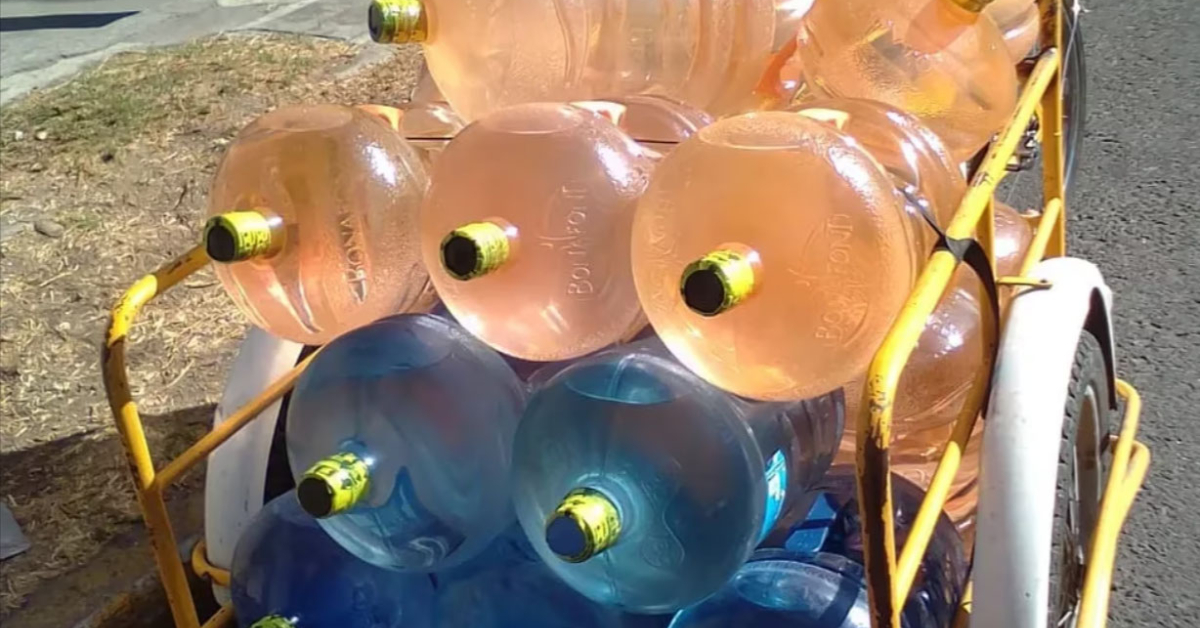
Puerto Vallarta (PVDN) – Around 40 million people in Mexico consume bottled water from approximately 24,000 local refillers, most of which operate without a license from the Federal Commission for the Protection against Sanitary Risks (Cofepris) and fail to comply with health standards. Therefore, an estimated 30 million citizens may be consuming contaminated water, as stated by Juan Francisco Bustamante Ruisanchez, President of Agua en México.
According to recent studies conducted by the National Polytechnic Institute (IPN), the Autonomous University of Mexico (UAM), and Agua en México, 7 out of 10 containers filled with water at a refilling station have been found to contain bacteria.
Bustamante Ruisanchez emphasized that water intended for human consumption must have a proper balance of salts and minerals to ensure proper hydration. However, a significant portion of the population is consuming poor-quality water.
He added that these refill stations do not maintain their equipment nor control the packaging, simply filling bottles with improperly purified water. In many cases, these refill stations also pirate water from a well-known company.
While some people have grown accustomed to consuming unbalanced water, the specialist expressed regret that this situation persists in Mexico, where in countries like the United States and Europe, the water that reaches homes is suitable for drinking.
For this reason, Bustamante urged consumers to demand their right to quality water and report these refilling businesses to the authorities for verification and compliance with filtering and purification standards, as well as good practices to avoid health risks.
Customers who purchase bottled water must consider three fundamental requirements. Firstly, they should look for the notice of operation issued by Cofepris, which grants permission to sell water intended for human consumption. Secondly, the refilling station should have bacteriological studies verifying that the water produced complies with sanitary norms established by Cofepris. Lastly, the establishment should follow good practices visible to the public, including wearing appropriate clothing, using caps and face masks when handling food for human consumption.
In case of failure in any part of the process, the product may become contaminated, and the consumer may suffer the consequences.
The specialist stated that if good practices are not fully followed during the process of washing containers, washing filters, purifying, and sealing, the product may become contaminated at some point in the process.