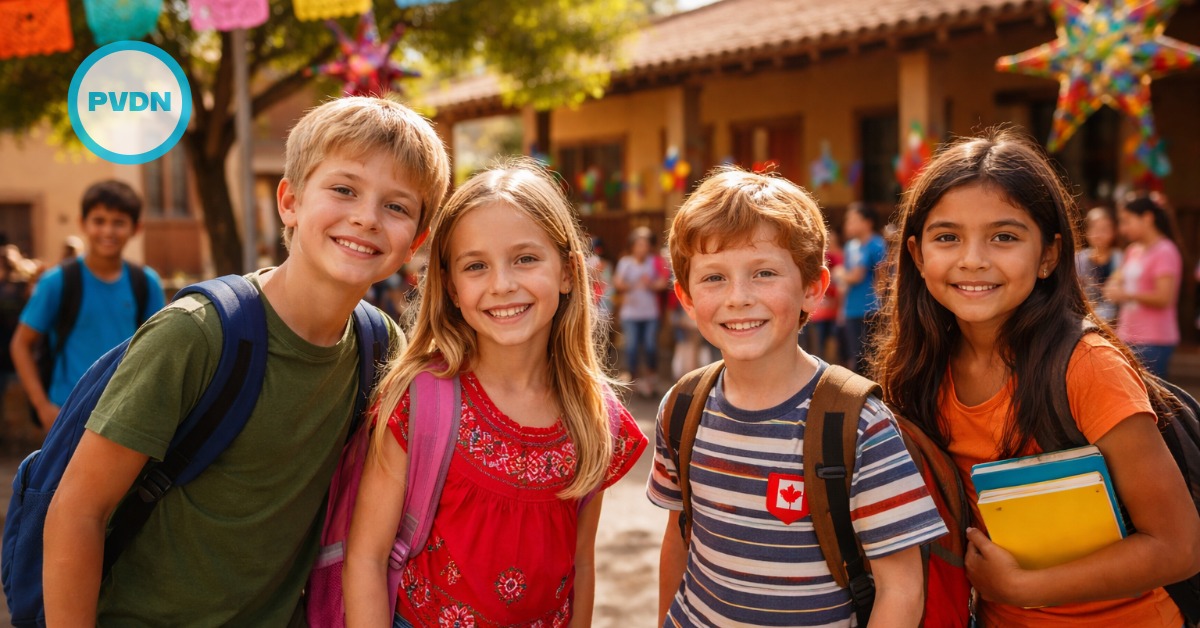
For expat parents in Mexico, school pick-up might mean switching between Spanish and English mid-sentence, and birthday parties involve mastering the piñata swing. Raising children abroad brings surprises and dilemmas—from choosing between local and international schools to watching your little ones celebrate U.S. Thanksgiving and Mexican Independence Day with equal excitement. These “third culture kids” straddle worlds effortlessly, but how do their families navigate the cultural mash-up? It’s not always easy, but as several parents reveal, the journey is full of unexpected rewards.
When an American or Canadian family moves south of the border, they aren’t just changing addresses—they’re transforming their children’s world. Young sons and daughters who once knew only one home country suddenly find themselves growing up between two. Third culture kids (TCKs) are children raised in a culture different from that of their parents. In Mexico, these kids blend their heritage with the customs of their new home, creating a unique third culture of their own. The result? Children who can order tacos in fluent Spanish and chat with their grandparents in English on a video call. They feel equally at ease singing the Mexican national anthem at school, and later reciting the Pledge of Allegiance at a July Fourth picnic.
School Days: Local vs. International
One of the first big decisions expat parents face is where to send their kids to school. Mexico offers a spectrum of educational options. Some families enroll their children in local public schools or private Mexican schools, diving headfirst into Spanish immersion. Others opt for international or bilingual private schools instead. These schools often teach in English (or a mix of English and Spanish). They usually follow a curriculum similar to back home. Each choice comes with trade-offs. Local schools provide deep immersion in Mexican culture and language. Your child quickly learns the words to Las Mañanitas (the traditional birthday song) and makes neighborhood friends. International schools, on the other hand, can offer a gentler academic transition. They feature familiar teaching styles and classmates from various countries. However, they often come with hefty tuition fees. These campuses can sometimes create a bubble of expat privilege.
For many, the allure of local schools is the chance for their kids to truly integrate. The Mexican education system might differ from what parents are used to. For example, there may be more emphasis on memorization, required uniforms, and weekly flag ceremonies. Or there might simply be a different approach to homework. Navigating enrollment can be an adventure in itself. Picture piles of paperwork in Spanish and new vaccination requirements. Yet the payoff comes when your child starts chattering in Spanish. They begin to understand cultural nuances far beyond what they’d get in a language class. “Our twins went from being monolingual homeschoolers to bilingual life learners,” recalls one mother who moved her eight-year-olds from the U.S. to a small town in Nayarit. Within a year at a local primaria (elementary school), “they could easily flip back and forth between English and Spanish.” Seeing that rapid growth in fluency and confidence reassures parents. Even if the math curriculum or school schedules look different, their children are clearly gaining something invaluable.
Of course, not every transition is smooth. An international school in Mexico City or Guadalajara might resemble a North American school. By contrast, dropping a shy third-grader into a completely Spanish-speaking classroom in a rural town can be a tough start. Many families report that the first few months require patience. There may be tears of frustration over not understanding lessons or missing old friends. But young kids are remarkably resilient. Teachers in Mexico are often warm and accommodating to newcomers, and classmates tend to be curious and welcoming. Before long, that once-timid child is coming home singing a song about the Día de la Bandera (Flag Day). They might even correct your pronunciation.
Growing Up Bilingual
Perhaps the most visible transformation in expat kids is linguistic. Language is no longer an academic subject for them; it’s the key to their daily fun and friendships. Playground games, sleepover giggles, and classroom discussions rapidly train their ears and tongues. Many parents marvel when they realize their child has become the family’s unofficial interpreter. Suddenly, their little one is ordering quesadillas at the market or chatting easily with the Spanish-speaking handyman, while Mom and Dad are still fumbling with basic phrases. Children who arrive in Mexico with little or no Spanish often turn into confident bilinguals within a year or two. This is especially true if they attend local schools or make local friends.
One American dad, whose family settled in Oaxaca, was stunned by his preschooler’s progress. At the first parent-teacher meeting, he discovered something astounding. His four-year-old son—who had barely spoken in full sentences back in California due to a mild speech delay—was now happily chatting away in Spanish with his classmates. “He was speaking in full sentences in class in Spanish. It was a total surprise because he was only speaking English at home,” the father admitted. He felt a swell of pride and relief at seeing his child thrive in Spanish. Stories like this are common. Kids often start out silent or confused in a new-language environment. Then, suddenly one day, you overhear them playing pretend with their toys in Spanish or using new slang you never taught them.
Being bilingual becomes second nature. Expat children seamlessly switch languages depending on context. They might speak Spanish with friends and teachers, and English with parents. Sometimes they even mix both with siblings who share both worlds. Code-switching (jumping between languages in one conversation) is a normal part of their day. They might exclaim, “Mami, mira lo que hice!” (Mom, look what I did!) one minute and then revert to, “Watch me do this!” the next. At times, their English might pick up a Mexican lilt. Or they’ll slip in a préstamo (borrowed word) from Spanish because it just fits. Rather than confusing them, this linguistic juggling act often boosts mental flexibility. Research suggests that bilingual kids tend to develop strong problem-solving skills and multitasking abilities, thanks to all that mental switching. More importantly, knowing the local language deeply connects the child to their community. They aren’t outsiders looking in; they sing the rhymes, trade the secrets, and tell the jokes just like a native.
Embracing Two Cultures
Ask a third culture kid in Mexico about their childhood, and you’ll hear about a tapestry of traditions and memories woven from two worlds. These kids don’t just observe Mexican culture; they live it while keeping their family’s customs alive. Take the quintessential Mexican birthday party. An expat child might have been confused at their first cumpleaños celebration, when everyone gathered around singing “Dale, dale, dale” as a blindfolded friend swung a stick at a bright papier-mâché piñata. But it only takes one shower of candies and a good-natured scramble on the ground for them to master the art of the piñata. They learn quickly to dive in for the sweets, and that it’s all part of the fun. And when it’s their own birthday, they might even brace for “la mordida”. This is the light-hearted tradition in which the birthday kid’s face is gently pressed into the cake after blowing out the candles, amid laughter and chants of “¡Mordida! Mordida!” What was once bizarre or startling becomes eagerly anticipated. One California-born mom recalls her children begging for a piñata at their U.S. parties after experiencing how much more exciting birthdays were “Mexican style.”
Beyond birthdays, bicultural kids in Mexico celebrate a calendar full of holidays from both countries. A ten-year-old in Guadalajara might dress in green and red for Mexican Independence Day on September 16, shouting “¡Viva México!” with her classmates during the school assembly. Then, come late November, she’ll help her parents bake pumpkin pie for an American Thanksgiving dinner on the patio. These children often become cultural bridges. They teach their Mexican friends about Halloween or Easter egg hunts, and in turn explain to curious relatives back home what it was like to build an altar for Día de Muertos at school or to march in a Revolution Day parade. For them, it’s perfectly normal to have two sets of traditions. They might hang up a stocking for Santa. They also set out shoes for the Reyes Magos (the Three Kings) in early January. Rather than feeling overburdened, many expat parents find that their kids relish having extra reasons to celebrate. Each holiday is another chance to eat special food, hear stories, and feel connected to a part of their identity. It might be lighting sparklers on the Fourth of July, joining the posada procession at Christmastime, or singing “Feliz Navidad” with neighbors.
Living in Mexico also gives expat kids a front-row seat to the richness of Mexican family life and community. Many foreign parents are struck by how inclusive events are here. Children are welcome at nearly all social occasions, from weddings to late-night fiestas. Your child might attend a classmate’s quinceañera (15th birthday) and marvel at the elaborate gown and choreographed dances. They could also spend a lazy Sunday afternoon with your Mexican neighbors, feasting on carne asada while kids of all ages play together in the yard. These experiences teach kids to be adaptable. They learn when to yell “¡Feliz cumple!” and when to stay respectfully quiet during a mariachi serenade. They grow comfortable with different music, different foods (yes, even spicy chamoy candies and tamarind sweets), and different social customs. Over time, they develop a keen cultural awareness. It’s not unusual for a third culture kid in Mexico to display a level of empathy and worldliness that even surprises their parents. Such a child might handle cultural mix-ups with grace. They might stand up for a classmate being teased for an accent, because they know what it’s like to be between cultures.
Challenges and Adjustments
None of this is to say that raising kids between cultures is all dulce de leche and roses. Expat families encounter real challenges as they adapt. Initially, the simple logistics of life can be daunting—a new language to learn, new driving rules, new school bureaucracy. Kids might struggle at first with being the “new kid” who can’t communicate fluently. Some parents describe the heartbreak of seeing their child sit alone on the first day of school, unable to join the fast-flowing Spanish conversation. These moments usually pass as language skills grow, but they still require gentle support and plenty of encouragement at home. Keeping up with the academic differences can also be tricky. For example, math might be ahead or behind what your child was learning back home. Or there’s more handwriting practice and national history to memorize than you expected. Expat parents often become extra involved with homework in the early days. It’s not only to help with translation but to understand what subjects are being taught.
Socially, there can be a bit of a culture shock. A Canadian mom in Puerto Vallarta chuckled, recalling how puzzled she was when her son’s classmates greeted her with a polite kiss on the cheek each morning. That was a far cry from the casual wave she’d get from kids in Canada. She realized it was a sign of respect and affection in Mexico. Soon her son was doing the same with his friends’ moms and even teachers. Getting used to different customs is a learning curve. For example, your child might be surprised that everyone stands up and sings the national anthem every Monday at school. They might also find it unusual that at birthday parties, the entire extended family (and then some) shows up and stays until midnight. Bedtimes, in fact, often shift later in Mexico. It’s not uncommon to see toddlers still chasing each other at 11 PM during a family fiesta while the parents dance. The attitude tends to be, “They’ll sleep when they’re tired.” For newcomers used to strict 7:30 bedtimes, this can be bewildering at first. But many adapt and even appreciate the more relaxed approach to family evenings.
Still, finding the right balance between two sets of norms can be delicate. Expat kids sometimes feel “different” from peers in either country. They may seem too Mexican when visiting family back home, with their new slang and soccer obsessions. But in Mexico, they’re obviously foreign in some ways to their friends—maybe their accent in Spanish gives them away, or they don’t quite get a local pop culture reference. Parents have to be attuned to these identity questions.
Another challenge can be the distance from extended family. Growing up abroad means grandma and grandpa might not be at every birthday or school play. Some expat families make annual summer trips back home, so the kids can bond with cousins and remember where they came from. Others invite relatives to Mexico for the holidays, proudly watching their children act as “tour guides” who showcase their bilingual abilities and favorite local spots. Today’s technology (video calls, social media) helps bridge these worlds, but it’s not the same as being there. This absence can sometimes weigh on kids, especially older ones who remember life “back home” more clearly. A teenager might miss out on friendships or rites of passage with their old crowd. These emotional challenges are subtle but real. It helps when families openly talk about these feelings. They celebrate the cool parts of having two homes while also acknowledging that it’s okay to feel sad or out of place occasionally.
Thriving in Two Worlds
In the end, most expat parents come to see that the benefits are overwhelmingly evident. The phrase “third culture kid” might sound academic, but in day-to-day life, it describes a young person with remarkable adaptability, empathy, and confidence. These bicultural children have effectively been given two childhoods in one. They learn early that there is more than one way to live, speak, eat, and celebrate. Such kids often grow up to be especially open-minded adults. By navigating two cultures, they become natural bridge-builders. One day in the future, your son might be the only one in his college dorm who knows how to make real guacamole. Your daughter could be the classmate who effortlessly befriends the international student, because she knows what it’s like to be new.
Parents also notice practical upsides: bilingual kids have an academic and professional edge. Studies have found that growing up bilingual can enhance cognitive flexibility and even creativity. Teachers often observe that these students bring a broader perspective to classroom discussions, sharing anecdotes from their lives in Mexico that enrich everyone’s understanding. Culturally, they tend to be chameleons—in a good way. Whether you drop them in a bustling Mexico City market or a quiet suburb in Ontario, they find ways to connect and adapt. One expat mom laughingly called her bicultural daughter a “social Swiss Army knife.” This girl is equally at ease singing karaoke in Spanish at a friend’s birthday, and discussing the latest Marvel show in English on a family Zoom call.
Crucially, raising third-culture kids in Mexico can deepen the family’s bond. Together, you’re all learning and growing, sharing the discovery of this beautiful country. Kids often lead the way with language and cultural integration, pulling parents into community events and new friendships. As they thrive, parents gain confidence too. Many who came for a job opportunity or a change of pace find that Mexico becomes home in ways they never expected. “Moving to Mexico has been an undeniable adventure that continues to shape our lives,” one mother reflects. She emphasizes how the experience has been a positive force for her children. “Our kids see a life without limits now – that anything is possible, that carving one’s way in this diverse world is achievable.” In a world that seems to get smaller every year, giving your children the gift of two cultures is like opening a door to endless possibilities.
In Mexico, third culture kids aren’t outsiders. They’re bicultural insiders. They are the bilingual bridge between abuela and grandma, between here and there. With each school year, each holiday, each friendship, they are quietly building a cultural fluency that will serve them for life. The challenges are real, but the rewards are extraordinary. As expat parents in Mexico are finding out, raising children across cultures doesn’t mean splitting identities—it means enriching them. Their kids aren’t growing up in one world or the other; they’re confidently growing up in both.