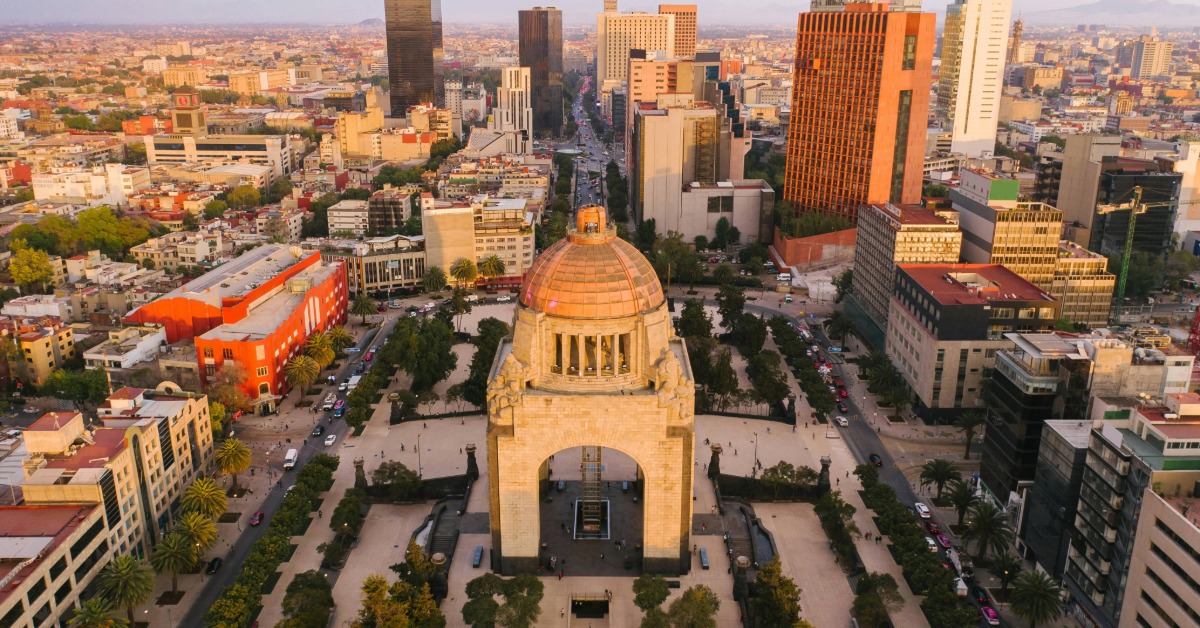
When a wise man points to the moon, a fool looks at the finger. That proverb has been repeated so often that it risks becoming wallpaper—but in the recent anti-gentrification marches in Mexico City, it fits like a key in the wrong lock. The protests promised to highlight the displacement of long-term residents. Instead, xenophobic and patriotic rhetoric hijacked the narrative, obscuring the underlying class dynamics that have dispossessed the city’s poorest for decades. The surface anger aimed at foreigners and cultural markers became a distraction from the systemic alliance of political and real estate power reshaping urban life.
The early July march—held on July 4, 2025—carried the unmistakable stamp of nationalism. Chants of “Gringos out” and pointed blame toward foreign residents turned a complex economic and social process into a cultural scapegoat. A later rally on July 20 saw shopkeepers reinforcing identity-based divides, displaying signs asking to protect “Mexican families,” further muddying the water between legitimate concerns over displacement and a narrative that conflated class with nationality. Those shifts were neither inevitable nor innocent; they emerged from a loosely organized protest structure overwhelmed by the scale and diversity of participants, including newcomers who brought in conflicting grievances and interpretations.
Yessica Morales, part of the revived anti-gentrification front in CDMX, acknowledged the drift. Her insistence that the narrative should not focus on migration but on “the differential treatment that can occur even among nationals” cuts to the bone of what was lost in the noise. “Those who can pay more seem to have more right to stay here,” she said, pointing to the core of the problem: survival in Mexico City is increasingly tied to income, and affordability has been hollowed out by policies and market forces that privilege capital over community.
The protests’ xenophobic flashpoints—anger at foreigners speaking English, resentment at rising café prices in Roma or Coyoacán, and the perception of cultural displacement—are real emotions. They are symptoms of a deeper wound, not the wound itself. The easy target of foreign residents with dollar or dollar-adjacent purchasing power offers a narrative that feels immediate and comprehensible, even if it misdirects. Framing gentrification as a clash of cultures or an invasion of outsiders mirrors dangerous simplifications seen elsewhere—much like right-wing rhetoric in the U.S. and Europe that blames migrants for economic inequality rather than interrogating who controls wealth, who avoids taxes, and who captures public resources. Acting “like the gringos but in reverse,” as documentary filmmaker Jacaranda Correa warns, satisfies a short-term emotional itch while leaving the structural architecture of displacement untouched.
To understand the root, the context must shift from cultural markers to the political and economic choreography behind urban change. Gentrification in Mexico City did not begin with digital nomads or pandemic-era capital flows; it traces back decades, shaped by alliances between political actors and real estate interests that have consistently commodified public space while pushing low-income residents to the margins. Sociologist Pablo Gaytán locates a pivotal moment in 1982 with the development of the private Santa Fe complex, which he describes as the start of “whitening by dispossession”—a process that systematically displaces families to the periphery while rebranding urban cores for wealthier, often whiter, consumption.
The pattern continued through successive administrations. Gaytán points to actions under figures like Manuel Camacho Solís—whose political trajectory intersected PRI, PRD, and alliances with later Morena influencers—and the real estate entrenchments that persisted across ideological banners. What he calls the “real estate state” is less about party labels than about networks: developers and financial groups such as RE URBANO, PARQUE, THOR URBAN, and KALUZ operating with tacit tolerance or explicit cooperation from elected officials, reshaping neighborhoods into branded consumption zones while erasing the public and community layers that once defined them.
Urban planner Víctor Delgadillo underscores that the visible faces of urban change—whether framed as recovery or improvement—often mask displacement. He points out that under Andrés Manuel López Obrador’s tenure as head of government, strategies labeled as “recovery” of the historic center included the removal of street vendors and homeless people, effectively clearing low-income visibility while opening space for sanitized consumption. That public-private choreography continued with powerful actors like Carlos Slim recasting such spaces in ways that benefit elite interests. Delgadillo’s blunt framing is a corrective: foreign consumers are oft-cited symbols, but the real levers belong to the public and private agents who hold the power to redefine neighborhoods and shift costs onto the vulnerable.
The consequence is predictable. Middle-class residents begin to feel displacement when their cultural comfort zones are encroached upon by higher-priced consumption, while the deeper, historical displacements—pushed outward since the early 1980s—remain invisible until they become politically usable. The arrival of foreign capital after the pandemic provided a convenient scapegoat to explain what had been a long-running reshuffling of urban space driven by domestic elites. That scapegoating deflects from the fact that gentrification in Mexico has repeatedly cut across party lines, from San Miguel de Allende to San Cristóbal de las Casas, because the real payoff is in multi-million-dollar urban deals, not ideology.
Against that background, recent policy shifts in the city offer a glimpse of corrective possibility. Mayor Clara Brugada unveiled a 14-point plan to address gentrification, including caps on rent increases tied to inflation, the creation of rental price indexes, and broader oversight mechanisms intended to mediate abuse and limit speculative ownership concentration. The official framing recognizes that unchecked price hikes and opaque property accumulation accelerate displacement, and it signals a willingness to regulate the levers that have long favored capital over residents.
But policy without enforcement remains fragile. The success of rent caps and anti-speculation measures hinges on exposing and penalizing evasive practices—front men, opaque ownership structures, and the informal graft that lets the same actors benefit regardless of which party wears the badge of governance. The inherited web of power, whether from PRI, PRD, PAN, Morena, or alliances between them, is what activists rightly call the “political dinosaurs” trampling on the city’s urban fabric. Dismantling that web takes more than rhetoric; it takes sustained institutional scrutiny of urban renewal contracts, transparency in campaign financing linked to real estate deals, and a shift in which voices carry weight in defining what counts as “progress.”
The protests, then, contain both a warning and an opportunity. The warning is that misdirected anger can fracture alliances and leave the core problem untouched. The opportunity lies in re-centering the conversation around class, ownership, and the public interest—building bridges between those displaced long ago and those newly squeezed, rather than letting cultural or national identity become the wedge.
If Mexico City is to reclaim its destiny, the moon must be the focus: the structural class struggle embedded in urban policy and capital flows. The finger—xenophobic scapegoating, identity theater, and simplistic blame—must recede. Only then can the city begin to unravel the layered dispossessions and create space for residents who have been here, and who should stay, not because they fit a cultural stereotype, but because their right to the city is defended equally.