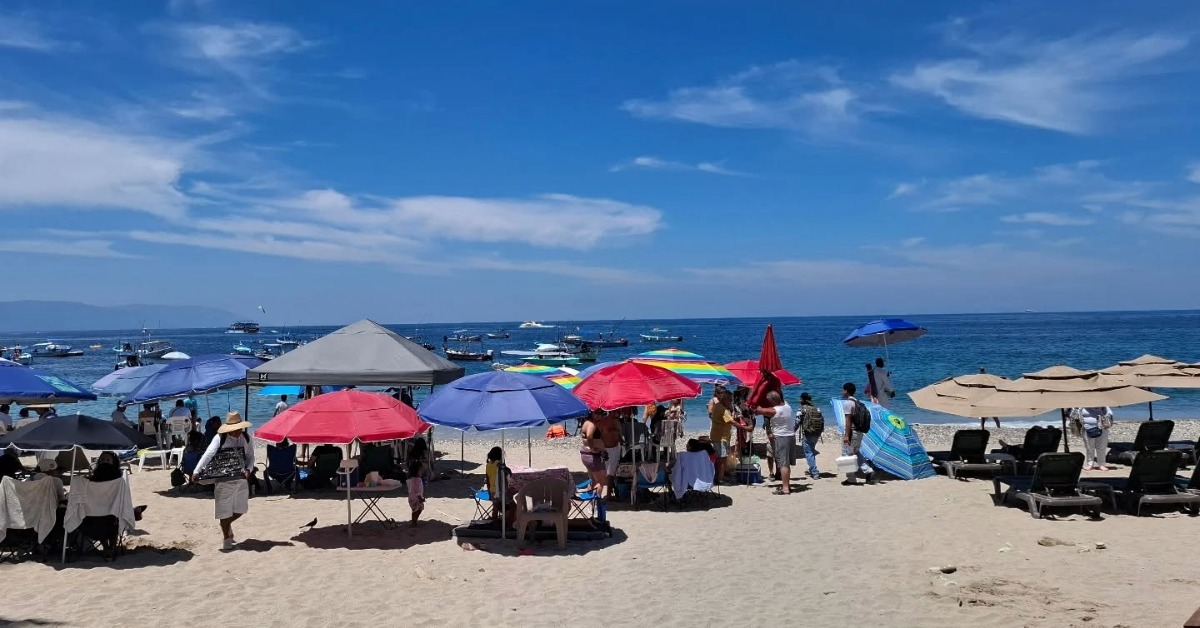
Semana Santa in the Bay Region usually means packed beaches, heavier traffic, and brisk business. This year, Bahía de Banderas has reported three deaths in a matter of days. Two people died in separate water incidents. Another person died in a crash on Highway 200. For Puerto Vallarta readers, the story is not distant. It points to the same beach and road risks that shape the wider bay during one of its busiest periods. The cases also raise a broader question about how people read warnings, assess conditions, and navigate the holiday rush.
Three deaths in days, not one isolated event
Authorities in Bahía de Banderas say three people died during the Semana Santa holiday period, with two deaths linked to the sea and one to a crash on Highway 200. The first reported case was on March 29, when an older man from Toluca was pulled into deeper water by rip currents and later recovered without vital signs. A second death was reported on April 3 at Playa Palito Verde, in the coastal stretch between La Manzanilla and La Cruz de Huanacaxtle. The third was a highway fatality on the Sayulita-San Francisco stretch of the federal road.
For readers in Puerto Vallarta, this is not just a story from the other side of a state line. The Vallarta-Bahía corridor functions as a single bay region in daily life. Residents cross for beaches, restaurants, errands, work, and weekend trips. Visitors do the same, often without paying much attention to where Jalisco ends and Nayarit begins. That is why a public safety problem in Bahía de Banderas quickly becomes relevant in Puerto Vallarta. The same crowds, travel patterns, and assumptions about local conditions move across the same coastline and roads.
The sea can look calm and still be dangerous
What stands out in this case is that the two water deaths do not appear to be random events with no warning signs. In the days before the latest summary, authorities had already raised alerts about red-flag beach conditions, high surf, and rip currents in parts of the Nayarit coast, including Sayulita. Another report on the Palito Verde death said the victim was found in a difficult access area after being dragged by the sea. That matters because visitors often judge danger by what they can see from shore. The surface may look manageable. The pull below it may not be.
That gap between appearance and risk is one of the hardest things to explain to short-term visitors and even to longtime residents who grow comfortable with familiar beaches. A red flag is not decoration. It is a warning that local responders already see conditions that can turn a swim into a rescue. In parts of the bay, those risks rise fast when mar de fondo, stronger sets, or changing currents arrive. Once someone is carried outward or into rockier sections, the odds worsen quickly. Rescue can still happen, but the margin narrows.
Highway 200 remains part of the holiday equation
The third death shifts the story from the surf to the pavement, but the broader pattern remains the same. The fatal crash happened on the federal highway between Sayulita and San Pancho, a stretch used heavily during holiday travel. It is a familiar road, yet it remains unforgiving when traffic builds, drivers speed, or someone misreads a curve. During vacation periods, the road carries a difficult mix. There are local commuters, delivery traffic, tourists in rental cars, buses, motorcycles, and drivers unfamiliar with the route. That raises the risk that one bad decision becomes fatal.
Official holiday operations in Nayarit and Bahía de Banderas were not designed solely around beaches. Authorities had already described a broader deployment that covered roads, urban areas, and coastal zones, with federal, state, and municipal forces involved. That wider setup helps explain why this story should not be read only as a drowning brief. It is really about how holiday risk spreads across an entire destination system. Beaches get the attention because the images are immediate. Roads often produce the quieter but equally serious toll, especially in a region where tourism movement depends so heavily on a few shared corridors.
What the wider bay should take from this
The clearest takeaway is that the holiday safety system only works when people treat warnings as real limits. A beach flag matters. A rough-water advisory matters. So does the simple fact that a highway packed with holiday traffic is not an ordinary weekday drive. For expats and foreign residents, that point is worth stating plainly. Familiarity with the bay can create false confidence. Many people know the area well enough to relax, but not well enough to predict changing sea conditions or the behavior of drivers around them during a peak travel period.
The three deaths reported in Bahía de Banderas do not tell one simple story. They point instead to a broader reality about life in the bay during Semana Santa. The danger is not only in one beach, one town, or one crash site. It is in the overlap of tourism, routine movement, weather, water, speed, and habit. Puerto Vallarta readers should understand this as a regional warning, not just a neighboring headline. The same bay that supports tourism and daily life can turn risky fast when people stop reading the signals in front of them.
Deep Dive:
Puerto Vallarta expands beach watch for holiday rush
Puerto Vallarta tightens beach watch for Easter crowds
Puerto Vallarta beaches on alert as mar de fondo builds
With information from Secretaría de Turismo del Estado de Nayarit, Turismo de Bahía de Banderas