On a busy stretch of Tijuana’s Zona Este, a group of artists is turning ordinary walls into something unexpected. The “Stop Wars” project uses familiar science-fiction imagery, but adds Mexican details that make the work feel rooted in the border city. The result is part mural project, part neighborhood statement, and part reminder that public art can change how people experience even the most routine parts of daily life.
Tijuana street art turns a boulevard into a gallery
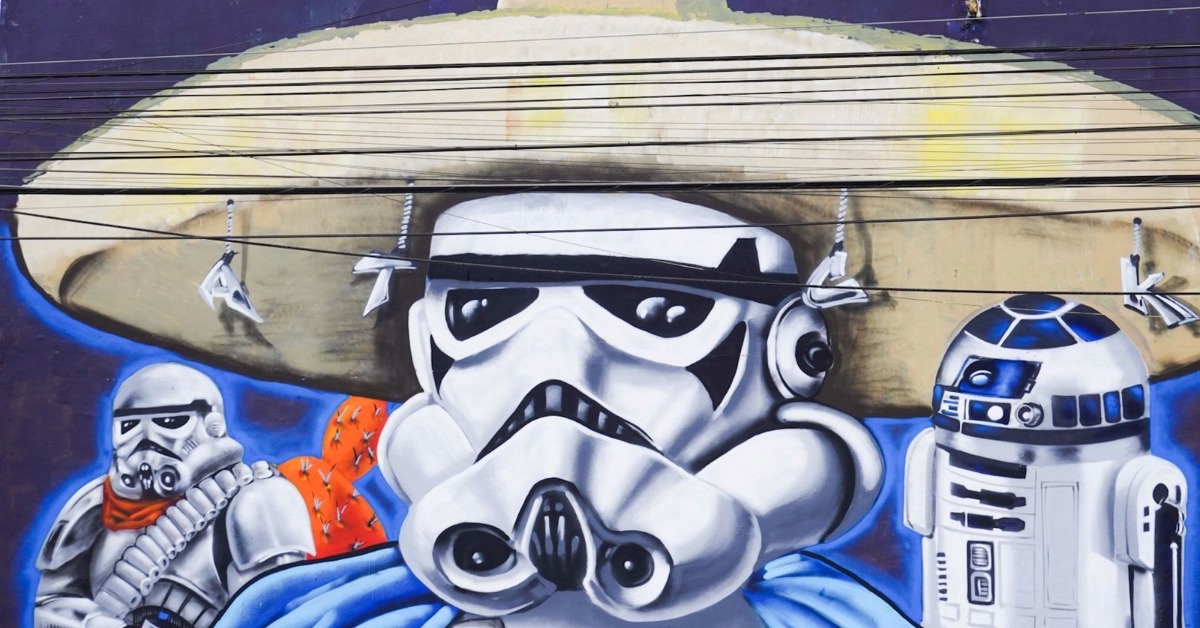
A mural project in Tijuana is bringing Star Wars-inspired imagery into a very Mexican setting, using public walls along Bulevar Casa Blanca as an open-air gallery.
The project, called “Stop Wars: Una galería al alcance de todos,” is led by Tijuana artist Eduardo Gómez, also known as “Serie” or “Chile Rage.” It is being developed near the Los Lobos neighborhood in the city’s Zona Este.
The murals mix characters and visual references from the famous film universe with Mexican details. Some works include elements such as a charro hat, candles, and cempasúchil flowers.
The project has drawn attention because it is not just a fan-art exercise. It also reflects how Tijuana artists often use walls to talk about identity, place, and community.
Mexican details in a familiar universe
About ten artists have taken part in the project. Most are from the Tijuana region, with invited artists from Rosarito and San Felipe.
One of the most discussed pieces reimagines a Mandalorian-style figure with Mexican cultural symbols. The piece was created by Areli, an artist from San Felipe and the only woman in the group.
The artists worked with graffiti techniques and aerosol paint. They were given creative freedom in color and style, while keeping the same general theme.
Gómez has said the goal was to blend recognizable science-fiction figures with Mexican elements. That mix gives the murals a local voice rather than simply copying pop-culture images.
Border identity shows up in public art
Tijuana’s location shapes much of its culture. The city sits at one of the busiest border crossings in the world, where Mexican, U.S., and international influences meet every day.
That background is part of what makes the “Stop Wars” project stand out. The murals use a global cultural reference, but place it inside a Mexican border-city language.
For residents and visitors, the work also shows how urban art can make public spaces feel more connected to local life. A wall beside traffic becomes a place to pause, notice details, and think about the city around it.
Public art has become a visible part of Tijuana’s cultural identity. Murals in the city often speak to memory, migration, neighborhood pride, and the daily life of the border.
Community support helped bring the project together
The project has been developing in stages. The earlier murals began about six years ago, while the current Star Wars-inspired direction has gained strength in recent years.
Before artists began painting, the walls were prepared so participants could focus on the artwork itself. Local businesses and collaborators also helped with food, materials, and other support during the workdays.
Gómez has described the murals as a way to encourage people to take part in caring for their surroundings. The project places that message in a visible public space, rather than inside a gallery or private venue.
The project is a reminder that cultural stories are not limited to museums, festivals, or historic centers. In many Mexican cities, some of the most direct expressions of local identity appear on the street.