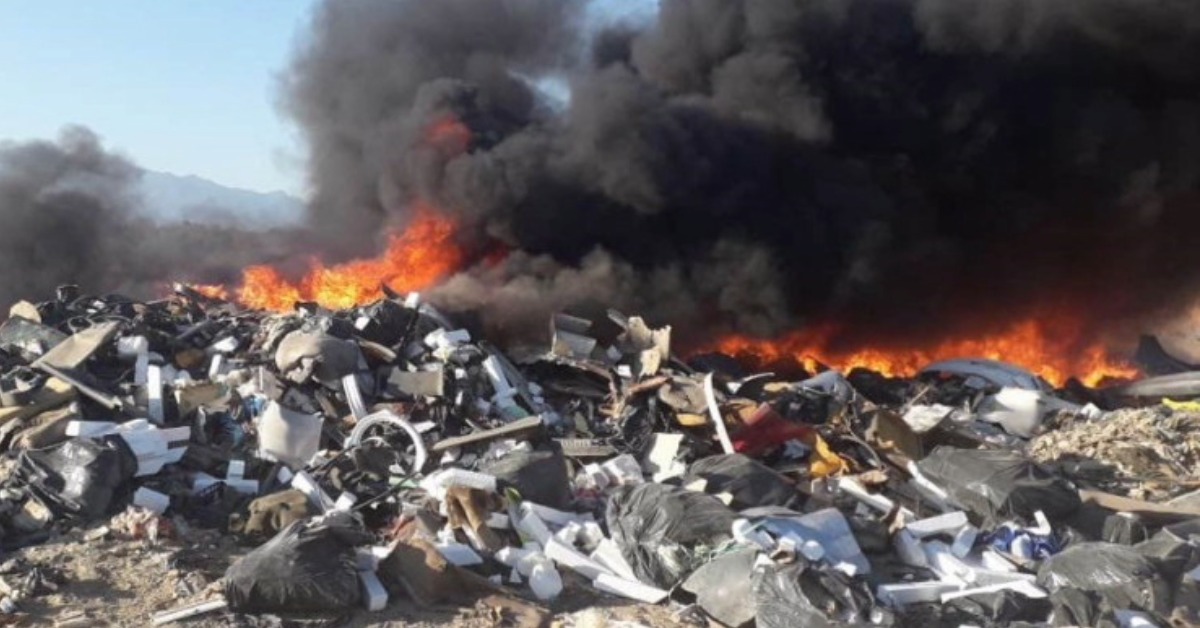
A black plume over Puerto Vallarta on Thursday morning came from the El Gavilán landfill, where tires burned, and firefighters called for more support. The smoke did more than alarm the city. It triggered health warnings, school disruptions in nearby zones, and renewed scrutiny of a site with a history of fires. Authorities still have not publicly explained what started the blaze, but the fuel source made the emergency harder to dismiss as another routine dump fire.
The Smoke Over Puerto Vallarta Was Worse Than It Looked
Puerto Vallarta’s El Gavilán landfill burned again on Thursday morning. A heavy black plume moved over parts of the city. Authorities treated the smoke as a public health concern, not only a fire call.
The fire was reported shortly before 7 a.m. on May 28 at the landfill in El Colorado. Firefighters from the Ixtapa base were sent first. They later requested additional units and heavy machinery as flames reached the area where old tires are stored.
The cause had not been made public in the first accounts. That leaves a familiar gap in a city that has dealt with repeated fires at or near the same dump site.
What burned at El Gavilán
The most serious detail was the fuel source. The fire was concentrated in an area with large amounts of tires. That material can burn hot, produce dense smoke, and resist fast suppression.
The U.S. Environmental Protection Agency has warned that open tire fires can release particulates, carbon monoxide, sulfur oxides, nitrogen oxides, volatile organic compounds, PAHs, dioxins, furans, benzene, PCBs, and metals. The same EPA summary says unprotected exposure to the visible smoke plume “should be avoided.”
That is why the morning smoke was more than a bad smell or a visual alarm. A tire fire can push fine particles and toxic compounds far from the flames. Wind, heat, and the size of the burning pile all shape the spread.
Fire crews requested machinery to remove the affected material and prevent the flames from spreading. Those tactics align with how tire fires are typically handled. EPA guidance notes that tire fires are hard to extinguish. It also says covering burning tires with dirt or sand is often more effective than water alone.
Schools and outdoor activity affected
By midmorning, the smoke had already moved the emergency beyond the landfill. Juan Carlos Flores Miramontes, head of Jalisco’s education secretariat, said morning in-person classes and outdoor activities were suspended in affected Puerto Vallarta zones after the atmospheric emergency was activated.
“In-person classes are suspended for the morning shift,” he wrote in the public notice tied to the emergency.
The affected areas listed in the notice included El Colorado, Los Ángeles, El Zancudo, Verde Valle, Colinas del Valle, Ecoterra Paraíso, La Arboleda, Colonia Las Rosas, Ojo de Agua, and nearby zones.
Authorities also urged people in areas reached by the plume to avoid outdoor physical activity. They advised closing doors and windows and following updates from civil protection and environmental authorities.
A repeat site with a larger question
El Gavilán has had previous fire problems. In June 2024, another fire at the municipal garbage dump was also reported in the area where tires were accumulated. The cause remained unclear afterward.
The tire issue has also been visible outside the scope of emergency coverage. During Puerto Vallarta’s 2024 dengue response, llanteros were allowed to take tires to El Gavilán without paying the usual disposal charge after completing a municipal form. The measure was meant to keep abandoned tires from becoming mosquito breeding sites. It also added pressure to how the city stores and manages that material.
A later local account said that more than 5,500 tires had accumulated at El Gavilán as part of dengue cleanup and tire-shop enforcement. At the time, a regional health official said the pile posed no risk to nearby urban areas because the site was far from housing.
Thursday’s plume made the distance argument harder to settle cleanly. The smoke was visible across Puerto Vallarta. State education officials still found enough risk to suspend classes and outdoor activities in several zones.
Puerto Vallarta has faced smoke problems beyond El Gavilán, including regional fires that degraded air quality during previous dry-season fire events.
How to reduce smoke exposure
Health guidance for smoke events is blunt. The CDC says staying inside is best when the smoke is heavy. If going outside is unavoidable, it recommends a well-fitting NIOSH-approved respirator, such as an N95 or P100.
EPA guidance for indoor smoke exposure recommends closing windows and doors. It also advises limiting activities that create more indoor particles, using recirculation on air-conditioning systems when possible, and using a portable air cleaner or high-efficiency filter if available.
People with asthma, heart disease, chronic lung disease, children, older adults, and pregnant people face a higher risk during heavy smoke exposure. Anyone with trouble breathing, chest tightness, dizziness, severe eye or throat irritation, or worsening respiratory symptoms should seek medical attention.
No public cause had been confirmed in the initial accounts. Firefighters continued working through the early hours. The dark plume left a clearer question for city officials after the flames were out. Puerto Vallarta still has to explain how tires are being stored at El Gavilán, how fires there are being investigated, and what will change before the next smoke plume appears.