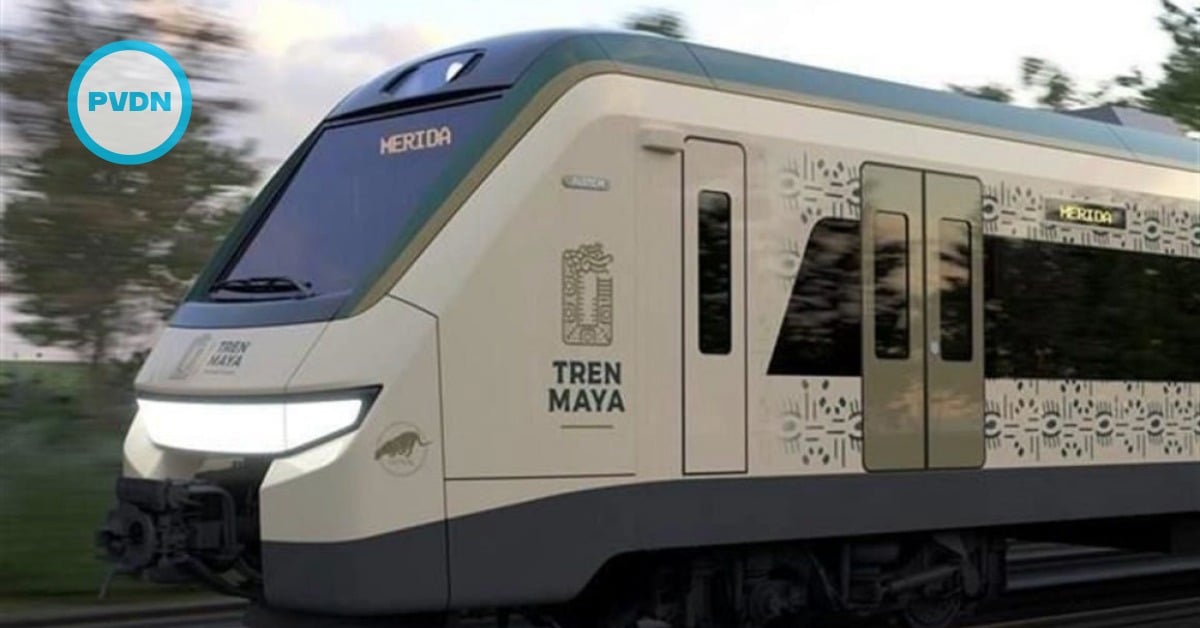
Tren Maya hits its 1.2 million passenger goal and rolls out a bundled New Year express with flights, hotels and a long-distance rail trip.
Tren Maya has reached a symbolic waypoint. Less than a year after setting a goal of moving 1.2 million passengers in 2025, the state-run railway now says it hit that target on 3 December and expects to close the year with about 1.383 million riders. The announcement came during Thursday’s morning news conference, where director Óscar David Lozano Águila framed the figure as proof that users are slowly embracing the new rail network across the southeast.
Lozano recalled that when the company laid out its objectives in January, Tren Maya had moved 784,536 passengers between its December 2023 launch and 20 January 2025. The 1.2-million goal for this year was presented as an ambitious but achievable next step. By mid-July, official data showed 600,839 passengers in the first half of 2025 alone, a 169 percent increase compared with the same period in 2024.
In November, the railway reported that it had already transported 1,129,204 passengers in 2025, or 94.1 percent of its annual target. It also logged a record day on 17 November, with 7,875 people moving along its 1,554-kilometre network of tracks that now links 34 stations in Chiapas, Tabasco, Campeche, Yucatán and Quintana Roo. Reaching the 1.2-million mark two weeks later fits that trajectory.
Yet the headline number masks a more complex picture. Daily ridership still falls well short of the tens of thousands of passengers originally forecast for the project, and many trains continue to run with empty seats. Some of the stations are several kilometres from city centres or tourist sites, forcing passengers to rely on relatively expensive buses or taxis to complete their journeys. For many local residents, traditional bus terminals remain cheaper and more practical.
In communities along the route, artisans and small business owners say they have yet to see a clear boost in income. Vendors near major archaeological sites describe trains arriving with few passengers on board, even on days when car parks are packed with tour buses and private vans. In smaller towns, shopkeepers talk about long stretches without visitors and question whether the rail line will ever deliver on the promise of steady, year-round tourism.
Tourism packages reshape the strategy
Against that backdrop, the new focus on bundled tourism products is not just a seasonal promotion; it is also a way to push up occupancy on specific routes and dates. Lozano stressed that the core mission of Tren Maya is public transport for the region, but acknowledged that the railway is leaning on tourism alliances to shore up its business model during peak travel periods.
For the winter season from December 2025 to January 2026, Tren Maya is offering at least a dozen package tours that combine flights, hotels and rail travel. The deals are promoted in coordination with the federal Tourism Ministry, the revived state carrier Mexicana de Aviación and the military-run hotel chain Grupo Mundo Maya.
Shorter four-day itineraries such as “Mares y lagunas” link Tulum, Bacalar and Chetumal, mixing Caribbean beaches and lagoon trips. “Ruta de las maravillas” connects Mérida, Progreso, Chichén Itzá and Valladolid, weaving together a colonial capital, a port city and major archaeological zones. Longer programs like “Santuario Maya” stretch to seven days and six nights, joining Tulum, Bacalar, Calakmul and Palenque in a loop that crosses several states.
According to the figures presented on Thursday, Tren Maya sold 117 package tours during Holy Week, 136 in the summer holidays and 81 so far in the winter season that began on 15 October. The company also acknowledges a seasonal price bump of around 10 percent, driven mainly by hotel rates, which climb during the December and January peak.
The hotel component rests heavily on Grupo Mundo Maya, whose properties sit close to archaeological sites in the region and are marketed as four-star accommodations with spas, pools and other amenities. By tying rail itineraries to a captive hotel network and to a single airline based at the Felipe Ángeles International Airport near Mexico City, the government is effectively building an all-inclusive corridor under military control, from the departure gate to the last night’s stay.
Tren Maya New Year
The flagship product in that strategy is the Tren Maya New Year experience: a four-day, three-night “Expreso de Año Nuevo” that doubles as the first commercial service of the railway’s long-distance luxury train. It is being pitched as a once-a-season trip that bundles air travel, lodging, excursions and a premium rail journey timed around the New Year holiday.
The itinerary begins with a flight on Mexicana de Aviación from the Felipe Ángeles airport to Tulum. Travelers then spend the night at a Mundo Maya hotel and visit the nearby archaeological site and the newly developed Parque del Jaguar, a protected natural area that has become a showcase for the project’s conservation narrative. From there, passengers board the long-distance train for a night-time run that includes a New Year’s Eve toast and dinner on board between Cancún and Mérida.
The ride continues north to the Yucatán coast so that passengers can greet the first sunrise of 2026 in the port city of Progreso, before looping back to complete the circuit. Along the way, the train offers tourist-class seats, first-class coaches with reclining seats and extra amenities, a dining car and sleeper cabins. Officials describe it as one of just three luxury long-distance trains in the Tren Maya fleet of 42.
Prices place the trip firmly in the higher end of the domestic tourism market. The basic “Expreso de Año Nuevo” package starts at 22,998 pesos per person, while the premium option begins at 28,997 pesos, with both options including the outbound flight, hotel nights, rail travel, some meals, excursions and the New Year’s Eve celebration on board. Other winter packages start at lower price points, but still sit well above what most local residents can afford.
For supporters of the project, the new offerings show a system that is learning from its slow start and trying to capture more value from holiday travel. For critics, they highlight a shift toward curated experiences for relatively affluent visitors, while many communities along the tracks continue to struggle with informal jobs and uneven public services.
What is clear is that the Tren Maya of late 2025 looks different from the grand vision first sold to voters. It now depends on carefully targeted tourism products, joint promotions with a state airline and a hotel group, and a steady stream of special packages like the end-of-year express. Whether that is enough to fill the trains beyond the high season, and to convince more residents that the railway serves their needs, will become visible long after the fireworks of New Year’s Eve fade from the windows of its luxury cars.