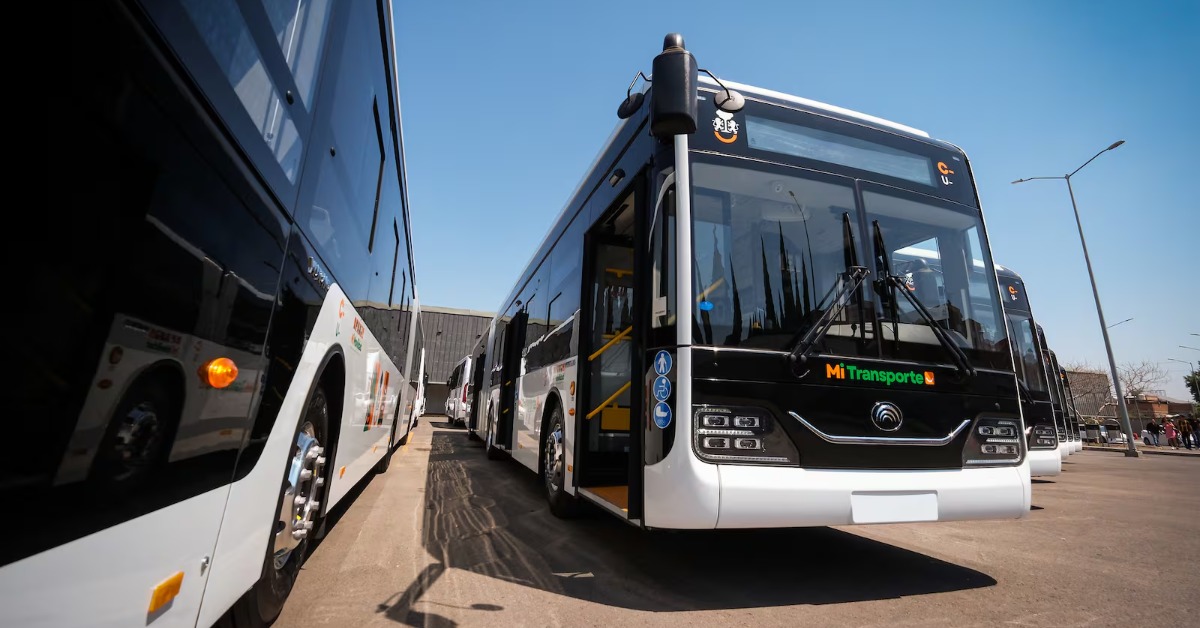
Puerto Vallarta has been waiting for electric buses on one of its busiest corridors, but the first units still need one key piece before service begins. State officials say the vehicles are already in testing, and the launch is close, yet the timing will be determined by the charging station. The project could affect daily riders, students, airport-area movement, and visitors using the Medina Ascencio corridor.
Electric bus launch depends on charging stations
Puerto Vallarta’s first electric public transport route is close to starting, but the launch now depends on the charging infrastructure needed to keep the buses running.
Jalisco Governor Pablo Lemus said the city’s electromobility program along Avenida Francisco Medina Ascencio will begin once the required electrolineras, or charging stations, are ready. He did not give a fixed start date.
The plan begins with seven fully electric buses for the Medina Ascencio corridor. The route is expected to serve one of Puerto Vallarta’s busiest areas, linking residents, workers, students, hotel zones, and visitors moving through the city.
The buses had previously been expected to begin operating in early May. The governor’s latest comments indicate that regular service is still waiting on the charging system, even as technical testing continues.
What riders can expect from the new buses
The first buses are part of a wider effort to modernize public transportation in Puerto Vallarta. Officials have said the units are 100 percent electric and equipped with air conditioning, Wi-Fi, accessibility features, and onboard systems for rider security.
Earlier details released for the project described Yutong buses with low-floor access, space for up to 130 passengers, charging ports for mobile devices, and video monitoring systems. Those features would mark a noticeable change for riders used to older buses on busy local routes.
The corridor is designed to serve Avenida Francisco Medina Ascencio and related points, including Ixtapa, Marina Vallarta, and the Centro Universitario de la Costa. That gives the project a local commuting role, not just a tourism role.
For residents and expats who rely on buses, the practical question is simple. The buses may improve comfort and access, but only if the route runs regularly and the charging infrastructure can support daily service.
A larger transport plan is still taking shape
The first seven buses are only the initial phase. Officials have previously described a broader Puerto Vallarta system with 19 electric buses, four trunk routes, one complementary route, 11 main stations, and about 110 bus stops.
The system has also been integrated into a unified payment model, including cards such as Mi Movilidad, Tarjeta Única, and Yo Jalisco Apoyo para el Transporte. Students in Jalisco are expected to have access to a preferential fare.
Puerto Vallarta’s local government has already approved a municipal land loan to SITEUR for a depot, charging station, and maneuvering yard tied to the electric route. The approved site covers 10,100 square meters near the Ixtapa-Las Palmas road area.
That approval explains why the charging stations are now central to the launch. The buses can be presented, tested, and assigned to a route, but they cannot operate as a dependable public service without a charging infrastructure in place.