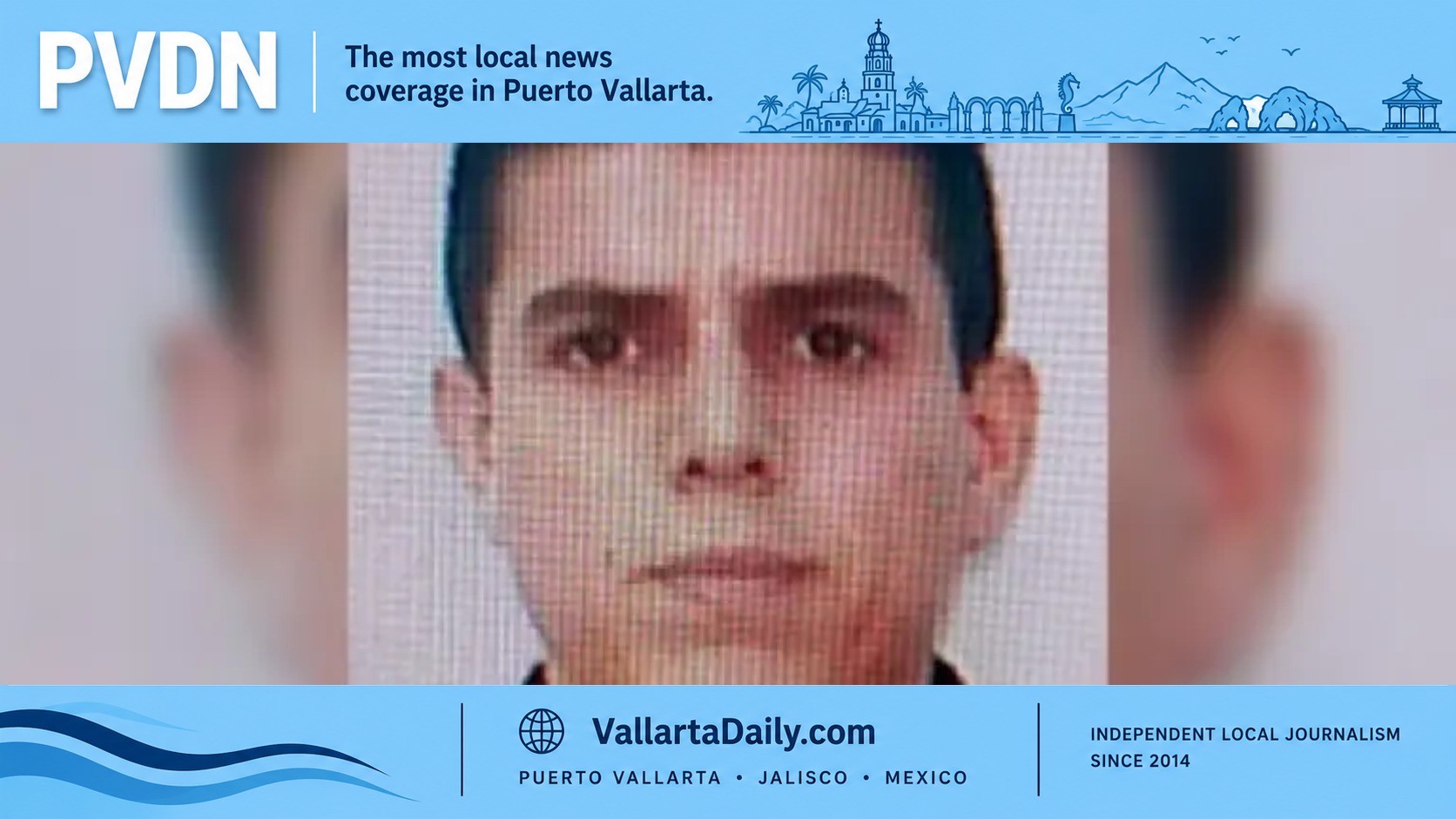
Puerto Vallarta, Jalisco, July 9, 2026 – The U.S. government is now publicly identifying Juan Carlos Valencia González, alias “El 03,” as the leader of the Jalisco New Generation Cartel after the death of Nemesio Oseguera Cervantes, “El Mencho,” placing renewed attention on the cartel’s command structure across Jalisco and the Pacific coast.
The identification appears in the updated National Counterterrorism Center profile of CJNG, which lists Valencia González as the group’s overall leader and describes him as a U.S. person. The page, current as of June 2026, says CJNG maintains a hierarchical command structure, with regional leaders managing day-to-day operations under the overall leader.
The NCTC profile says CJNG operates across Mexico and is dominant in Jalisco, Nayarit, Colima, Veracruz, Guanajuato, Puebla, Querétaro and Hidalgo. It also describes Jalisco, Nayarit and Colima as core strongholds in the cartel’s expansion model.
Valencia González has been a U.S. target since before the current succession question. A U.S. Department of Justice release from 2021 says a federal court in the District of Columbia unsealed an indictment against him under several aliases, including Pelon, Tricky Tres, O3, El 3, JP and Pelacas. Prosecutors alleged he conspired as early as 2007 to import cocaine and methamphetamine into the United States and used or possessed a firearm tied to drug trafficking. The indictment remains an allegation, and defendants are presumed innocent unless proven guilty.
The same DOJ release said that the U.S. State Department announced a reward of up to $5 million for information leading to his arrest and conviction.
The succession question became sharper after two blows to the cartel’s older leadership circle this year. El Mencho died in February 2026, according to the NCTC profile, which now lists him as deceased and describes him as CJNG’s founder and leader until his death. Another senior figure, Audias Flores Silva, alias “El Jardinero,” was captured by Mexican authorities on April 27, 2026, according to the same U.S. profile.
That sequence leaves Valencia González, now publicly identified by U.S. intelligence as the top of the organization. It does not mean all CJNG cells answer cleanly to one person, nor does it mean the cartel’s regional disputes have settled. The U.S. description points to a network that mixes hierarchy with local franchise-style arrangements, a structure that can keep operating even after a major leader is killed or captured.
In February, the U.S. Treasury Department sanctioned a cartel-linked timeshare network tied to the Bahia de Banderas area and said CJNG took control of timeshare fraud schemes in Puerto Vallarta and surrounding areas beginning around 2012. Treasury also said nearly 6,000 U.S. victims reported losing almost $300 million to Mexico timeshare fraud schemes between 2019 and 2023.
The risk described by U.S. agencies is not limited to armed violence. It includes fraud, shell companies, resort-linked sales operations, call centers, money movement, and businesses that appear legitimate to ordinary consumers.
PVDN has previously reported on that pattern in CJNG-linked real estate and timeshare fraud allegations in Puerto Vallarta, as well as the immediate security disruption after El Mencho’s death triggered roadblocks and fires in parts of Jalisco.
The U.S. legal posture also changed last year. The State Department designated CJNG and several other criminal organizations as Foreign Terrorist Organizations in a Federal Register notice published February 20, 2025. That designation adds pressure on financial networks, business relationships and alleged support structures connected to cartel activity.