Two border-state governors are now at the center of a disputed visa fight that cuts across corruption, organized crime, and Mexico’s relationship with Washington. A new investigative report says U.S. authorities revoked their visas while maintaining another route for entry. Both state governments deny the claims. President Claudia Sheinbaum has asked them to explain and has also questioned the purpose of public leaks. The result is now a politically sensitive test of evidence, secrecy, and pressure.
Visa claims put two governors under scrutiny
Two northern Mexican governors are facing renewed scrutiny after a cross-border investigative report said U.S. authorities revoked their visas amid inquiries into alleged organized-crime links, corruption, and fuel-theft networks.
The dispute centers on Sonora Gov. Alfonso Durazo and Tamaulipas Gov. Américo Villarreal. The report said U.S. agencies are examining Durazo over alleged links to criminal groups and Villarreal over alleged illegal fuel trafficking, known in Mexico as huachicol. It also said both governors have continued to enter the United States with special permission after their visas were canceled.
No U.S. agency has publicly confirmed the visa revocations or any criminal investigation against either governor. That limit is central to the story. Under U.S. regulations, a nonimmigrant visa can be revoked at the discretion of the State Department. A visa action is not a criminal charge.
Sheinbaum asks for explanations while questioning the leak
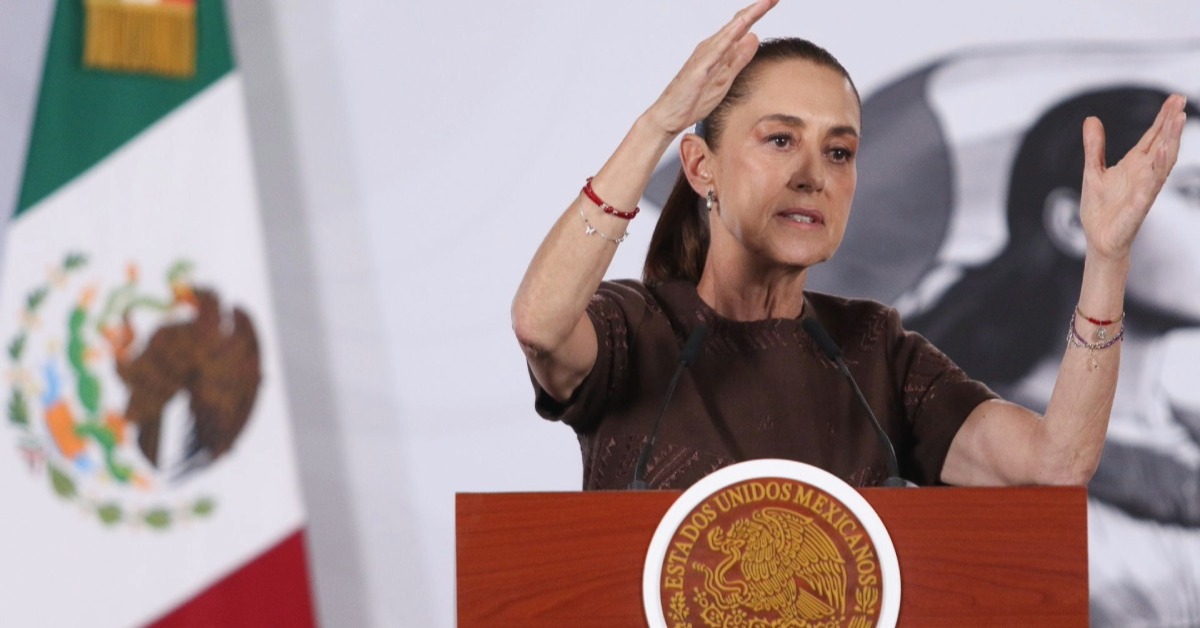
President Claudia Sheinbaum said Wednesday that the two governors “have to clarify” the matter, while questioning the public release of visa claims. “What is the interest in taking away the visa and making it public?” she said in her morning conference remarks.
Her response kept two lines open. She did not say the claims were true. She also did not dismiss the need for Durazo and Villarreal to answer them.
The president’s caution reflects a broader strain in Mexico-U.S. security relations. Washington has relied more heavily on visa cancellations, sanctions, and criminal cases as tools against Mexican officials suspected of helping organized crime. Mexico’s government has stated that any action within Mexico must be based on evidence that can withstand Mexican legal review.
Governors reject the allegations
Durazo rejected the report and said his U.S. visa remains valid. “I have my current visa, and I have no affiliations with criminal groups,” he told reporters in remarks responding to the allegations. He also said he would not travel to the United States just to prove the point or show his documents to a journalist.
The Sonora government called the account “completely false.” Paloma Terán, who heads the state communication office, said Durazo had not been notified of any U.S. investigation.
Villarreal also rejected the claims. In a video message, he called the allegations “false, tendentious, and lacking evidence.” He denied any criminal ties and said there were no accusations, court proceedings, or official communications against him in Mexico or the United States.
The Tamaulipas government’s communication office said there were no “documents, files, resolutions, or verifiable evidence” supporting the claim. The office said rumors and anonymous versions cannot be treated as facts.
The unresolved question over entry permits
Steve Fisher, one of the journalists behind the investigation, said in a June 4 interview that the governors’ normal visas had been revoked and that U.S. authorities had created a strict entry mechanism for them.
“It is a permit called a type of parole,” Fisher said, describing a mechanism used for people who may cooperate with authorities and need to be physically present in the United States. He said the governors’ visas were already revoked and “the only way they can enter is through this permit.”
That assertion is now the sharpest factual conflict. The governors say their visas are valid. The report says they no longer rely on ordinary visas. U.S. officials have not publicly settled the dispute.
The issue is politically sensitive because visa revocation carries reputational weight even when no charges are filed. Under U.S. regulations, a revocation can happen quietly and does not require public evidence used in a courtroom. That makes it a useful pressure tool and a messy one.
A wider U.S. campaign
The latest claims fit a pattern that has grown since 2025. U.S. officials have revoked visas for dozens of Mexican politicians and officials as part of a broader drug-war and corruption push. The number reported last year exceeded 50, though most names were not made public.
That earlier sweep already reached Mexican political circles, including Morena officials, and became part of the same pressure campaign examined in previous coverage of U.S. pressure on Mexican politicians. The new Durazo and Villarreal claims also follow the separate Rocha Moya case, where U.S. allegations against a Sinaloa governor with ties to Morena opened another front in the bilateral fight over evidence, sovereignty, and cartel corruption.
U.S. Ambassador Ronald Johnson added to the pressure in April when he said the North American trade agreement requires governments to criminalize bribery and enforce conduct rules for public officials. He said there could be “significant action” on that front.
For Sheinbaum, the political risk is narrow and uncomfortable. If Mexico accepts U.S. claims without seeing evidence, it feeds accusations of foreign interference. If it dismisses the claims and stronger evidence later appears, the government faces charges of protecting allies. If the matter remains locked inside confidential U.S. visa files, the public record stays incomplete.
As of Thursday, June 4, the dispute remains unresolved. The governors deny the claims. The journalists behind the investigation stand by them. Washington has not made the alleged visa actions public.