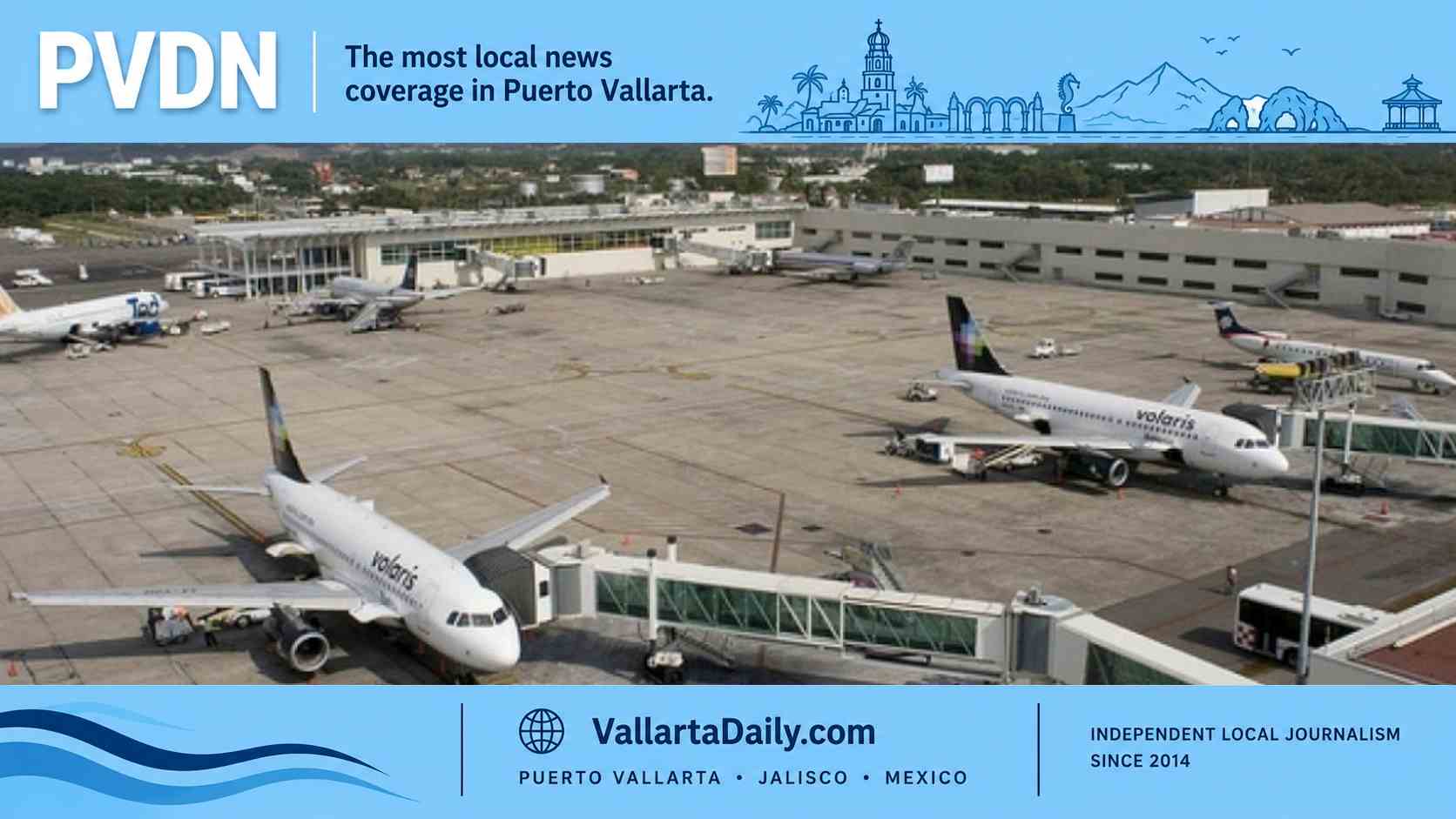
Puerto Vallarta, Jalisco, July 7, 2026 – Puerto Vallarta’s airport lost nearly 484,000 passengers in the first six months of 2026, turning what began as a soft spring travel season into a clear midyear setback for one of the bay’s most important economic indicators.
The Licenciado Gustavo Díaz Ordaz International Airport handled 3.32 million terminal passengers from January through June, down 12.7% from 3.81 million during the same period in 2025, according to GAP’s June passenger traffic report.
The sharper number is in the international market. Puerto Vallarta’s international terminal passengers fell from 2.32 million in the first half of 2025 to 1.90 million this year, an 18.2% drop. Domestic traffic also declined, but by a much smaller margin, slipping 4% from 1.48 million to 1.42 million passengers.
That means international travel accounted for almost 424,000 of the airport’s 484,000 lost passengers through June. In practical terms, the airport’s first-half decline was not evenly spread across the market. It was overwhelmingly concentrated in the foreign travel segment that fills winter flights, supports higher-spending hotel stays, and feeds much of the restaurant, taxi, tour, property rental, and airport-service economy.
June was especially weak. The airport handled 415,400 passengers for the month, down 18.7% from 511,100 in June 2025. Domestic passengers fell 6%, while international passengers dropped 33.4%, from 237,300 to 157,900.
The scale of Puerto Vallarta’s decline stands out inside GAP’s network. Across all GAP airports, total passenger traffic fell 5.1% in June. GAP’s 12 Mexican airports were down 3.5%. Puerto Vallarta’s 18.7% drop was far steeper than the network average and worse than Los Cabos’s 9.7%. Montego Bay, another major leisure market in GAP’s portfolio, dropped 23.4%. Guadalajara moved in the opposite direction, rising 6%.
The airport’s weak first half follows a record 2025, when PVR closed the year near 6.95 million passengers. PVDN reported in January that the airport started 2026 with a 2.6% gain, but the year turned after February and March, with March traffic falling 24% and May traffic falling 14.4%.
One known disruption came in February, when several airlines suspended or adjusted flights to western Mexico after violence in Jalisco. Reuters reported that Air Canada resumed full operations to Puerto Vallarta from Montreal, Toronto, and Vancouver on February 24, after Air Canada, United, Aeroméxico, and American had suspended flights to the area. The Associated Press also reported flight cancellations and rebooking options tied to security concerns in Jalisco that month.
Those disruptions alone do not explain a first-half decline lasting through June, but they form part of the year’s air-travel backdrop. GAP’s data also show airline capacity moving lower across its network: available seats in June were down 4.9% from the same month last year, while the load factor barely changed, from 82.2% to 82.0%. That suggests airlines were still filling a similar share of seats, but with fewer seats available overall.
Puerto Vallarta has added some domestic links that could help soften the decline later in the year. GAP listed new Volaris routes connecting Puerto Vallarta with Puebla, Aguascalientes, and San Luis Potosí, matching PVDN’s June reporting on the new Vallarta routes. Those routes strengthen the domestic side of the airport, but the first-half numbers show they have not yet offset the international losses.