Puerto Vallarta faces questions over rising payroll costs, nearly 31 million pesos in disputed spending and funding for employee Christmas bonuses.
Puerto Vallarta, Jalisco, November 28, 2026 – When Luis Munguía took office in October 2024, Puerto Vallarta had 433 temporary municipal employees. By July of this year, that number had reportedly grown to 1,080, with the cost of paying those workers more than tripling.
Now, the same administration is struggling to pay its employees, has removed hundreds of workers from the payroll and wants to use money from next year’s government revenue to meet this year’s financial obligations.
During a marathon City Council meeting that began Thursday evening and continued into Friday morning, council members presented figures that raise serious questions about how Puerto Vallarta arrived at its current financial situation.
Among the expenditures questioned were millions of pesos for office renovations, furniture, television screens, private security and municipal events.
The figures presented by council members have not all been independently verified. However, a review of the municipality’s own published financial documents confirms that spending on temporary personnel was already running considerably ahead of its original budget during the first half of 2026.
How Puerto Vallarta’s payroll grew
Councilman Víctor Manuel Bernal Vargas presented an analysis of municipal payroll records during the meeting, detailing how personnel expenses have increased since Munguía took office.
| Payroll indicator | October 2024 | July 2026 |
|---|---|---|
| Temporary employees | 433 | 1,080 |
| Temporary payroll per fortnight | $3.4 million | $10.4 million |
| Overall payroll per fortnight | $33.1 million | $53.8 million |
Figures in Mexican pesos, as presented by Bernal.
The number of temporary workers reportedly peaked at 1,345 in May 2026.
Meanwhile, the overall payroll increased by approximately 62%, requiring an additional 20.7 million pesos every two weeks compared with October 2024.
Hiring more municipal employees isn’t necessarily a problem. Puerto Vallarta is a growing city, and additional personnel may be justified when demand for public services increases.
The question is whether that additional spending has translated into better services for residents.
It’s a particularly relevant question in a city where residents continue to complain about garbage collection, deteriorating roads and insufficient municipal maintenance.
The city’s own financial records reveal a problem
Puerto Vallarta’s original expenditure budget for 2026, published in the municipal gazette, allocated 100 million pesos for the base salaries of temporary employees for the entire year.
But by June, the financial picture looked considerably different.
The municipality’s preliminary expenditure report covering January through June 2026 shows that the original first-half allocation for temporary personnel remuneration was approximately 50 million pesos.
That allocation was subsequently increased to 194.3 million pesos, with actual payments reaching 152.2 million pesos by June 30.
In other words, the municipality paid more than three times what it had originally budgeted for temporary personnel during the first six months of the year.
The revised budget accommodated that expenditure, so the figures alone do not establish unauthorized spending. They do, however, demonstrate how dramatically the city’s personnel expenses departed from its original financial planning.
That helps put into perspective Thursday’s report that Puerto Vallarta has removed approximately 300 municipal workers from its payroll.
After expanding its workforce, the administration now finds itself cutting jobs to make ends meet.
Nearly 31 million pesos in questioned expenses
Councilwoman Melissa Madero approached the city’s financial problems from a different direction.
Rather than focusing exclusively on the number of municipal employees, she questioned how the administration has prioritized its spending.
During the council meeting, Madero presented a list of municipal expenditures totaling nearly 31 million pesos that she believes deserve further scrutiny.
Among the expenses she identified were:
- 6.72 million pesos to renovate the mayor’s office.
- 1.43 million pesos for office furniture.
- 1.69 million pesos for four LED screens.
- 4.5 million pesos for four months of private security for the mayor.
- 2 million pesos for evening gown rentals.
- 5 million pesos for food and related supplies for events.
- 1.85 million pesos for organizing an event involving the mayor.
These are expenditures identified by Madero during the council meeting, not independently audited findings. The underlying contracts, invoices and procurement records are needed to determine their exact nature, whether the amounts were paid in full and whether the purchases were properly authorized.
No detailed response from the mayor addressing each of the individual expenses was identified in the reporting reviewed.
The timing of the expenditures is central to Madero’s criticism. She questions why money was directed toward these purchases while municipal employees faced uncertainty about receiving their salaries and year-end benefits.
What happened to the Christmas bonus budget?
Perhaps the most consequential financial question raised during the meeting concerns the annual Christmas bonus, known in Mexico as the aguinaldo.
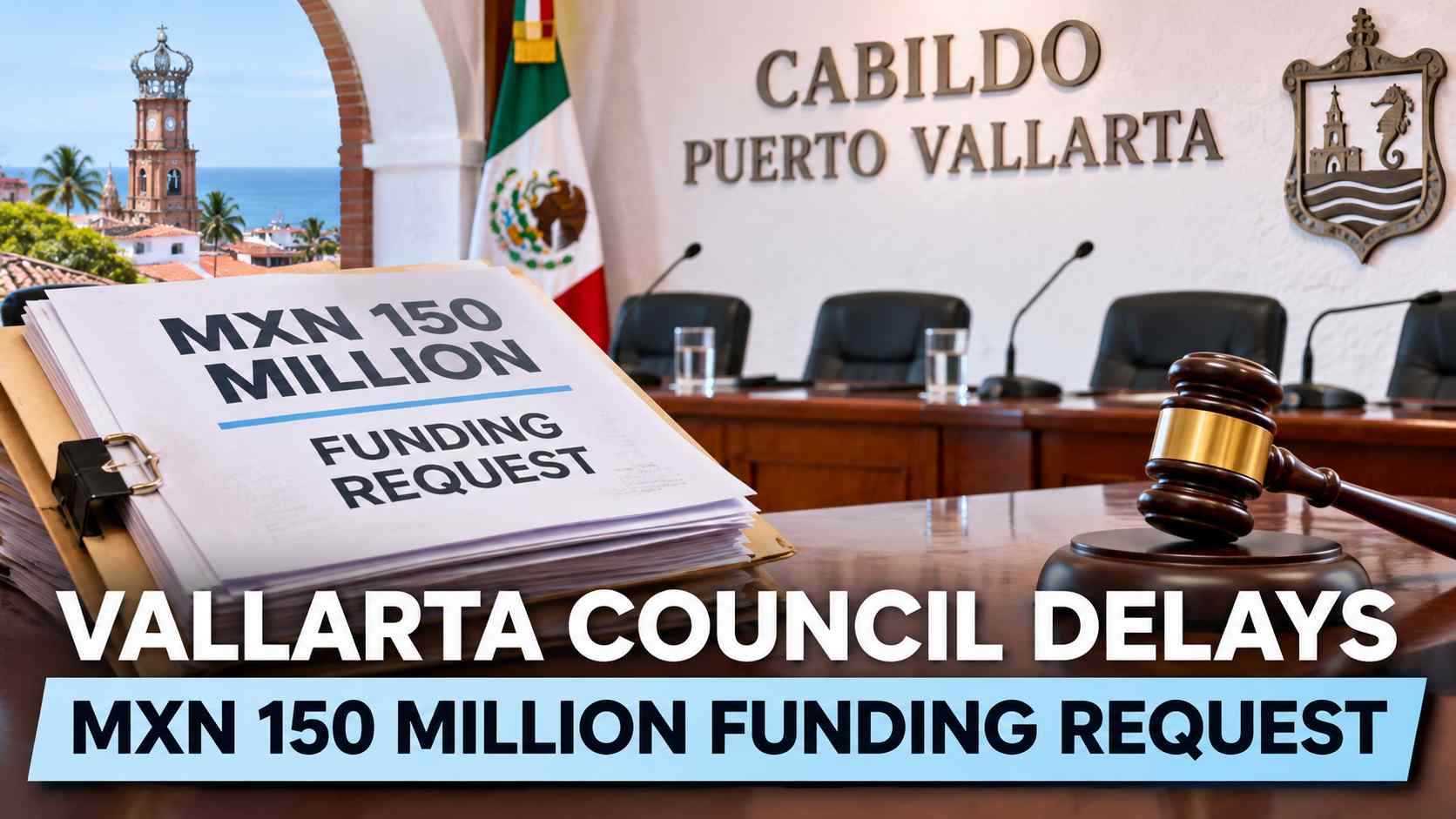
As Vallarta Daily reported Friday, City Council delayed a request for 150 million pesos in advance government funding after members demanded more information about the municipality’s financial position.
The proposed arrangement would allow Puerto Vallarta to receive a portion of its anticipated 2027 federal revenue distributions before the end of 2026.
But Madero says approximately 128 million pesos had already been budgeted for employee Christmas bonuses when the 2026 budget was approved last December.
She asked the administration to explain what happened to that allocation.
The original published budget contains a line item of approximately 121.08 million pesos covering vacation premiums, Sunday work premiums and year-end bonuses combined. That figure does not independently confirm Madero’s specific 128-million-peso claim, which requires further reconciliation with the detailed budget and subsequent amendments.
Municipal Treasurer Hugo Robles Cibrián acknowledged that the city still had sufficient budget authorization to cover its remaining labor obligations.
What it doesn’t have, he explained, is sufficient cash.
Having a budget isn’t the same as having money
This is where municipal accounting becomes important.
When City Council approves an expenditure budget, it authorizes the administration to spend money for specific purposes. That doesn’t necessarily mean the money is sitting in a bank account waiting to be used.
Municipal budgets are based partly on anticipated revenues that will be collected throughout the year.
If revenues fall short, expenses increase or money is redirected toward other obligations, the municipality can find itself with authorization to spend money it doesn’t actually have available.
Robles told council members that resources had been used to cover essential operating expenses, including fuel and electricity, and that some budget categories required transfers because their original allocations were insufficient.
The municipality’s June expenditure report provides some context for that explanation.
Fuel and lubricant expenses had reached approximately 40.8 million pesos in the first half of the year, compared with an original allocation of around 8.3 million pesos for that period.
That doesn’t answer every question raised by council members, but it illustrates that financial pressures extend beyond employee salaries.
The outstanding question is whether those pressures were unavoidable, the result of unrealistic budgeting or a consequence of administrative decisions that could have been handled differently.
The mayor points to falling tourism and unpaid taxes
Munguía has acknowledged that the municipality is experiencing a cash-flow problem, although he has described it as temporary.
The mayor attributed part of the financial difficulty to the decline in tourism following the security incidents of February 22, along with outstanding property tax and business licensing payments.
He maintained that the municipality intends to meet its obligations and continue providing public services.
Bernal, however, presented a different perspective during the council meeting. He cited third-quarter financial figures indicating that municipal revenues had exceeded projections by approximately 285.5 million pesos between January and September.
That figure has not been independently reconciled with the city’s latest financial statements.
Both explanations need closer examination. Revenues exceeding projections during a particular period do not necessarily mean the municipality has sufficient unrestricted cash to meet every financial commitment.
What is needed is a complete accounting of revenues, expenses, outstanding debts, available cash and the restrictions attached to particular funding sources.
Cutting 70 positions may only be the beginning
Council members have proposed a significant administrative restructuring intended to reduce municipal operating costs.
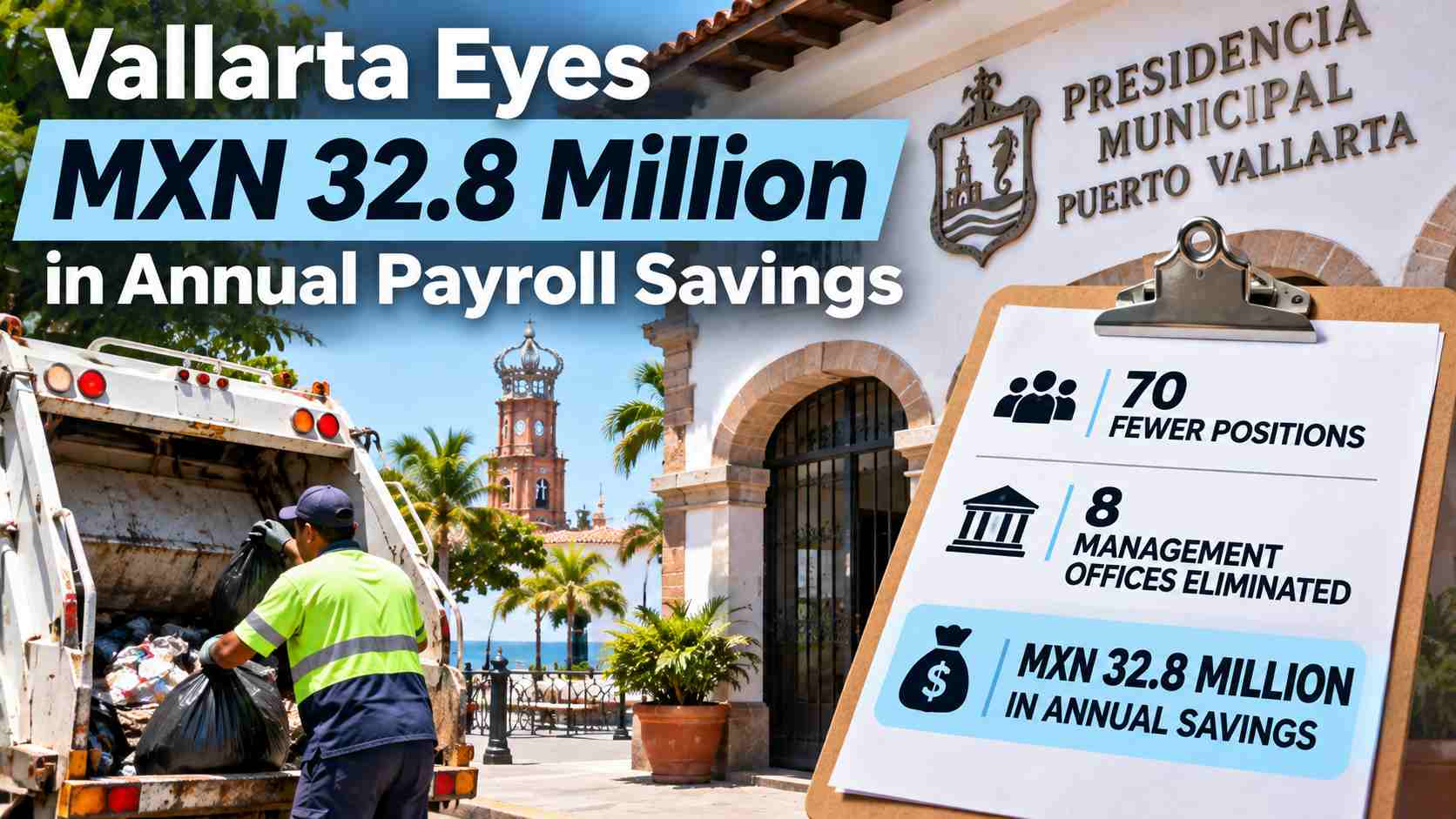
As Vallarta Daily reported Friday, the proposal would eliminate eight municipal management offices, reduce the number of centralized departments from 31 to 17 and remove 70 positions.
The projected gross annual salary savings amount to approximately 32.8 million pesos.
Bernal has also proposed introducing a formal salary schedule as part of the 2027 municipal budget.
The initiative would establish compensation ranges for municipal positions, require justification for additional hires and ensure that funding is available before new employment obligations are created.
Both proposals remain subject to the municipal approval process.
Reducing administrative expenses could provide some financial relief. However, the projected annual savings from the restructuring are considerably smaller than the immediate funding request of 150 million pesos.
There is unlikely to be a single administrative change capable of resolving all the city’s financial difficulties.
More financial transparency is coming, at least on paper
One concrete decision from this week’s council meeting could help residents better understand where their tax money is going.
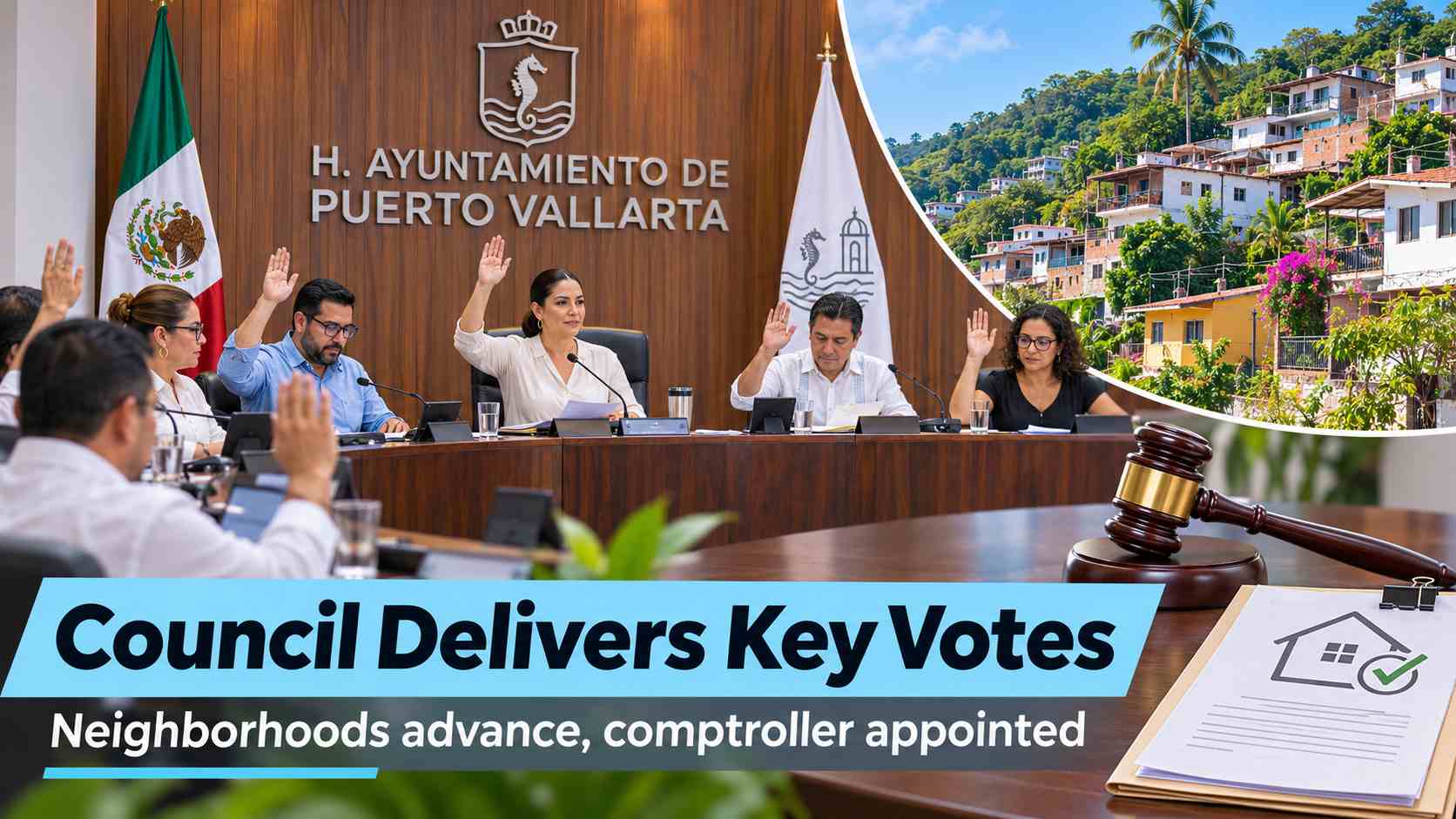
Council members unanimously approved a measure requiring the municipal treasurer to appear before City Council every month to provide a detailed account of municipal finances.
The treasurer must also deliver outstanding financial statements and public accounts by the next ordinary council meeting.
The municipality already maintains a public transparency portal containing payroll records and government accounting reports.
Making those documents complete, current and accessible would allow residents to evaluate the financial decisions being made on their behalf without having to rely exclusively on accusations exchanged during council meetings.
What taxpayers should expect
For most Puerto Vallarta residents, the intricacies of municipal accounting aren’t particularly interesting.
What matters is whether garbage gets collected, potholes get repaired, police officers have the equipment they need and public employees receive their wages on time.
Residents should also be able to understand why their municipal government needs an advance on next year’s revenue when the current year’s budget was supposed to cover its obligations.
Puerto Vallarta is heading into December with an administration looking for additional money, council members questioning previous spending decisions and hundreds of workers already removed from the payroll.
The financial documents establish that personnel spending significantly exceeded its original projections. What has yet to be established is how much of that additional expenditure was necessary, how much could have been avoided and who bears responsibility for the decisions that were made.
Those are questions that deserve answers supported by financial records, not simply another round of political accusations.
Ultimately, Puerto Vallarta’s financial problems belong to more than the politicians sitting around the City Council table. They belong to every resident who pays taxes and depends on the services those taxes are supposed to provide.