Puerto Vallarta’s World Cup story is no longer a tourism pitch.
You can see that in the July 4 concert, now tied to Vibra Jalisco, the state’s World Cup programming push. You can also see it in City Hall votes that have nothing to do with soccer on paper, yet have everything to do with how a city handles event season. The clearest examples came fast: a free Ximena Sariñana show, a permanent Municipal Security Advisory Council, and municipal support for Diversity Week 2026 in the Romantic Zone.
Taken together, those decisions say more about governance than promotion. Vallarta is being treated as part of a host region. Guadalajara has the matches. Puerto Vallarta gets the overflow strategy, the beach branding, and the public-service load that comes with being sold as part of the package.
A free concert still runs on public systems
Publimetro reported that Ximena Sariñana is confirmed for July 4 in Puerto Vallarta as part of Jalisco’s World Cup activities. Out & About Puerto Vallarta also tied the event to Vibra Jalisco and to the broader World Cup celebration calendar.
Vallarta Daily already covered how Puerto Vallarta landed the free Ximena Sariñana show. At the time, early reports still lacked something residents usually care about first: the exact site and operating details.
That gap is where these stories stop being promotional copy and start becoming local government business. Put a large free concert near the Malecón, the sports complex, or another central point, and the city immediately inherits the practical questions. The venue decides almost everything after that, from bus detours and blocked streets to portable toilets, trash pickup, ambulance access, vendor control, noise complaints, and police shifts.
Free admission changes the crowd as well. No ticket barrier means a looser flow, more walk-ups, more teenagers, more last-minute arrivals, and less predictability. For a destination city, that may be part of the appeal. For a municipal government, it is an operating problem.
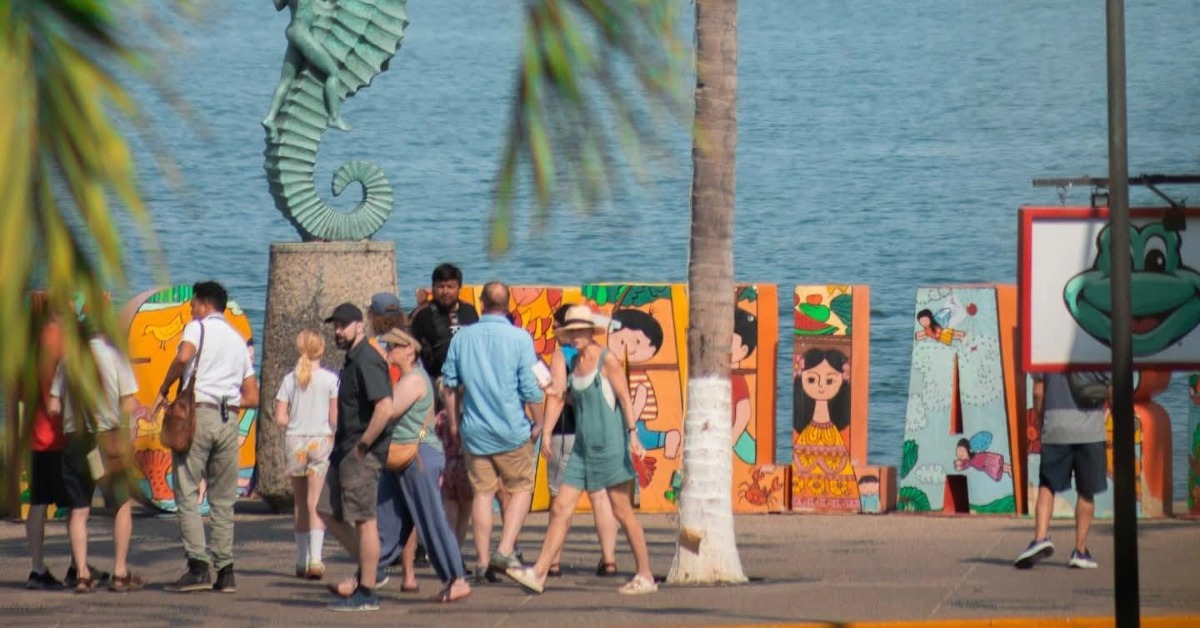
The same goes for public viewing zones. Vallarta Daily previously reported that World Cup screens were coming to the Malecón. Anyone who knows that stretch of downtown can already picture the pinch points. Pedestrians mix with delivery traffic, tour groups, beachgoers, taxis, and bar crowds even on an ordinary weekend. Add a Mexico match, alcohol, and a packed boardwalk, and the issue stops being how to attract people. The issue becomes how to move them.
Security is being built into the calendar
Vallarta Opina reported that Puerto Vallarta approved a Security Advisory Council proposed by Mayor Luis Munguía. According to that report, the council is meant to improve coordination among authorities, business groups, academics, and civil society, with possible participation from Sedena, the Navy, and the National Guard in working sessions.
That is a serious structure for a city that is not hosting matches. It is also a sign that officials expect the World Cup year to touch daily operations well beyond a fan event here and there.
Vallarta Daily’s report on the new Municipal Security Advisory Council placed the move in the city’s 2026 World Cup preparations. Another local report outlined a 641-officer World Cup security plan built around expected spillover tourism from Guadalajara.
Puerto Vallarta is a compact city with beach zones, nightlife corridors, and neighborhoods pressed close together. Police assigned to event coverage are police, not doing something else. Extra patrols may reassure some residents and irritate others. Road checks, crowd barriers, and alcohol enforcement all look different depending on whether you are a tourist, a bar owner, a taxi driver, or someone trying to get home through Centro on a busy night.
Diversity Week shows where the city is willing to spend
Then comes Diversity Week 2026, scheduled for July 30 through August 1 in the Romantic Zone.
The World Cup will be over by then, but the city’s approach is part of the same pattern. Puerto Vallarta is backing major events that reinforce its identity in the tourism market while leaning on municipal resources to make them work.
Tribuna de la Bahía reported that the city approved 1 million pesos for Diversity Week 2026 and that Jalisco’s State Entertainment Agency is contributing 7 million pesos toward a total 8 million peso budget. Vallarta Independiente reported that municipal backing also includes support from Public Security, Transit, Civil Protection, Firefighters, and Medical Services.
Vallarta Daily covered the decision in its story on support for Diversity Week. For the Romantic Zone, that money will read two different ways at once. Local businesses that depend on LGBTQ+ tourism will see a city investing in one of Vallarta’s strongest markets. Residents of the area may see another major event added to a district already carrying nightlife noise, congestion, sidewalk conflicts, and public order complaints.
When officials approve funding for branded event weeks, they are also approving the strain that comes with them. Police have to be there. Medical crews have to be there. Transit has to adapt. Sanitation crews still have to clean the streets the next morning, whether the event came in under budget or not.
The economics are less clean than the sales pitch
The argument for all of this is familiar. More visibility brings more visitors. More visitors bring spending. Spending supports jobs.
The city’s own recent coverage suggests that the equation is less tidy in practice.
Vallarta Daily reported that World Cup crowds were not filling Vallarta hotels, even as tourism officials continued talking up the regional opportunity. That puts local government in an awkward position. The city still has to prepare for event-related impacts, even when the promised wave of bookings has not materialized.
Businesses face their own version of that mismatch. Vallarta Daily also reported that Canirac warned bars and restaurants about World Cup broadcast rights. A full bar during a Mexico match looks like easy money until licensing, enforcement, and penalties enter the picture.
So the World Cup arrives in Vallarta less as a single tourism boom and more as a web of obligations. Public screens, concerts, and security plans all require staff, rules, and coordination, while nearby neighborhoods are usually first to deal with the noise, traffic, and cleanup.
Resident tolerance may be the real limit
Vallarta has long experience with high season, Pride, holiday weekends, and event tourism. The city knows how to host. It also knows how quickly patience thins when event planning comes to the same streets, intersections, and neighborhoods again and again.
The World Cup is being folded into existing pressure points rather than arriving in an empty space. Mobility is already strained. Sanitation is already uneven in some areas. The Romantic Zone already lives with the friction of mixing nightlife, tourism, short-term rentals, and daily residential life within a small footprint.
Maybe the city manages all this well. But residents will judge the World Cup year less by the branding than by the operating details. They will notice whether buses move, whether police overreact, whether streets stay blocked too long, whether trash sits too long in the heat, and whether public money buys a durable benefit or a weekend photo set.