Puerto Vallarta prepares for its December 1–12 Guadalupe celebrations, with more than 300 pilgrimages registered. Here’s what to expect.
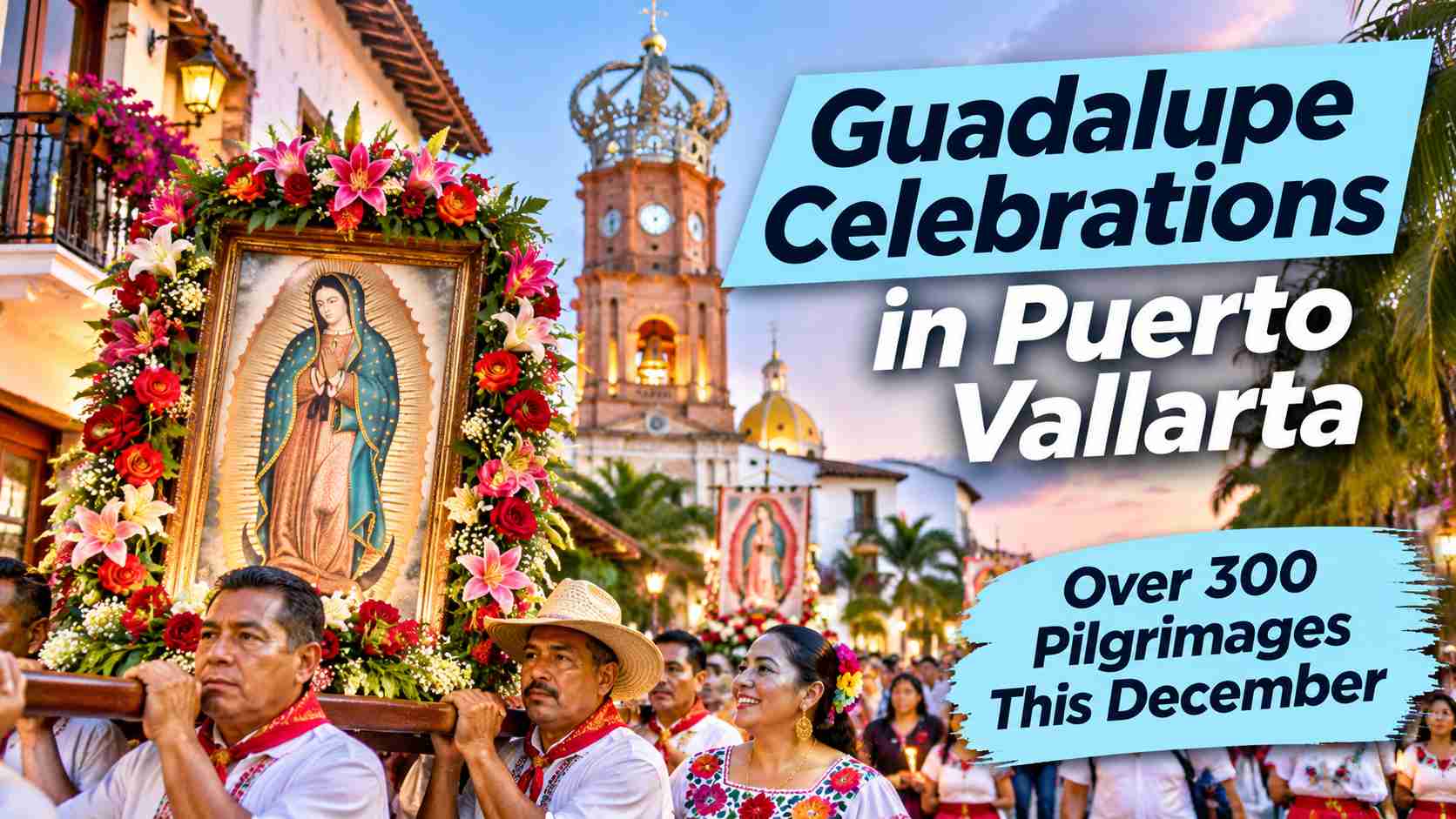
Puerto Vallarta, Jalisco, November 26, 2026 – More than 300 pilgrimages have already been registered for Puerto Vallarta’s annual Fiestas Guadalupanas, which will fill the streets of downtown with music, traditional dancing and religious processions during the first 12 days of December.
Father Arturo Arana López announced preparations for the celebrations Thursday, confirming that registration remains open for families, businesses, schools, religious groups and other organizations wishing to participate.
The official Puerto Vallarta tourism calendar lists the celebrations from December 1 through December 12, culminating with the traditional tribute to Our Lady of Guadalupe.
For residents, the celebrations mean nearly two weeks of increased activity downtown, changes to traffic patterns and streets filled with people well into the evening.
For visitors experiencing their first December in Puerto Vallarta, they offer a glimpse into a side of the city that has little to do with beaches, resorts or international tourism.
More than a religious celebration
Although the festivities are rooted in the Catholic faith, their significance extends throughout the local community.
Speaking during Thursday’s presentation of this year’s celebrations, Father Arana explained that the tradition has grown beyond the parish itself, bringing together communities from across Puerto Vallarta and neighboring municipalities.
Hotel employees, restaurant workers, government agencies, professional associations, musicians, students and entire families organize their own pilgrimages.
Some participants walk to give thanks for recovering from an illness, finding employment or overcoming a difficult period in their lives. Others participate because their parents and grandparents did the same.
For many local families, taking part in a pilgrimage is as much a December tradition as putting up a Christmas tree.
This year’s celebrations will also focus on promoting peace and strengthening relationships within the community.
Where to watch the Guadalupe pilgrimages
The center of the celebrations is the Parroquia de Nuestra Señora de Guadalupe, the church recognizable by its distinctive crown overlooking downtown Puerto Vallarta.
Most pilgrimages traditionally gather near the intersection of Calle Juárez and Calle 31 de Octubre before proceeding south toward the church.
Along the way, participants carry images of the Virgin of Guadalupe, religious banners, flowers and candles. Traditional dancers, mariachi musicians and marching bands often accompany the groups, while some organizations prepare decorated floats.
The best places to watch the processions are generally along Calle Juárez, around Plaza de Armas or near the entrance to the church on Calle Hidalgo.
Although some pilgrimages take place earlier in the day, much of the activity traditionally occurs during the late afternoon and evening.
In previous years, processions have continued from around 5 p.m. until late at night. The complete group-by-group schedule for 2026 has not yet been verified.
There is no admission charge to watch the pilgrimages from the city’s public streets.
December 12 is the most important day
The celebrations reach their peak on December 12, a date of enormous religious and cultural significance across Mexico.
According to Catholic tradition, the Virgin of Guadalupe appeared to Juan Diego in December 1531 on the Hill of Tepeyac, in what is now Mexico City.
Today, millions of people throughout the country mark the occasion with pilgrimages, religious services and celebrations. Vallarta Daily has previously explored the history and significance of Our Lady of Guadalupe Day.
In Puerto Vallarta, some of the most anticipated moments traditionally include:
- December 1: The pilgrimage of the Familias del Viejo Vallarta, bringing together families with longstanding ties to the community.
- December 11–12: The traditional midnight performance of Las Mañanitas, accompanied by mariachi music.
- December 12: The Peregrinación de los Favorecidos, one of the largest processions of the celebrations.
- December 12: The customary arrival of torchbearers carrying a flame from the Basilica of Our Lady of Guadalupe in Mexico City.
These are longstanding elements of the festivities, although exact participation and schedules should be confirmed with the parish.
Parish volunteers are also expected to hold their own opening pilgrimage on November 30, ahead of the main public celebrations.
A tradition closely connected to Vallarta’s history
Puerto Vallarta’s relationship with Our Lady of Guadalupe dates back to the community’s earliest years, when the settlement was known as Las Peñas de Santa María de Guadalupe.
The pilgrimages grew alongside the town, eventually becoming one of the most recognizable expressions of local identity.
In 2018, the celebrations received recognition as part of Jalisco’s Intangible Cultural Heritage, acknowledging the importance of preserving a tradition passed down through generations.
Unlike a historic building or monument, intangible cultural heritage refers to living traditions, knowledge and customs that communities continue to practice.
The Guadalupe celebrations are a good example. Their preservation depends on people continuing to participate, organize pilgrimages, perform traditional dances and share their customs with younger generations.
As part of that preservation effort, Father Arana announced that organizers will work on developing a management manual to help protect the tradition and improve the organization of future celebrations.
Jalisco’s secretary of culture is also expected to visit during this year’s festivities.
Expect downtown traffic disruptions
Anyone who regularly drives through downtown Puerto Vallarta should prepare for possible delays during the first two weeks of December.
Temporary road closures, public transportation diversions and restricted vehicle access along Calle Juárez are common during the celebrations.
The municipal government’s detailed traffic management plan for this year’s festivities has not yet been confirmed.
Residents heading downtown for dinner, shopping or appointments may find it easier to walk or arrange transportation to the edge of the historic center rather than attempting to drive directly to their destination.
The celebrations also coincide with the beginning of the winter tourism season and increased cruise ship activity, meaning some downtown streets could be particularly crowded.
For information about other seasonal activities and their potential impact on getting around the city, see Vallarta Daily’s guide to Puerto Vallarta events and cultural celebrations.
A few things foreign residents and visitors should know
Visitors do not need to be Catholic or speak Spanish to appreciate the celebrations. Watching respectfully from the sidewalk is perfectly acceptable.
It is worth remembering, however, that these are religious pilgrimages rather than parades organized for tourists.
Avoid walking through processions, blocking access to the church or interrupting participants to take photographs. Asking permission before photographing someone at close range is always a good practice.
Visitors entering the church should dress appropriately and remain mindful that religious services may be taking place.
The surrounding streets also traditionally fill with vendors selling tamales, churros, buñuelos, atole and other Mexican foods, making an evening downtown an opportunity to experience some of the country’s December culinary traditions.
With more than 300 pilgrimages already registered and additional groups still signing up, Puerto Vallarta’s celebrations are once again shaping up to be a substantial community event.
Beginning next week, the sounds of drums, church bells and mariachi music will become familiar across downtown as local families continue a tradition that began long before Puerto Vallarta became an international vacation destination.