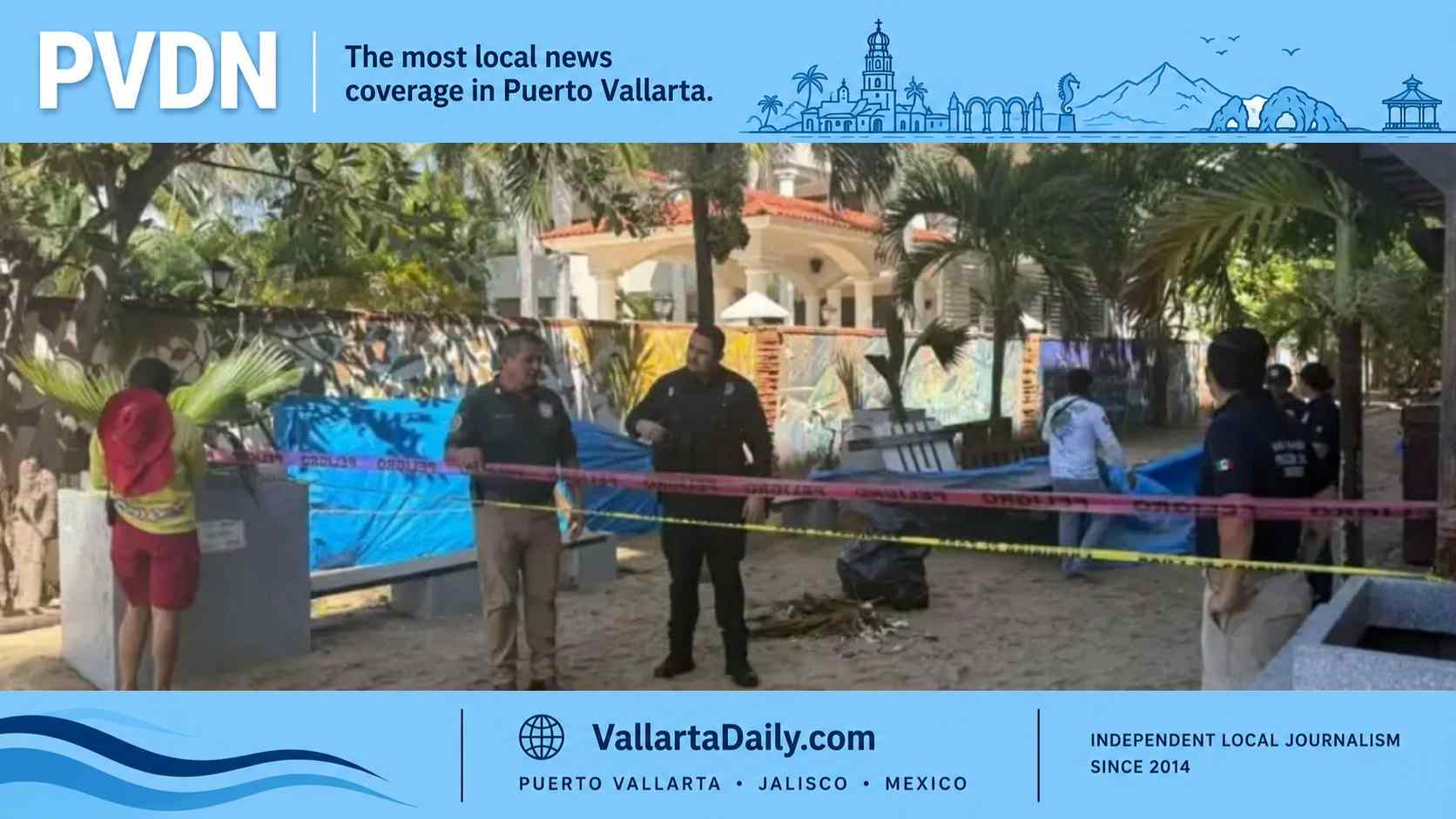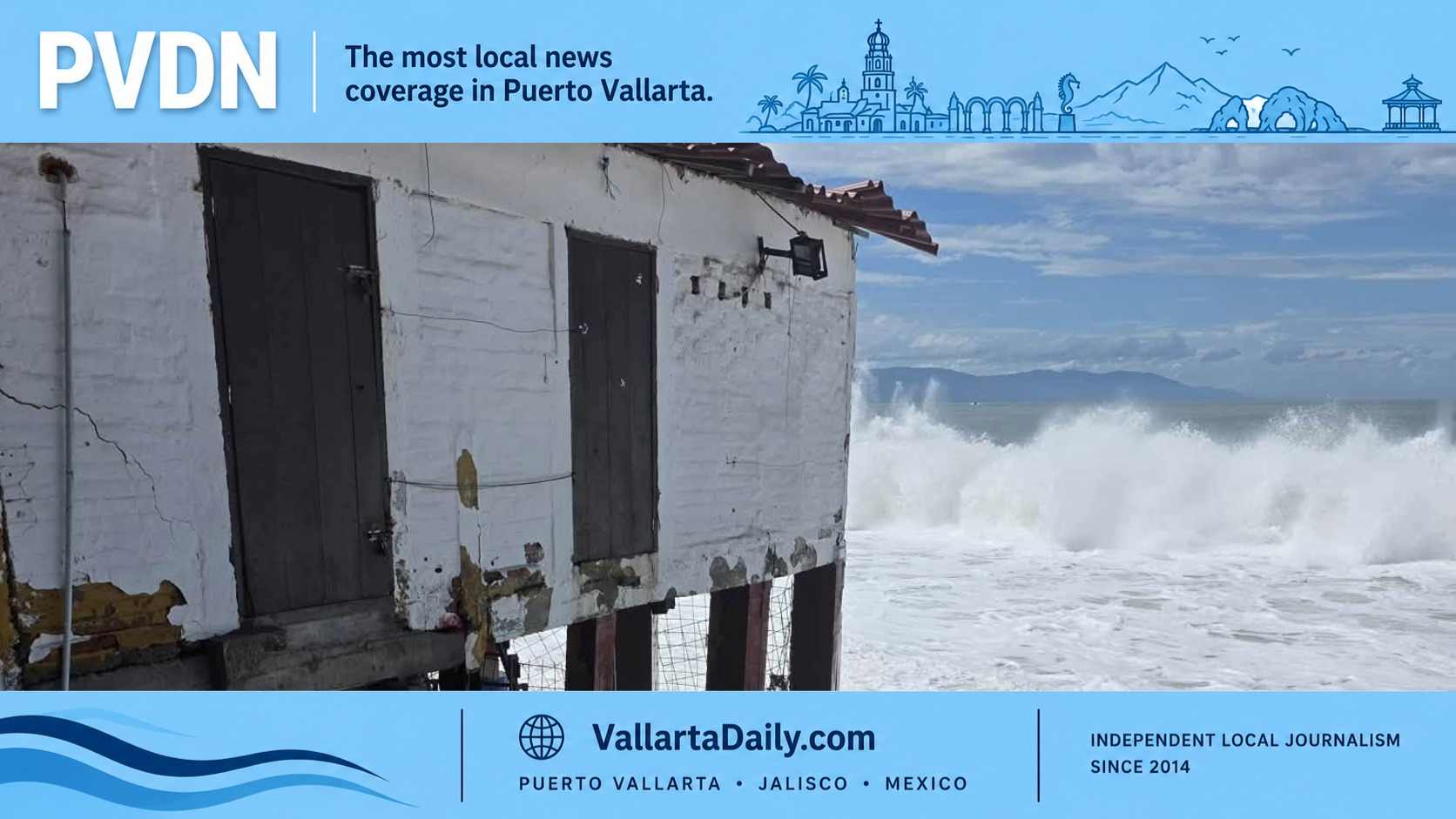
Puerto Vallarta, Jalisco, Oct. 6, 2026 — Storm damage in Puerto Vallarta and San Pancho has prompted a university urbanist to call for a review of coastal construction approvals.
In comments published Oct. 6, José Alfonso Baños Francia urged authorities to reassess beachfront projects. Baños is an urban planning researcher at the University of Guadalajara’s Centro Universitario de la Costa.
Baños said technical assessments must establish the causes of damage at individual buildings. He acknowledged that he did not know the foundation details at Punta Paraíso, the affected condominium development in San Pancho.
Waterfront cleanup and repair needs
Our review of Puerto Vallarta’s Oct. 5 municipal updates found continuing waterfront cleanup and assistance to Playa de Oro merchants. The city said beaches remained under red flags that day.
On the Malecón, civil protection director Misael López Muro said inspectors identified damaged plates and fasteners in retaining structures. Areas checked included the dolphin fountain and El Caballito sculpture, according to his account.
Mayor Luis Munguía said in Oct. 5 comments about repairs, “There is damage, especially to slabs and parts of some retaining walls.”
Munguía said the city would seek resources for rehabilitation. The proposed funding request is also covered in our report on Malecón and hotel-zone repairs.
In San Pancho, Nayarit, authorities closed Punta Paraíso following inspections on Oct. 2, according to Bahía de Banderas civil protection chief José Santos Salas Hernández.
Salas reported that 13 Canadian and U.S. tourists were evacuated without incident. He said ground and drone inspections preceded the closure. PVDN previously covered the evacuations after waves exposed the tower foundations.
A call to reconsider coastal approvals
Baños argued that the response to damage from Polo and Rachel should extend beyond cleaning and repairing affected properties. Authorities should also review the criteria used to approve construction near the shoreline, he said.
He said buildings closer to the sea face greater exposure to waves and erosion. Deep foundations can also be affected by exceptional conditions, he added.
For coastal planning, Baños proposed using records spanning 50 to 100 years to model water movement and assess risk. His recommendation concerns future approval decisions; his comments did not establish the cause of Punta Paraíso’s damage.
Punta Paraíso’s earlier enforcement record
Federal records document an earlier dispute over the development’s boundary.
In a Dec. 8, 2017, notice, Mexico’s federal environmental enforcement agency, Profepa, reported a partial, temporary closure. The agency said the project had failed to comply with an order to remove chain-link fencing from the federal coastal zone.
A March 22, 2018, follow-up recorded compliance with the fence’s removal and relocation. Profepa said the barrier had stood outside the area authorized by Semarnat, Mexico’s environment ministry.
The agency said the correction freed 210 square meters of coastal dune and restored public passage and access.