Cancún’s long-awaited Nichupté Bridge is entering its final stretch, and officials still say drivers could be using it by late April. But the bridge is arriving with a much larger price tag than first advertised. Federal budget tracking now shows the final construction cost at more than 12 billion pesos, more than double the original contract amount. For residents, workers, and visitors, the story is no longer only about a new route into the hotel zone. It is also about delays, added engineering, and the real price of building megaprojects in Cancún.
The bill for a shortcut keeps rising
The long-delayed Nichupté Bridge is close to opening. It is also arriving with a far larger bill than first promised. Federal budget tracking now places the final construction cost at just over 12.02 billion pesos, including VAT. That is more than double the 5.57 billion pesos attached to the original 2022 contract. In a city that has waited years for another route into the hotel zone, the cost story now rivals the mobility story.
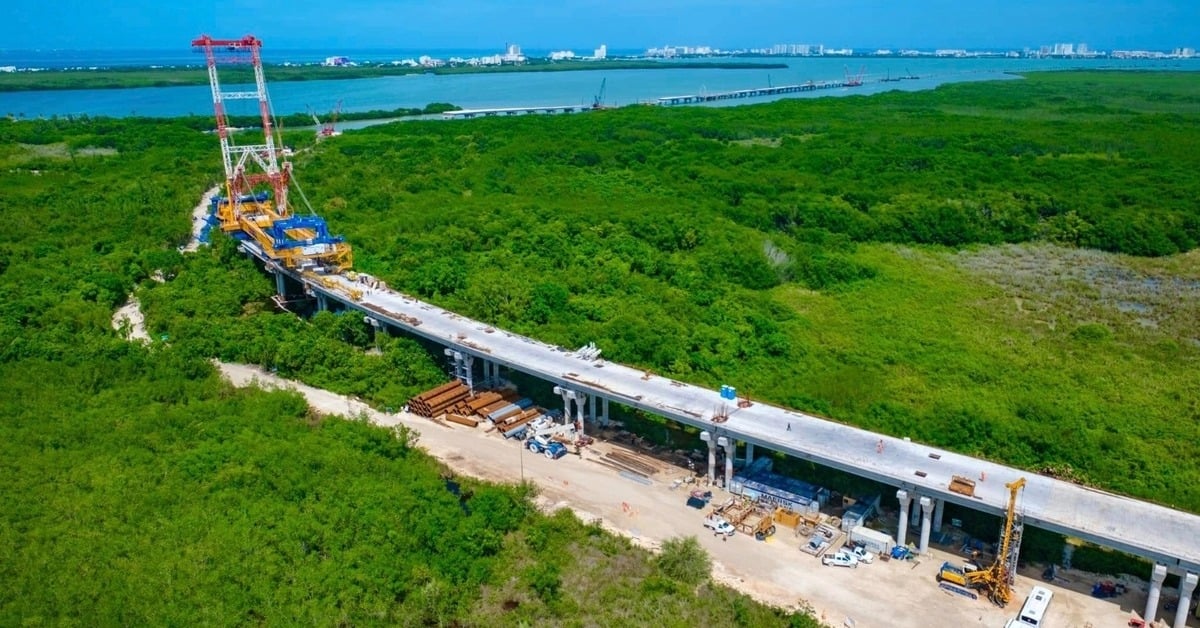
For readers outside Cancún, the project needs context. The bridge is designed to connect the city side of Cancún with the hotel zone across the Nichupté lagoon system. The full project runs about 11.2 kilometers, including an 8.8-kilometer bridge section. It includes three traffic lanes, one of them reversible, along with space for pedestrians and cyclists. The main promise is simple: give the city a second way in and out of its busiest tourism corridor.
The headline figure covers construction, but the public cost does not end there. Federal reporting now also places 26 years of maintenance at roughly 1.85 billion pesos. That pushes the longer-term budget impact above 14.1 billion pesos. It is a reminder that megaprojects often continue to generate costs well after the ribbon-cutting.
Why the price grew
The overrun did not come from one single problem. Early in construction, officials linked higher costs to inflation, added karst and soil studies, and expanded environmental mitigation in and around the lagoon. Those are not minor adjustments on a project built over water, mangroves, and unstable ground. When those factors appear after bidding, budgets rarely stay where they started.
The project also grew in scope. Officials now say the Entronque Kukulcán is essential if the bridge is to avoid creating new traffic jams at the hotel zone entrance. That connection has become one of the biggest cost pressures in the final stage. Federal officials said more than 1.593 billion pesos will be needed in 2026 to finish the work. That package includes part of the spending tied to the Kukulcán connection. In plain terms, the bridge was sold as one project, but it is being delivered as something larger and more expensive.
There is also the cost of delay. Construction began in 2022, and the opening date has moved more than once. As schedules slip, labor, materials, supervision, and financing usually rise with them. Earlier reporting on the project had already shown the budget climbing well before the latest update. The new figure confirms that those increases did not level off near the finish line.
Why officials still want it open fast
Even with the overrun, the federal government still has a strong incentive to open the bridge soon. Cancún’s Boulevard Kukulcán remains the main artery for the hotel zone. When traffic backs up there, the slowdown hits workers, residents, airport transfers, deliveries, and visitors at the same time. Officials say the new route could handle about 12,000 vehicles a day and cut some trips from around 90 minutes to about 10 minutes.
That matters beyond convenience. For Cancún, the bridge is also an economic infrastructure project. The hotel zone is not just a tourism district. It is the city’s main revenue engine and a daily workplace for thousands of people. A second access route can reduce vulnerability when crashes, flooding, maintenance, or demonstrations affect the existing corridor. That is one reason officials have kept pushing the project despite the larger bill.
What happens before the opening
The bridge is close, but it is not finished. Officials say crews are still working on parapets, curbs, asphalt, and expansion joints while carrying out final load and vibration tests. Some tests use heavy weights of roughly 150 tons to measure how the structure responds and recovers. Recent official updates have described the results as favorable, but the bridge remains in a controlled testing phase.
That leaves Cancún with two realities at once. The project remains on track for a late-April opening, and the government is clearly treating that target seriously. But the Nichupté Bridge is also becoming a clear example of how major public works can outgrow their original budgets. Once the first cars cross, the public conversation will focus on whether traffic improves. The longer debate will be whether the final cost was justified and whether the government clearly explained the increase before opening day.