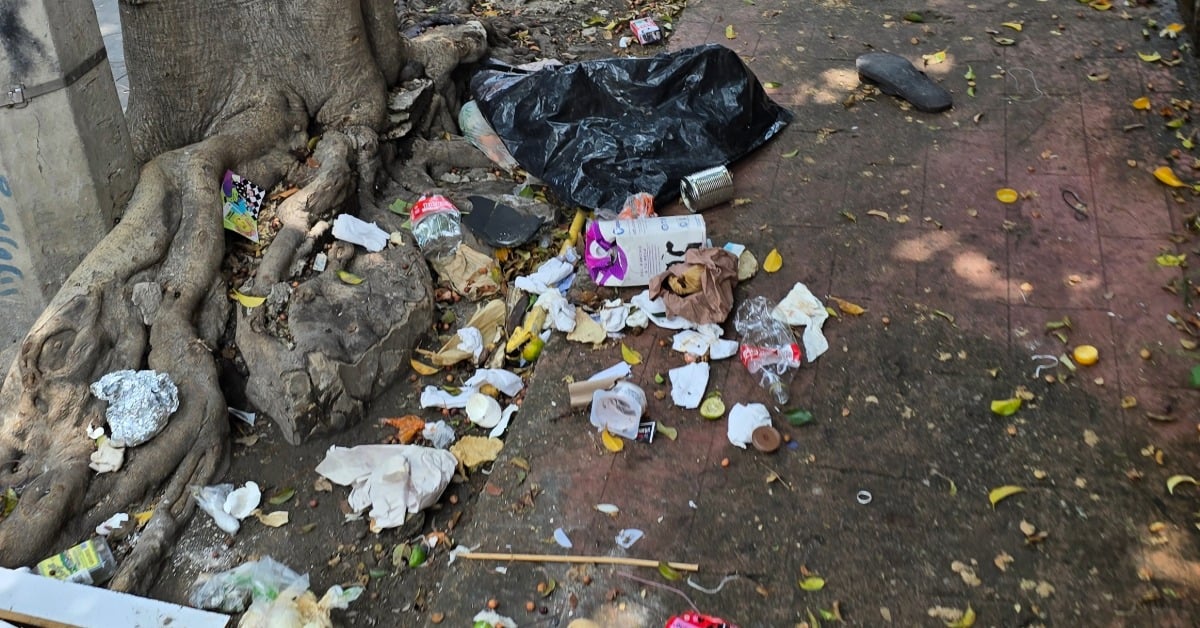
Walk any block after a hard rain and you’ll see the chain reaction: gutters stuffed with foam cups and candy wrappers, corner drains choked by plastic bags, puddles turning into knee-deep lagoons because the water has nowhere to go. Street trash in Mexico isn’t just an eyesore; it’s an infrastructure failure you can smell. And it doesn’t come from a single cause. It’s the sum of policies that push responsibility down the ladder, municipal budgets stretched thin, collection systems that were never built for today’s volume, uneven public education, and the tired resignation that comes when a city stops looking like anyone’s pride.
Policy says “it’s the municipality’s job.” Reality says “with what money?”
Mexico’s waste law is clear: municipalities are responsible for collecting, transporting, treating, and disposing of urban solid waste. That division of labor—where the federal government sets standards, states regulate, and municipalities collect the waste—has existed for years and is outlined in the General Law for the Prevention and Integral Management of Waste (LGPGIR), Article 10.
On paper, that’s tidy. In practice, the order often outstrips the wallet. Federal and state transfers dominate local finances; charging a realistic user fee for trash collection is politically toxic and, when services are inconsistent, hard to defend. Mexico’s National Program for Integrated Waste Management (2022) spells it out bluntly: many municipalities avoid charging for cleaning services, and that chronic underfunding produces “precarious, partial” waste management.
The result is predictable: too few trucks, irregular routes, and workers asked to cover more neighborhoods with less. When bags sit on curbs overnight, dogs tear them open, wind scatters the contents, and the cityscape absorbs the mess long before any crew arrives.
The scale problem
Mexico generates a significant amount of garbage—more than many residents realize. In 2022, municipalities collected an average of 108,146 tons of urban solid waste daily. Two-thirds of that was door-to-door pickup; less than one-tenth moved through fixed container systems. If you’re wondering why you don’t see many public bins, that’s part of the answer: much of the system is built around household hand-off to trucks, not around containerization.
National diagnostics estimate roughly one kilogram per person per day—about 120,000 tons daily—when you zoom out beyond just what’s collected. Those loads are overwhelmingly comprised of organic and low-value mixed materials; according to various official tallies, about half is food and yard waste that quickly decomposes in warm weather. That composition makes everything messier, smellier, and more complicated to handle if the collection is late or the bins are scarce.
Infrastructure that never caught up
You can’t keep streets clean if there’s nowhere for trash to go and not enough capacity to move it. Mexico’s network of transfer stations, treatment plants, and compliant final-disposal sites is patchy. Even where landfills exist, enforcement and operation vary, and open dumping still competes with engineered sites. The 2022 national program acknowledges uneven final disposal and a backlog of investments municipalities can’t shoulder alone.
At street level, the failures show up every rainy season. Mexico City’s water authority has said six out of ten flood incidents in the capital are linked to solid waste clogging drains and grates. That figure is echoed in official briefings and coverage: crews collect tons of debris from pluvial inlets in just a few days of storms. Every bottle tossed in a gutter becomes someone’s flooded living room.
Education and habits: mixed progress
It’s tempting to say “people just litter,” full stop. It’s also lazy—and incomplete. Mexico has bright spots in recycling education and practice: the country is a continental leader in recovering PET beverage bottles, with industry-backed programs reporting capture rates above 60% in 2023–2024. That shows habits can move when there’s a transparent value chain and constant messaging. But a high PET capture rate doesn’t solve mixed street litter or organic waste; it only proves that sound systems change behavior.
On the public-service side, Mexico City operates long-standing education programs, such as Mercado de Trueque, and school initiatives that promote separation. Similar efforts pop up across states and municipalities, but coverage is uneven and often project-based rather than universal. Surveys also reveal a knowledge gap: many residents express a desire to do more, but lack clear information on what to separate, when to discard it, and where to take it.
And yes, norms matter. When corners are perpetually crusted with bags, people adapt to the visible rule—“this is where trash goes”—even if the written rule says otherwise. That’s not a uniquely Mexican psychology; it’s how humans everywhere respond to neglected space.
Enforcement exists on paper—less so on sidewalks
Cities do have fines. Mexico City’s civic code allows penalties for dumping or littering, ranging from community work to fines of several thousand pesos. Monterrey has raised penalties dramatically and talks tough every rainy season about throwing trash into drains. The issue isn’t the absence of rules—it’s day-to-day enforcement and credibility. Sporadic crackdowns don’t reset norms if residents expect that next week the same corner will be piled high again.
Pride is a two-way street
“Lack of pride” is a loaded phrase. People are more likely to care for places that care for them. If your block floods every June because the grate has been clogged for years, if the trash truck honks at 11 p.m. one week and never shows the next, if there are no public bins anywhere on your walk to work, the message is that public space is nobody’s job—pride withers.
Conversely, when services are reliable and visible, when bins are placed where people actually need them, when sweeping and pickup are predictable, behavior shifts, that’s the story behind the better-kept historic cores and tourist corridors: priority routes get more crews, more bins, and tighter schedules—and, not coincidentally, cleaner streets.
So why is there so much trash in the streets?
Because the law mandated cleanliness locally, but the funding didn’t always follow, due to the large, wet, and difficult-to-transport waste stream, which is challenging to manage with our trucks and transfer stations. This is because we’ve built systems around curbside bells, not containers and sealed bins. Because education arrives in pockets, not at scale. Because enforcement flickers. And because when the built environment signals neglect, people stop treating it as a shared living room.
None of that is destiny. The same data that paints the problem points to fixes:
- Stable funding and cost recovery for waste services—politically tough, but essential—paired with visible service improvements so residents see what they’re paying for. (The federal program itself warns that avoiding fees leads to precarious management.)
- Hard infrastructure: more covered containers where they’ll actually be used, more frequent pickup on high-litter corridors, transfer and treatment capacity that matches today’s volumes.
- Drain discipline: pre-storm cleanouts and year-round anti-litter enforcement targeted at flood-prone blocks, not just public campaigns.
- Education that sticks: citywide, simple separation rules and collection calendars—plus leveraging what already works in PET to lift other streams.
- Consistent enforcement: fines and community service that are applied regularly, not theatrically.
Mexico already undertakes the most challenging part of this story every day: crews collect more than 100,000 tons of waste, day in and day out. The question is whether we’ll give them the policy, equipment, and public buy-in to keep the trash where it belongs—out of the gutters, off the corners, and away from the lives that unfold on those streets.