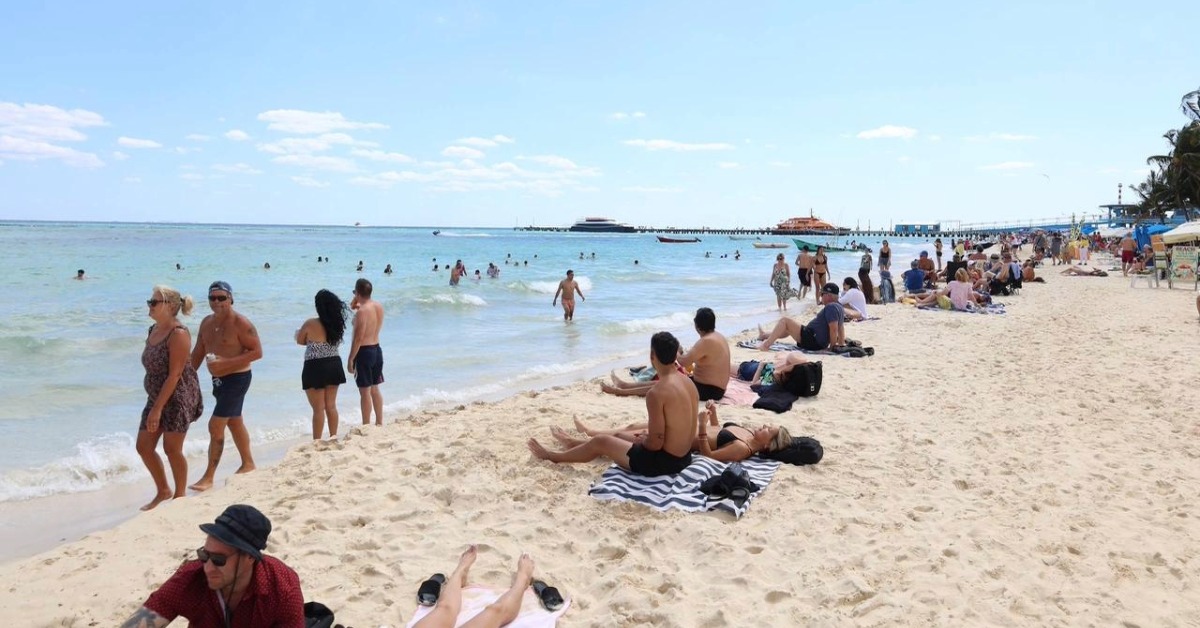
Quintana Roo’s hotels are still drawing large numbers of visitors, but some tourism businesses say the spending is not spreading as widely as before. Operators of parks, tours, and other add-on experiences report a noticeable drop this year, pointing to a mix of all-inclusive resort habits, tighter travel budgets, and visitor hesitation about leaving hotel properties. The shift raises a bigger question for Cancún, Puerto Morelos, Playa Mujeres, and the Riviera Maya: who benefits when tourists come, but stay behind resort gates?
Tourism Experiences See Drop as Visitors Stay Inside Resorts
Tourism service providers in Quintana Roo say they are seeing a decline in complementary tourism activities, even as the Mexican Caribbean continues to receive large numbers of visitors.
The reported drop affects add-on experiences such as parks, excursions, dolphin programs, local tours, and other activities often booked after travelers arrive. These businesses depend on visitors leaving their hotels and spending beyond the room package.
Operators said activity is running about 4% to 5% below last year’s levels in some segments. The decline is not being described as a collapse in tourism. Instead, it points to a more specific problem: visitors are still coming, but more of them appear to be staying inside all-inclusive resorts.
That distinction matters in Quintana Roo, where tourism supports hotels, restaurants, transport operators, guides, parks, and small businesses. A full hotel does not always mean nearby businesses are getting the same lift.
A strong destination with uneven spending
Quintana Roo remains one of Mexico’s busiest tourism regions. Official state figures showed strong hotel activity earlier this year, with the Mexican Caribbean reporting high occupancy during late February. Cancún also reported a strong Spring Break season, with hotel occupancy above 90% and nearly 30,000 visitors during that period.
Those numbers show demand is still present. But tourism workers are pointing to a gap between visitor volume and visitor behavior.
The concern is that hotel occupancy no longer tells the whole story. A visitor staying five nights at an all-inclusive resort may spend much of the trip eating, drinking, and relaxing inside the property. That can reduce spending on taxis, restaurants, beach clubs, local guides, and paid attractions.
This is especially important in destinations such as Playa Mujeres and Puerto Morelos, where large resort developments are often marketed as self-contained vacation spaces. Guests may arrive expecting the resort itself to be the trip.
Why visitors may be staying inside
Tourism operators cited several possible reasons for the decline. One is the growth of the all-inclusive model, where more services are bundled into the room price. When meals, drinks, entertainment, and activities are already included, travelers may be less willing to pay extra for outside experiences.
Another factor is cost. For many international visitors, a weaker dollar or a tighter household budget can make additional tours feel less affordable. Families may still book the vacation, but cut back on extras once they arrive.
Some operators also pointed to concerns about safety or uncertainty outside resort areas. Even when tourist zones operate normally, perception can influence behavior. Visitors who are unfamiliar with Mexico may choose the simplest option: staying where transportation, meals, and activities are already arranged.
This does not mean tourists are avoiding Quintana Roo. It means some are narrowing the way they experience it.
The repeat visitor challenge
Tourism operators also noted that repeat visitors now make up a large share of the market. These travelers may already know the major parks, beaches, and tours. If they have visited Cancún or the Riviera Maya several times, they may be less likely to buy the same experience again.
That creates a challenge for the region’s attractions. The first-time visitor may still want the classic itinerary. The repeat visitor often needs something new, more local, or more flexible.
For tourism businesses, this may mean creating products that go beyond the standard package. Smaller-group tours, food experiences, cultural routes, conservation programs, and local neighborhood visits may appeal to travelers who already know the beaches and resort zones.
The issue is not just how to bring tourists to Quintana Roo. It is about giving them a reason to move around once they arrive.
Resort growth changes the local economy
The continued expansion of large resorts can bring jobs, investment, and tax revenue. It can also concentrate spending inside private properties.
That creates a split economy. Hotel companies may do well, while independent operators outside the resort gates see weaker sales. Restaurants, guides, transport providers, and small attractions may feel the impact first.
For residents and long-stay foreigners, this trend can be visible in everyday ways. A destination can feel busy at the airport and in hotel zones, while local businesses still report slower sales. The tourism economy is not one single market. It is a network, and some parts can weaken while others remain strong.
This is why operators are watching the numbers closely. A 4% or 5% drop may sound small, but margins can be thin in seasonal tourism. Even a modest decline can affect staffing, pricing, and future investment.
Dolphin attractions face another layer of uncertainty
Some operators in the activity sector are also dealing with regulatory changes. Mexico’s 2025 reform to the General Wildlife Law placed new limits on the use of marine mammals in commercial and entertainment activities.
Businesses connected to dolphin programs say they are waiting for clearer rules on how the law will be applied in specific cases, including rescued animals, rehabilitation, and animal care. The sector says some activities continue under education or conservation programs, but the legal environment has changed.
That issue is separate from the wider decline in add-on tourism. Still, it adds another concern for companies already trying to adjust to new visitor habits.
What could happen next
The immediate task for Quintana Roo’s tourism sector is to understand whether this is a short-term shift or a longer change in travel behavior.
If visitors are staying at resorts due to price concerns, promotions may help. If they are doing so because the resort model is becoming more self-contained, the challenge is larger. In that case, outside businesses may need stronger partnerships with hotels and tour sellers before visitors arrive.
The region may also need more experiences aimed at repeat guests. Many travelers already know the usual attractions. They may respond better to smaller, more personal outings that feel different from a standard package tour.
Quintana Roo’s tourism engine is still running. The question is how widely the benefits are spreading. For the businesses built around tours, parks, and local experiences, that question is becoming harder to ignore.